
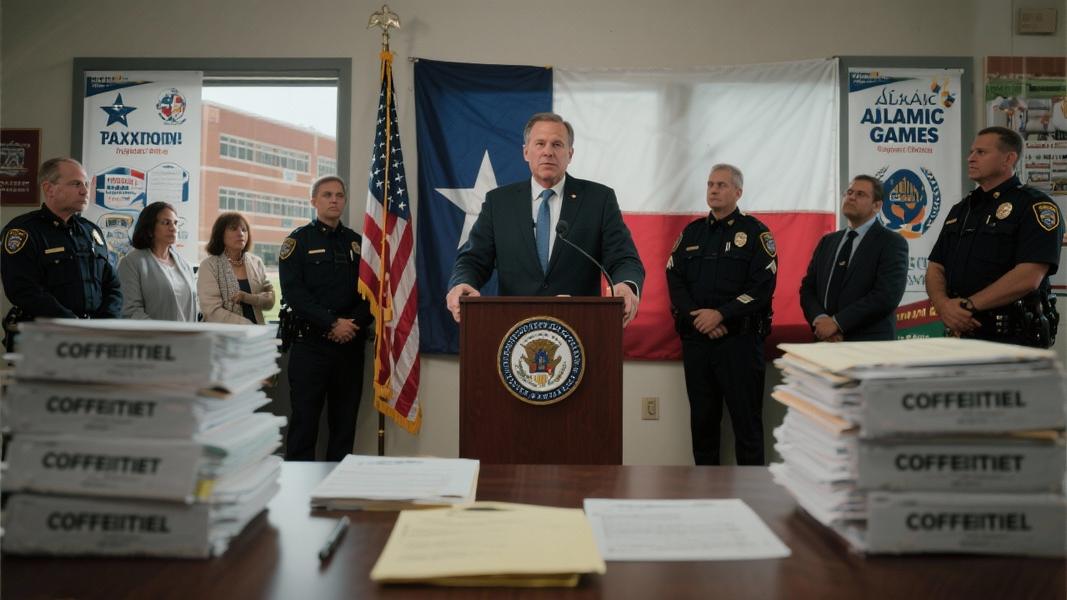
Texas Attorney General Ken Paxton is ramping up investigations into public school districts allegedly tied to Islamic organizations, marking his latest move in a widening campaign targeting what he describes as “radical Islam” in the state’s educational system.
The controversy centers around Paxton’s demand for documents from Cypress-Fairbanks and Grapevine-Colleyville Independent School Districts regarding their connections to the Islamic Games of North America, an event sponsored by the Council on American-Islamic Relations’ New Jersey chapter (CAIR-NJ). In a strongly worded statement, Paxton declared, “The spread of radical Islam in Texas must be stopped, and if school districts are continuing to promote or partner with organizations tied to an FTO, that ends now. I will ensure that taxpayers’ dollars are not materially supporting activities by Islamist terrorists in violation of Texas law.”
Voucher Program at Center of Controversy
The investigation comes amid a parallel dispute over Texas’s new school voucher program. Paxton recently issued an opinion stating the state comptroller has authority to exclude private schools from the voucher system if they violate laws prohibiting material support for foreign terrorist organizations. The opinion came in response to Acting Comptroller Kelly Hancock’s inquiry about schools that have hosted CAIR events.
Critics, however, view the opinion as deliberately vague. “Ken Paxton might have a future as an NFL punter,” one observer noted. “Instead of answering the simple question that Comptroller Hancock posed, the attorney general has responded with a confusing, evasive letter that kicks the issue back to Mr. Hancock to decide.”
What’s actually at stake here? The events in question were largely educational “Know Your Rights” sessions hosted by CAIR, which describes itself as a civil rights organization. But Paxton’s office has repeatedly referred to CAIR as a “designated foreign terrorist organization,” a characterization that CAIR vehemently disputes.
Religious Freedom Concerns
Civil liberties advocates worry the scrutiny unfairly targets Muslim institutions. “Nothing in the law permits Mr. Hancock to scrutinize private Muslim schools because of their religious identity,” a critic stated, “nor can he punish them if they once hosted an educational lecture from a civil rights organization that Greg Abbott happens to dislike.”
The controversy doesn’t exist in isolation. It appears to be part of a broader political strategy emerging in Texas Republican circles ahead of upcoming primaries. Candidates across the state have intensified rhetoric against what they characterize as threats from Sharia law and Islamic influence.
Aaron Reitz, a Republican candidate, has gone so far as to claim Islam is fundamentally “incompatible with Western civilization” — language that reflects an increasingly common theme in campaign messaging across the state.
Political Calculations
The timing hasn’t gone unnoticed. With primary season approaching, some political observers suggest the heightened focus on Islamic organizations serves strategic electoral purposes for Republican candidates looking to energize their base.
CAIR representatives remain defiant in the face of what they view as politically motivated attacks. “CAIR is not going anywhere, American Muslims are not going anywhere, and our community will show its strength at the ballot box, God willing,” CAIR Action Texas coordinator Rizvi emphasized in a recent statement.
For school districts caught in the crossfire, the investigations create immediate practical challenges. They must now produce documentation about any interactions with Islamic organizations while navigating the politically charged environment surrounding religious freedom, education policy, and state funding.
As this story continues to unfold, the fundamental question remains whether these investigations represent legitimate security concerns or, as critics contend, an attempt to use state power to target specific religious communities in an election year.
