
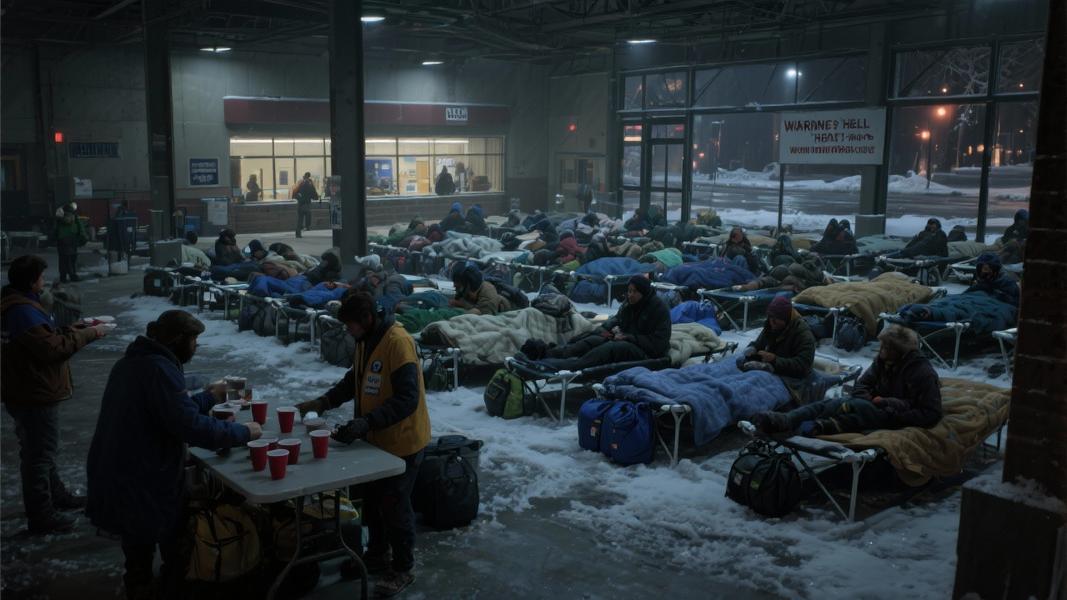
Nearly 850 people face uncertain shelter options as Dallas’ largest temporary warming shelter at Fair Park prepares to close its doors after the weekend, despite regular shelters across North Texas remaining at capacity.
The Fair Park facility, operated by Our Calling, has been a critical lifeline during the recent cold snap but will shut down as temperatures begin to rise across the region, leaving hundreds potentially returning to the streets.
Shelter Crisis Looms as Temperatures Rise
“Today, we are still operating here at the inclement weather shelter at Fair Park. We have about 850 people here now,” said Wayne Walker from Our Calling, who confirmed the shelter will close after breakfast following the weekend.
The timing couldn’t be worse. “Unfortunately, those 850 people don’t have anywhere to go. We’ve been working with people and getting them back to recovery programs and rehabs and some housing options and shelter options, but most of those are full now,” Walker explained.
It’s a problem that extends beyond Dallas. In Fort Worth, the Presbyterian Night Shelter has been operating near capacity throughout the cold weather event, with 757 people currently housed and nightly averages hovering around 765, officials stated.
At the peak of the winter emergency from Sunday night into Monday morning, Fort Worth sheltered more than 1,200 people across its facilities, stretching resources to their limits.
Thousands Served During Cold Snap
The scale of this emergency response has been massive. The Austin Street Center’s shelter at Fair Park has served nearly 2,000 people since last Friday, operating at a nightly capacity of 1,200 people in the automobile building, according to officials who spoke with local media.
Across Dallas, the city has helped over 1,800 people since the winter storm hit the region last week, as reported by CBS Texas.
What happens when these temporary shelters close? That’s the question haunting both service providers and those they’re helping. Regular shelters remain full, and the transition back to the streets seems inevitable for many.
Walker emphasized the need for community involvement as the temporary shelters wind down operations. “So many of those will be returning to the streets, and that’s why it’s important that organizations in the community partner with our calling and other agencies so that we can help them get off the streets,” he urged.
The closure comes as temperatures are expected to climb back above freezing, technically ending the immediate life-threatening conditions that prompted the emergency shelter openings. But for hundreds of individuals without permanent housing options, the warming weather brings cold comfort.
As the Fair Park shelter prepares for its final weekend, the clock is ticking for both service providers and those they serve to find solutions before the doors close for good.
