
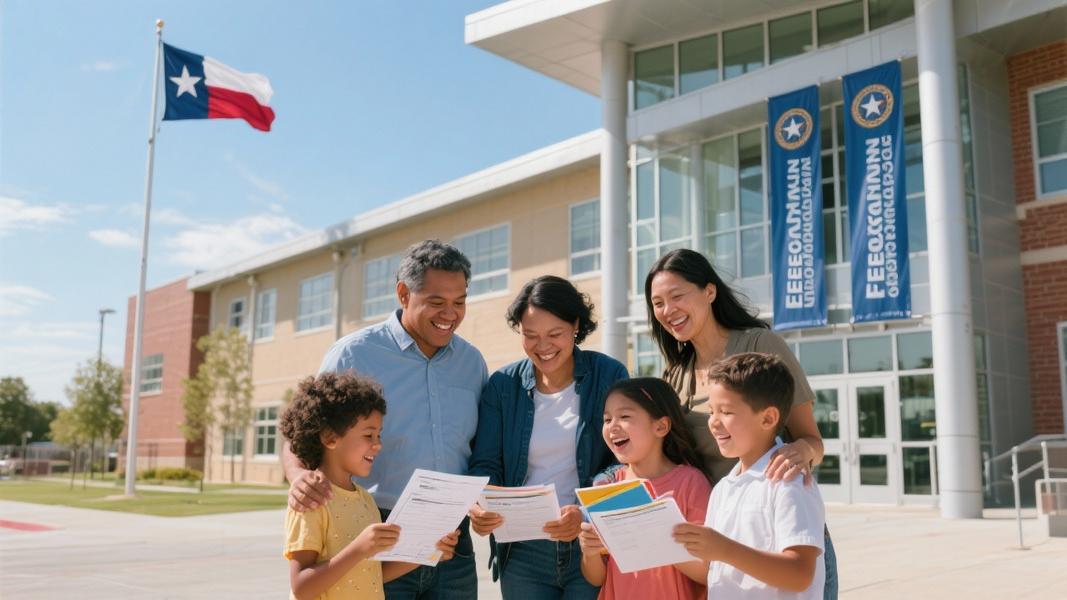
Texas families can now apply for the state’s ambitious new school choice program that will provide up to $10,474 per student for private education or $2,000 for homeschooling expenses, Governor Greg Abbott announced Monday.
The Texas Education Freedom Account (TEFA) program, which opens its application portal today, represents the largest initial launch of an education savings account initiative in the country with $1 billion allocated for the 2026-2027 school year. The program aims to serve approximately 100,000 students across the state, prioritizing those from low-income households and children with disabilities.
“With Texas Education Freedom Accounts, more parents can choose the learning environment that’s best for their child and more students will be able to reach their unique potential,” Governor Abbott said during the announcement.
How the Program Works
Applications opened online February 4 and will remain available until March 17, 2026, at 9 a.m. CT. The program isn’t first-come, first-served — all eligible applications submitted during this window will be considered equally, with priority given based on financial need and special education status if the program is oversubscribed, according to program officials.
Acting Comptroller Kelly Hancock, whose office administers the program, praised the governor’s efforts. “Governor Abbott’s unwavering leadership made this moment possible for Texas families,” Hancock stated.
Funding will be substantial. Families can receive up to $10,474 per student for private school expenses, while students with disabilities who have Individualized Education Programs (IEPs) may qualify for up to $30,000. Homeschooling families aren’t left out either — they can access up to $2,000 per child for approved educational expenses.
What can these funds cover? The list is extensive: tuition, textbooks, uniforms, tutoring services, meals, educational therapy, curriculum materials, and even technology — though tech purchases are capped at 10% of the total allocation.
Disbursement and Timeline
Families won’t receive the full funding amount all at once. “Families will get up to about 25 percent of their total funding on July 1 so that they can get ready for the school year, pay their initial costs, acquire curriculum, pay their tuition and fees at their school,” explained Travis Pillow, spokesperson for the TEFA program.
The remaining funds will be distributed in October, following verification that the child is enrolled in an approved educational setting. The Comptroller’s office maintains authority to block schools that fail to comply with program requirements.
But who exactly qualifies? Essentially, any Texas child who is a U.S. citizen or lawfully admitted resident can apply. This includes students currently in public or charter schools, as well as those preparing to enter pre-K or kindergarten. Children ages 3-5 have additional eligibility pathways, including being non-English speakers, from military families, or in foster care.
Application Process
The application process requires several key documents: tax records, social security numbers, proof of Texas residency, and a child’s IEP documentation if applicable. Families submit one application per household, regardless of how many children they’re enrolling in the program.
What happens if too many families apply? “The biggest variable is going to be the kinds of students who apply,” Pillow noted. If applications exceed available funding, a lottery system will determine recipients, with preference given based on family income levels.
More than 1,400 private schools across Texas — spanning from Pre-K through high school — have already signed up to participate in the program, giving families considerable choice in educational settings.
The TEFA program emerged from Senate Bill 2, which Governor Abbott signed into law in May 2025 after a protracted legislative battle over school choice in Texas. For many families who’ve been seeking alternatives to traditional public education but couldn’t afford private tuition, the program represents a significant shift in educational possibilities — though critics continue to question its potential impact on public school funding and enrollment.
As the application window opens today, one question remains: Will the program’s ambitious scope meet the potentially overwhelming demand from Texas families? Only time will tell if this $1 billion investment will transform education in the Lone Star State as its supporters hope.
