
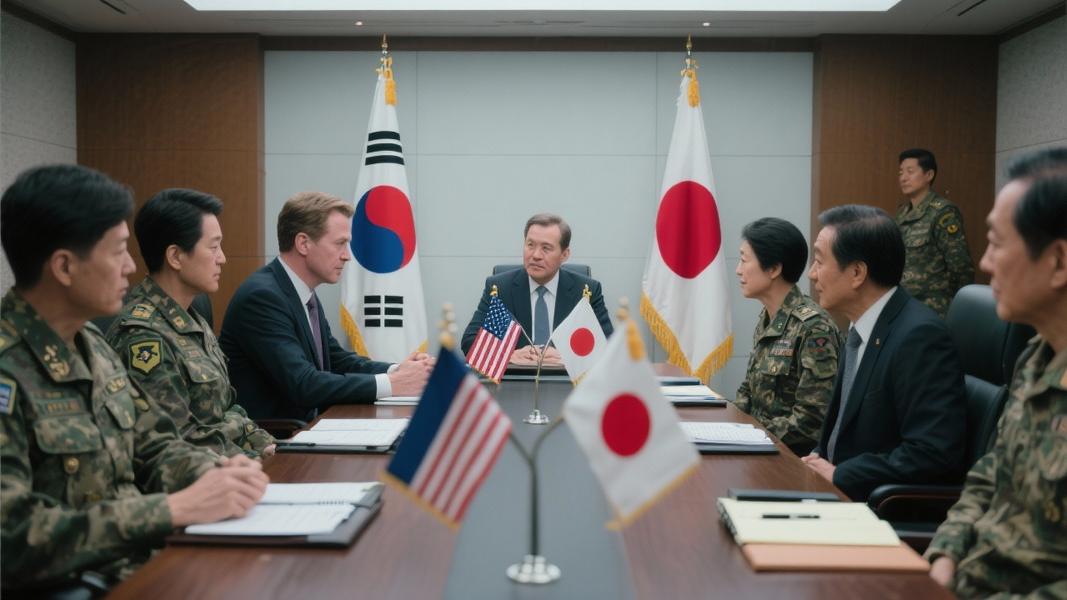
Under Secretary of War for Policy Elbridge Colby has wrapped up a high-stakes diplomatic tour through South Korea and Japan, pushing allies to dramatically increase defense spending as part of the administration’s “peace through strength” agenda ahead of the 2026 National Defense Strategy.
The diplomatic mission, which concluded earlier this week, focused heavily on burden-sharing and regional security coordination at a time of heightened tensions across the Indo-Pacific. Colby met with top defense and government officials in both Seoul and Tokyo, emphasizing the administration’s expectation that allies must shoulder more of their own defense costs — specifically calling for defense spending targets that far exceed current NATO standards.
In Seoul, Colby held meetings with Minister of National Defense Ahn Gyu-back, National Security Advisor Wi Sung-Lac, and Foreign Minister Cho Hyun, where discussions centered on “alliance modernization” and South Korea’s role in deterring North Korean threats, according to a statement released by the Department of War.
The Under Secretary also received operational briefings from Gen. Xavier Brunson, Commander of U.S. Forces Korea, covering force posture and the status of transitioning wartime operational control to South Korean forces — a long-standing goal that has seen numerous delays over the years.
A “Model Ally” in Seoul
South Korea earned particular praise from Colby during his visit. He reportedly described the country as a “model ally” after Seoul’s pledge to increase defense spending to 3.5 percent of GDP — a significant jump from current levels but still short of the administration’s ambitious 5 percent target for all U.S. allies, as noted by regional media.
“The Republic of Korea is showing real leadership in taking primary responsibility for conventional deterrence against North Korean threats,” Colby said during a press briefing in Seoul, though he emphasized the U.S. nuclear umbrella would remain firmly in place.
What’s behind this push for allies to dramatically increase military spending? The forthcoming 2026 National Defense Strategy reportedly calls for all U.S. allies to boost defense budgets to a striking 5 percent of GDP — more than double the current NATO standard of 2 percent that many European allies struggle to meet, according to Japanese media reports.
Tougher Conversations in Tokyo
The Tokyo leg of Colby’s trip appeared more challenging. There, he met with Vice Minister of Foreign Affairs Takehiro Funakoshi and Vice Minister of Defense Taro Yamato, emphasizing what he called “the urgent need for Japan to quickly improve its defense capabilities” to strengthen regional deterrence.
Japan, which has historically maintained defense spending below 1 percent of GDP due to its pacifist constitution, has been gradually increasing military expenditures in recent years. Still, Tokyo remains far from the administration’s ambitious new targets.
Colby also held meetings with U.S. Ambassador George Glass and Lt. Gen. Stephen Jost, Commander of U.S. Forces Japan, focusing on alliance coordination and improving U.S. forces’ readiness posture in the region, the Department of War confirmed.
Defense analysts note that Colby, who previously served as the lead official in developing the 2018 National Defense Strategy, has long advocated for allies to take greater responsibility for their own conventional defense while the U.S. maintains its nuclear deterrent capabilities.
As the administration prepares to unveil its complete 2026 National Defense Strategy in the coming months, these high-level discussions in East Asia signal a significant shift in expectations for U.S. allies — and potentially, the shape of America’s military footprint across the Indo-Pacific region for decades to come.
