
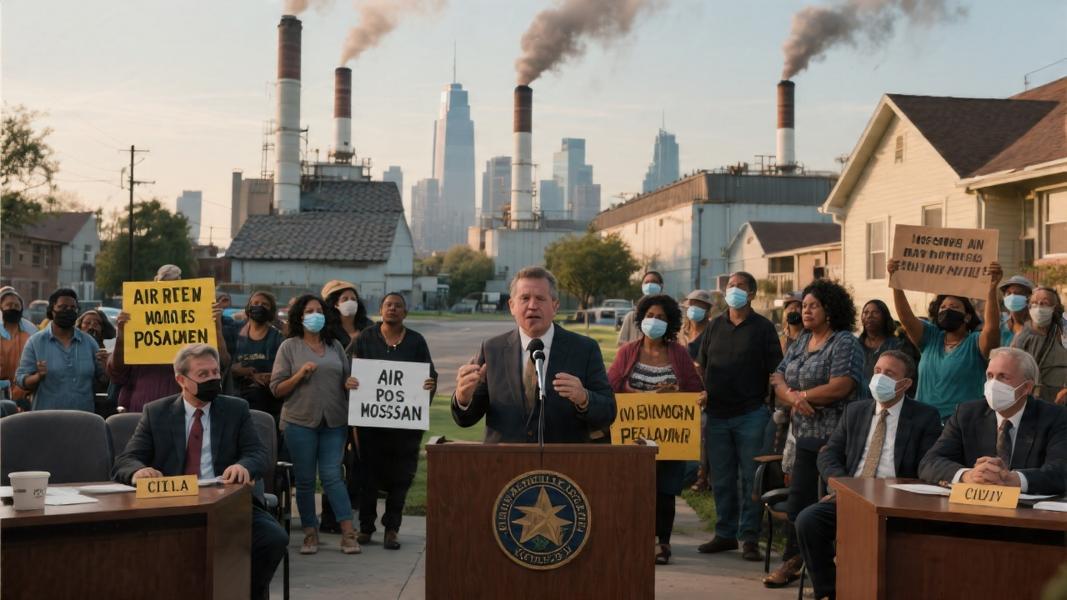
Dallas is spending $200,000 to figure out how much it would cost to make two polluting shingle factories go away — and the neighborhoods downwind aren’t willing to wait much longer.
The Dallas City Council recently voted to hire a consultant to study the potential buyout and closure of two asphalt shingle manufacturers: GAF Materials in West Dallas and Tamko in the Joppa neighborhood. The move is being framed as a fact-finding exercise — a business valuation to give city leaders something concrete to work with before committing to a far more expensive decision. But for the residents who’ve spent years breathing the air near these plants, the study feels less like progress and more like another lap around the same track.
The Biggest Polluter in Dallas Nobody’s Talking About
How bad is it? The GAF plant, sitting at 2600 Singleton Boulevard in West Dallas, is the single largest source of sulfur dioxide in the entire city, emitting more than 260 tons of air pollution annually. That’s not a rounding error. That’s a factory pumping toxic emissions into a predominantly working-class Latino neighborhood, year after year, while city leaders weigh their options.
Residents in West Dallas have been pushing back hard, citing a recent independent report concluding that the GAF facility pollutes the surrounding air and should be relocated out of their neighborhood entirely. The frustration has reached a boiling point. Community members near both plants have been threatening civil disobedience, and some are already locked in legal battles — claiming the facilities are making people sick.
No Deal, No Deadline, No Certainty
That’s the catch. Despite what some residents may have heard or hoped, city staff confirmed there is currently no formal agreement with GAF to shut down by 2029 or any other date. The $200,000 consultant is meant to establish what a buyout might actually cost — a prerequisite, city officials argue, before any serious negotiation can begin. Council member Roth was blunt about the city’s financial reality, saying “We’re in the budget process, we’ve got limited funds that we are going to be dealing with over the next several months, this is not a critical issue right now,” as confirmed by KERA News.
That framing — “not a critical issue” — landed hard in communities where the issue is, quite literally, the air they breathe. Still, the council did vote to move forward with the study, which suggests at least some political will exists to eventually act. Whether that will survives a tight budget cycle is another question entirely.
A Longer Fight Than Most People Know
West Dallas and Joppa aren’t strangers to this kind of environmental struggle. The saga of “Shingle Mountain” — an illegal, towering pile of shingle debris that once loomed over the Floral Farms community in South Dallas — consumed six years of neighborhood organizing, legal fights, and media attention before residents finally secured a city-approved zoning change to prevent future inappropriate land uses on that site. It was a win, but an exhausting one. And it illustrates something important: these communities don’t give up, but they also can’t afford to fight forever.
The two active shingle plants represent a different — and in some ways harder — battle. Unlike an illegal dump, GAF and Tamko operate within the bounds of existing permits and zoning. That means the city can’t simply order them out. A voluntary buyout, if it happens at all, would require negotiation, money, and a level of political commitment Dallas hasn’t fully demonstrated yet.
What Comes Next
The consultant’s findings will shape whatever comes next — whether that’s a serious buyout offer, a prolonged negotiation, or, perhaps, a quiet shelving of the idea when the budget gets tight. Dallas has voted to spend the money. Now the question is whether it has the stomach to spend considerably more.
For the families in West Dallas and Joppa, the math has always been simpler: 260 tons of sulfur dioxide a year, one working-class neighborhood, and a city that keeps saying it cares. The consultant’s report won’t change the air. But it might, finally, change what the city is willing to do about it.
