
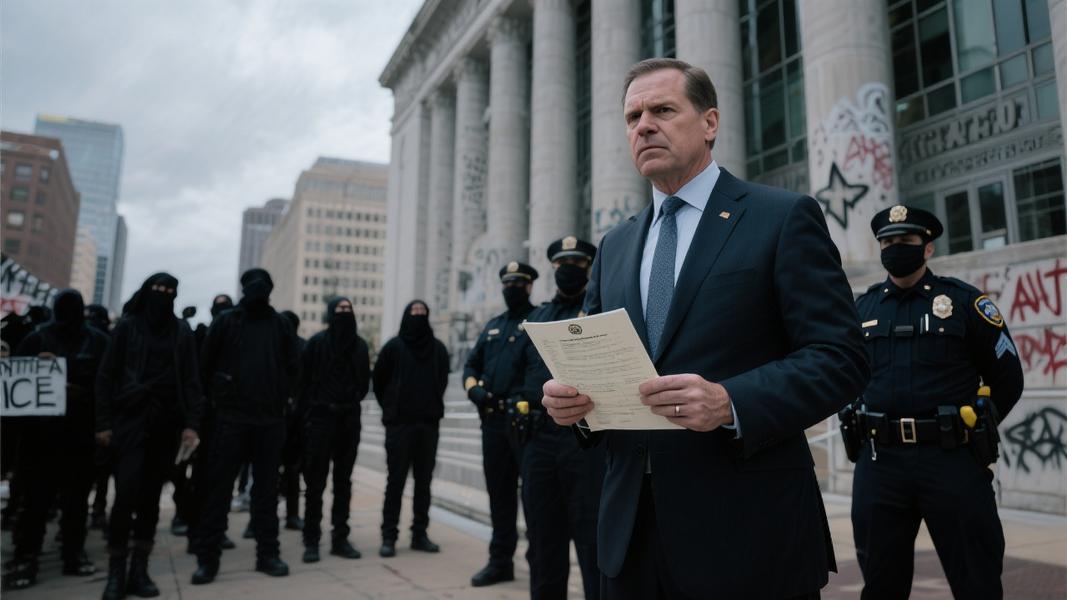
Texas Attorney General Targets Houston Antifa Group, Alleging Illegal Doxing and Terrorism Support
Texas Attorney General Ken Paxton has launched legal proceedings against a Houston-based anti-fascist organization, accusing the group of violating state law through alleged doxing activities and supporting terrorism.
In a strongly worded statement released Monday, Paxton announced the state’s lawsuit against Screwston Anti-Fascist Committee, an unincorporated nonprofit association that has been active in Houston since 2016. The group, which identifies itself as anti-fascist, now finds itself in the crosshairs of Texas’ top law enforcement official.
Aggressive Stance from State’s Top Prosecutor
“Radical leftists have engaged in coordinated efforts to militantly attack our nation and undermine the rule of law. Screwston and related groups have illegally doxed Texans and encouraged violent terrorism against fellow citizens,” Paxton declared in his statement. “These deranged traitors will face the full force of law. No stone will be left unturned, and no tool will be left unused.”
The lawsuit represents one of the most direct legal challenges to an anti-fascist organization in Texas in recent years. While specific details of the alleged violations weren’t fully outlined in the initial filing, the Attorney General’s office claims to have evidence of coordinated doxing—the practice of publishing private information about individuals online—and what they characterize as material support for terrorist activities.
What exactly constitutes “terrorism” in this context? The complaint doesn’t specify particular incidents, though Paxton’s language suggests a broad interpretation of the group’s activities and communications.
Group’s Background and Activities
Screwston Anti-Fascist Committee has positioned itself as part of a longer tradition of anti-racist organizing in the region. According to their own materials, the group draws inspiration from earlier organizations like Houston Anti-Racist Action from the 2000s and the John Brown Anti-Klan Committee of the 1970s and 80s, while opposing what they describe as “white supremacy, settler-colonialism, patriarchy, hetero-sexism, authoritarianism, and capitalism in the South.”
The organization’s public activities have included participation in the Houston Anarchist Bookfair, hosting workshops, discussions, and various community events. They’ve also been involved in political actions, including a reported blockade of BNY Mellon as part of a Global Day of Action Against Elbit Systems, according to their website.
Still, the specific activities that prompted the Attorney General’s lawsuit remain somewhat unclear from public documents. Paxton’s office has not yet released detailed evidence supporting the allegations of illegal doxing or terrorism support.
Legal and Political Implications
The case raises significant questions about the boundaries of political activism and when such activity crosses into legally problematic territory. Civil liberties experts have frequently cautioned about the potential chilling effect that broad interpretations of anti-terrorism laws can have on political organizing and protected speech.
Paxton’s characterization of the group as “deranged traitors” has already drawn criticism from civil rights attorneys, who note that such inflammatory language from a state’s chief legal officer could potentially prejudice any legal proceedings.
The Screwston Anti-Fascist Committee had not issued a formal response to the lawsuit at time of publication. Legal experts suggest the case could potentially test boundaries between protected political speech and illegal activity in a politically charged environment.
“This appears to be as much a political statement as a legal action,” noted one constitutional law professor who requested anonymity due to the sensitivity of the case. “The courts will ultimately have to determine whether there’s substance behind the rhetoric.”
