
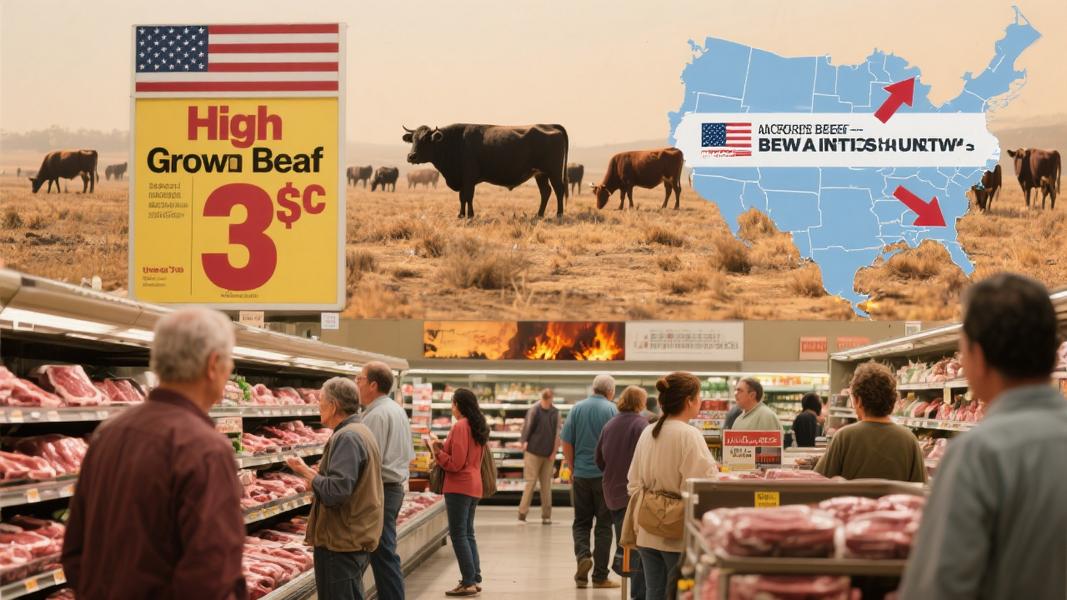
Americans’ love affair with beef is getting more expensive by the day. Ground beef prices hit a staggering $6.69 per pound in December 2025 — the highest price recorded since the Department of Labor began tracking beef costs in the 1980s, according to a White House statement.
The soaring costs come as little surprise to industry watchers. The United States, which ranks as the world’s largest beef consumer by volume and second globally in per capita consumption, has been grappling with declining cattle inventories and supply chain disruptions that have squeezed availability and pushed prices upward.
Shrinking Herds, Growing Concerns
As of July 2025, U.S. cattle inventory stood at 94.2 million head, including 28.7 million beef cows — representing a one percent decline from July 2023 and continuing a troubling downward trend, White House officials noted.
The tightening domestic supply has forced the U.S. to look abroad, with beef imports reaching a record 4.64 billion pounds in 2024, jumping more than 24 percent from 2023 levels, according to federal data.
What’s behind this perfect storm of high prices? A combination of factors, including drought conditions in key cattle-producing states, rising feed costs, and disease outbreaks. In May 2025, the detection of New World screwworm in Mexico prompted the USDA and U.S. Customs and Border Protection to restrict importation of live animal commodities from or transiting through Mexico, further limiting feedlot stock supplies.
Presidential Intervention
Responding to the crisis, the President has increased the in-quota beef import quantity by 80,000 metric tons for 2026, allocated entirely to Argentina and administered in quarterly tranches, in an effort to ease supply constraints and potentially lower prices for consumers.
“The administration’s move is a recognition that domestic production alone can’t meet current demand at affordable prices,” said Maria Sanchez, agricultural economist at Capital Market Analytics. “But it’s a balancing act between consumer affordability and protecting domestic producers.”
Production Outlook
Despite these challenges, the USDA has forecast 2026 beef production at 25.735 billion pounds, with an average steer price of $236 per hundredweight. This production estimate represents a slight upward revision of 10 million pounds from December projections, attributed to heavier dressed weights, as reported by industry analysts.
Yet other sources paint a slightly different picture. Total U.S. beef production is expected to fall to 25.5 billion pounds by 2026, according to Statista, reflecting ongoing herd reduction pressures.
Americans’ dinner plates are likely to feature less beef in coming years. Per capita beef availability is projected to decrease to 56.9 pounds per person in 2026, down from 58.5 pounds in 2025, according to Department of Agriculture figures.
Quality vs. Quantity
There is, however, a silver lining for beef enthusiasts with deeper pockets. While quantity may be declining, quality is on the rise. A remarkable 87% of U.S. beef production is now graded Choice or higher, with retail per capita consumption hovering around 60 pounds in 2025, industry experts indicate.
But that quality comes at a premium. All-fresh retail beef prices have reached a record $8.90 per pound, putting pressure on household budgets across the country.
For the average American family, the future of beef consumption appears to be one of tough choices — pay more for less, switch to alternative proteins, or reserve beef for special occasions rather than everyday meals. As the cattle cycle continues its contraction phase, consumers may need to adjust their expectations at both the grocery store and the dinner table.
