
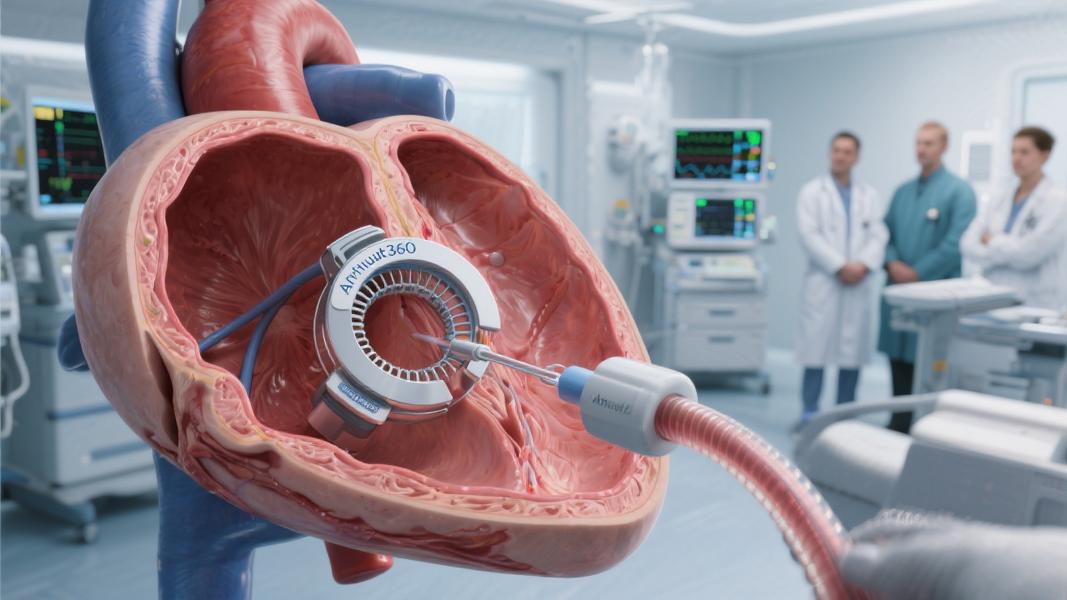
Abbott’s new Amulet 360 device for atrial fibrillation patients has shown remarkable success in preventing strokes, according to recent clinical data from the VERITAS Study. The trial, which included 400 patients across 34 sites in the U.S., Canada, and Europe, revealed that 93.9% of non-valvular AFib patients achieved complete left atrial appendage (LAA) closure within just 45 days — with no leaks greater than 3 mm.
For the millions suffering from atrial fibrillation, this breakthrough offers a potentially game-changing alternative to blood thinners. The device works by sealing off the LAA, a small pouch in the heart where blood clots often form in AFib patients, thereby reducing stroke risk without requiring lifelong medication.
Superior Performance Compared to Competitors
“Abbott is committed to developing minimally invasive approaches that help doctors address AFib and prevent strokes, ensuring optimal safety and benefits for patients,” said Christopher Piorkowski, M.D., chief medical officer of Abbott’s electrophysiology business, in a company statement.
The device isn’t just effective — it’s showing superiority over existing alternatives. Abbott’s Amplatzer Amulet LAA Occluder IDE trial demonstrated better LAA closure (98.9% vs. 96.8%) and higher implant success (98.4% vs. 96.4%) compared to the Watchman device, according to data from the comparative study.
What makes this particularly significant? Nearly 80% of patients implanted with the Amulet device were able to leave the hospital without oral anticoagulants (blood thinners), dramatically improving quality of life while still providing protection against strokes.
Long-Term Results Show Lasting Benefits
Perhaps most compelling are the five-year results from the Amulet IDE trial involving over 1,800 patients. The data showed 78.9% of Amulet patients were free of oral anticoagulation immediately after discharge, compared to just 4.2% for those receiving the Watchman device. By the five-year mark, those numbers had risen to 94% versus 90.9%, respectively, according to cardiovascular research publications.
“Amulet demonstrated a clear benefit for people suffering from atrial fibrillation who are at risk of stroke and in need of LAA occlusion,” a researcher noted. “The Amulet IDE trial data show that we can effectively treat these patients with Amulet and get them off blood thinners immediately following implantation.”
Safety concerns? The primary safety endpoint at 12 months was comparable between devices: 14.5% for Amulet versus 14.7% for Watchman, meeting the non-inferiority standard set by researchers.
Freedom from Blood Thinners
The most life-changing aspect for many patients is the device’s ability to eliminate the need for long-term blood thinners. Traditional oral anticoagulants, while effective at preventing strokes, come with significant bleeding risks and lifestyle limitations. The Amulet device appears to offer a 67% reduction in stroke risk without these drawbacks.
And it’s not just a short-term benefit. The 5-year results from the IDE trial confirmed that 94% of Amulet patients remained free from oral anticoagulation compared to 90.9% for the competing device — a statistically significant difference (P=0.009).
The VERITAS Study specifically evaluates the safety and effectiveness of Abbott’s newer Amulet 2 LAA occluder in patients with non-valvular atrial fibrillation who are seeking alternatives to medication-based approaches.
For patients with atrial fibrillation who struggle with blood thinners, these results offer a compelling alternative. The device’s 99% implant success rate and 99% effective closure rate suggest that mechanical solutions to stroke prevention in AFib may increasingly become the standard of care.
As competition in the LAA occluder market intensifies, patients may ultimately be the winners — with more options, better devices, and the potential freedom from lifelong medication dependence while still protecting against the devastating impact of stroke.
