
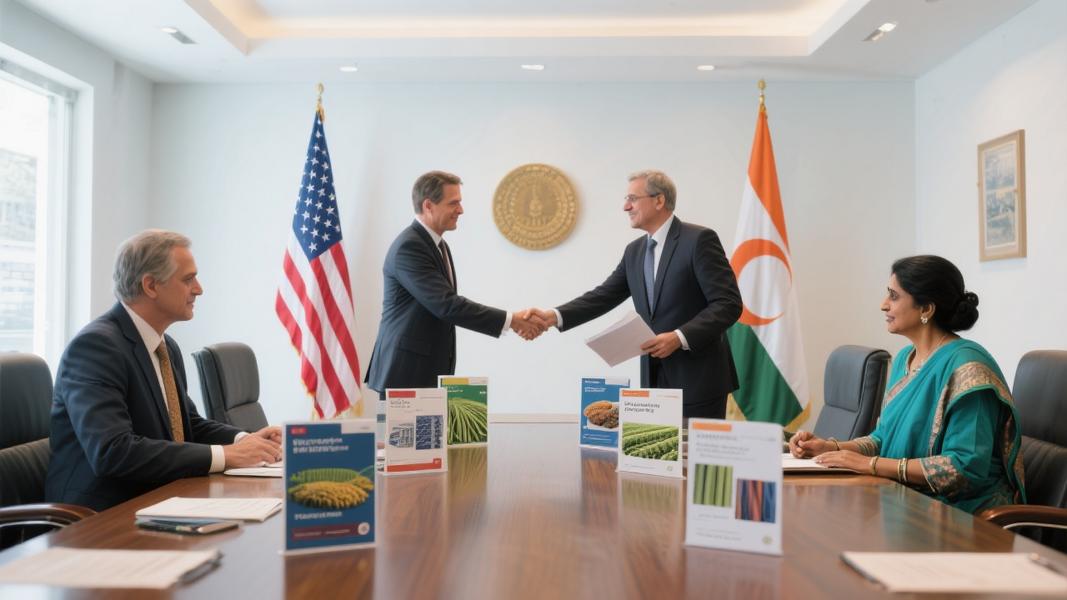
In a significant diplomatic breakthrough, Bangladesh and the United States have inked a new trade agreement that slashes the reciprocal tariff rate to 19%, providing a major boost to the South Asian nation’s export sector, particularly its vital garment industry.
The deal, signed after nine months of intensive negotiations, marks a substantial deepening of economic ties between the two nations. It reduces the tariff burden on Bangladeshi goods entering the American market from a previous 34% and offers zero tariff on select textile products that use U.S. inputs — a strategic win for Bangladesh’s crucial ready-made garment sector that employs millions.
A New Chapter in Trade Relations
Commerce Adviser Sk Bashir Uddin, who signed the agreement on behalf of Bangladesh, characterized the deal as transformative for bilateral economic relations. “This agreement will fit Bangladesh on US trade policy,” he stated. “It will provide substantially enhanced access of Bangladesh and the US to each other’s respective markets.”
U.S. Trade Representative Jamieson Greer, who signed for the American side, praised Chief Adviser Muhammad Yunus for his “overarching leadership” throughout the negotiation process and commended the Bangladesh team for their “incredible efforts” in bringing the agreement to fruition, according to official sources.
The framework builds upon the 2013 Trade and Investment Framework Cooperation Agreement (TIFCA) and represents a significant advancement in the economic partnership between the two nations, as outlined in a joint statement from the White House.
What’s in the Deal?
National Security Adviser Khalilur Rahman highlighted the specific benefits for Bangladesh’s export sector. “The reduction of reciprocal tariff will grant further advantage to our exporters, while zero reciprocal tariff on specific textile and apparel exports from Bangladesh using US inputs will give substantial added impetus to our garments sector,” Rahman explained.
The agreement reduces the overall tariff on Bangladeshi exports from 35% to 34%, with a supplementary duty set at 19%. This represents a significant improvement from earlier rates, which had previously been as high as 37% before being reduced to 20%, according to financial reports.
Perhaps most notably for the garment industry, products containing at least 70% U.S. inputs could see tariff rates potentially drop to as low as 15%, a dramatic reduction from the previous 37%, as reported by WION.
Boeing Deal Sweetens the Pot
As part of the broader agreement, Bangladesh has committed to purchasing 25 Boeing aircraft, a deal estimated to be worth between Tk30,000-35,000 crore (approximately $2.7-3.2 billion). This purchase represents a significant investment in the country’s aviation infrastructure and forms a key component of the overall trade package.
Beyond tariff reductions, the agreement also addresses non-tariff barriers that have historically complicated trade between the two nations. Both countries have committed to working together to identify and eliminate these obstacles, potentially opening up even more trade opportunities in the future.
How significant is this deal for Bangladesh’s economy? With the garment industry accounting for more than 80% of the country’s export earnings and employing over 4 million workers, primarily women, the tariff reductions could translate into substantial economic growth and job creation in one of Asia’s rapidly developing economies.
Looking Ahead
Commerce Secretary Mahbubur Rahman confirmed the details of the signing ceremony, which marks the culmination of nearly a year of diplomatic efforts. The agreement’s focus on reducing barriers for products using American inputs also creates an interesting dynamic — potentially increasing U.S. cotton exports while simultaneously boosting Bangladesh’s finished garment exports.
For Bangladesh, a country that has worked diligently to expand its economic horizons, this agreement represents not just immediate tariff relief but a significant diplomatic achievement in securing more favorable trading terms with one of the world’s largest economies. Whether it serves as a template for future trade negotiations with other partners remains to be seen, but for now, Bangladesh’s export sector has reason to celebrate.
