
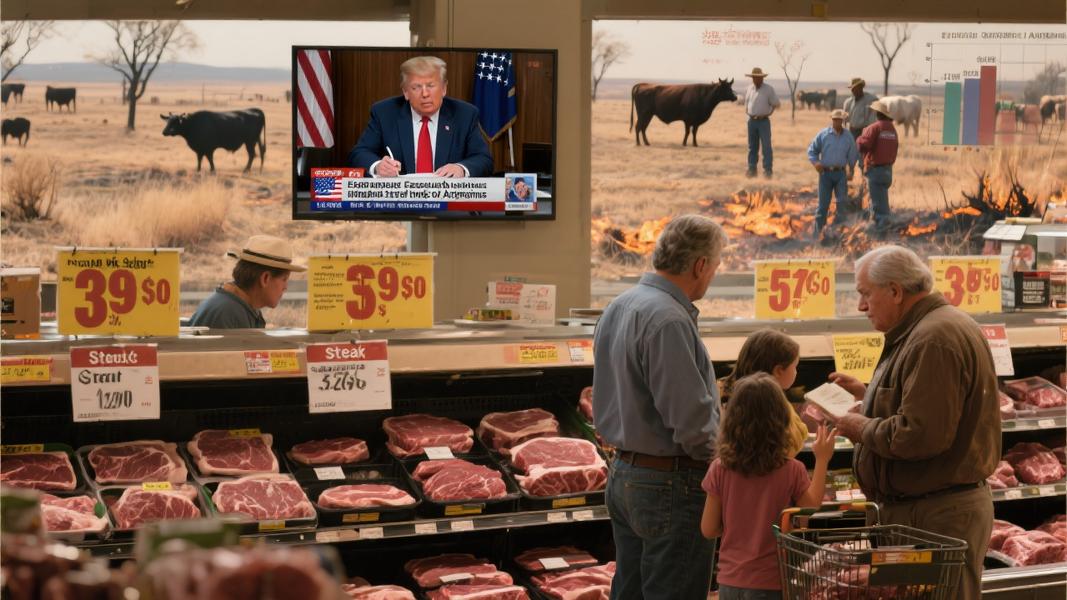
President Trump signed an executive order Friday expanding beef imports from Argentina by a whopping 80,000 metric tons, a move aimed at easing soaring meat prices that have left American consumers feeling the pinch at grocery stores nationwide.
The order, which takes effect in 2026, comes as U.S. beef prices have skyrocketed to historic highs. Ground beef that cost less than $4 per pound just a few years ago now commands nearly $7 at the meat counter, while sirloin steaks have jumped from $8.50 to over $14 per pound — increases that show no signs of slowing.
Beef Crisis: Years in the Making
How bad has it gotten? Year-over-year price increases through December were staggering: ground beef up 15.5% and steaks up 17.8%, according to the Bureau of Labor Statistics Consumer Price Index. The White House noted that domestic beef cattle inventory has plummeted 8.6% since 2020, reaching its lowest level in 70 years.
“While we fundamentally disagree with the premise that increased imports can lower beef prices, NCBA is encouraged to see the Trump administration take necessary steps to address longstanding market-access challenges for U.S. beef in Argentina,” said Kent Bacus, executive director of international trade and market access at the National Cattlemen’s Beef Association. The industry group expressed concerns about Argentina’s history with foreign animal diseases.
Under the agreement, the additional Argentine beef will be released in four quarterly tranches beginning February 13, 2026. The deal, worth approximately $800 million in Argentine exports, also includes provisions for reviewing tariffs on steel and aluminum between the two countries.
Will It Actually Lower Prices?
The administration’s hope is that flooding the market with more beef will drive down consumer costs. But economists aren’t so sure.
David Ortega, a food economist and professor at Michigan State University, points out that 80,000 tons represents merely 0.6% of the overall U.S. beef supply — likely too little to significantly impact prices at the grocery store, though it could improve profit margins for food companies.
The domestic cattle industry has been hammered by a perfect storm of challenges. Ranchers have reduced herds due to persistent drought and wildfires affecting key ranching regions. Meanwhile, overhead costs including feed, labor, fuel, and equipment have climbed steadily. Adding to these woes, cattle imports from Mexico have been restricted due to New World Screwworm, a parasitic infestation affecting livestock.
“Given Argentina’s issues with foreign animal diseases, NCBA remains concerned that expanding imports from Argentina without increased inspection protocols and up-to-date audits could place American consumers and our cattle herd at unnecessary risk,” Bacus warned.
Long-Term Solutions
Many experts believe the key to lowering prices isn’t imports but rebuilding America’s cattle herds — a process that will take years, not months. This would require increased heifer breeding rather than slaughter, a significant investment with no immediate payoff.
The timing of the executive order — coming at a moment when consumers are increasingly vocal about food inflation — hasn’t gone unnoticed by political observers. Beef prices have become a kitchen table issue across America, with consumers facing sticker shock each time they visit the meat department.
In 2018-19, ground beef prices hovered under $4 per pound but began rising during the pandemic and have been above $5 a pound since June 2023. The steady climb has continued unabated, reaching about $6.69 a pound in December — a figure that has many Americans rethinking their dinner plans.
For now, the administration is betting that Argentine beef can provide at least some relief. But as one economist put it: the proof will be in the prices — and those might not budge until America’s ranchers can rebuild their herds from the ground up.
