
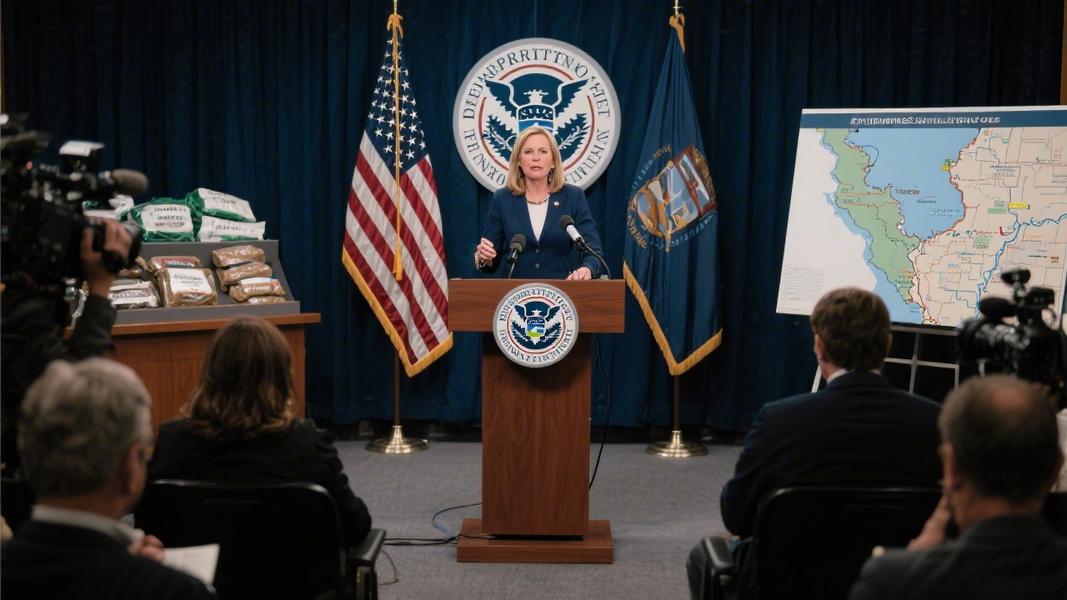
Border Patrol Chief Mike Banks declared the U.S. southern border “the most secure it’s ever been” during a high-profile press conference alongside Homeland Security Secretary Kristi Noem. The bold claim comes as the administration continues its aggressive push to transform border security operations.
Secretary Noem, flanked by officials from Customs and Border Protection (CBP), Immigration and Customs Enforcement (ICE), and other agencies, announced a sweeping status update on border security measures that includes a major new border wall section in Arizona and what officials described as historic staffing levels.
A New Era of Border Security
“The border’s the most secure it’s ever been. We’re not done yet. We’re going to continue getting there,” Chief Banks stated during the briefing. “And under the leadership that we have in this president and Secretary Noem, she hears you. She doesn’t just hear you, but she responds to you.”
The administration’s approach centers on infrastructure investments that officials say multiply the effectiveness of each agent. “This border wall actually makes every single agent more effective. Every investment we in CBP make in infrastructure and technology across all of CBP lets the actual agent, the human being do things that only the human being can do,” Banks explained.
What’s different about the current strategy? Officials point to a fundamental shift in how border resources are allocated. By reducing what they characterize as chaos at crossing points, agencies can redirect their focus toward sophisticated criminal networks.
From Chaos to Control
One senior official highlighted the administration’s philosophy: “President Trump understood that chaos provides cover for criminals. And when we reduced the illegal immigration at the border and shut down that chaos, it allowed border patrol agents, customs and immigration enforcement agents, DEA, every agency out there to focus on the real threats, the networks that keep bringing these threats to us.”
This refocused approach has reportedly led to increased fentanyl seizures at ports of entry, according to officials present at the briefing. The strategy appears to combine physical barriers with enhanced inspection capabilities and information sharing between agencies.
Secretary Noem’s announcement of a new border wall section in Arizona represents the most visible component of the security strategy. She also confirmed the deployment of what she described as “the highest number of Border Patrol agents in history” to maintain security along the southern border.
Tough questions remain about the long-term sustainability of these efforts and their effectiveness against evolving smuggling tactics. Critics have previously questioned whether physical barriers alone can address the complex drivers of migration.
For now, though, the administration is projecting confidence. As officials continue implementing their border security vision, the message from Chief Banks was unambiguous: this is just the beginning of a transformed approach to securing America’s southern frontier.
