
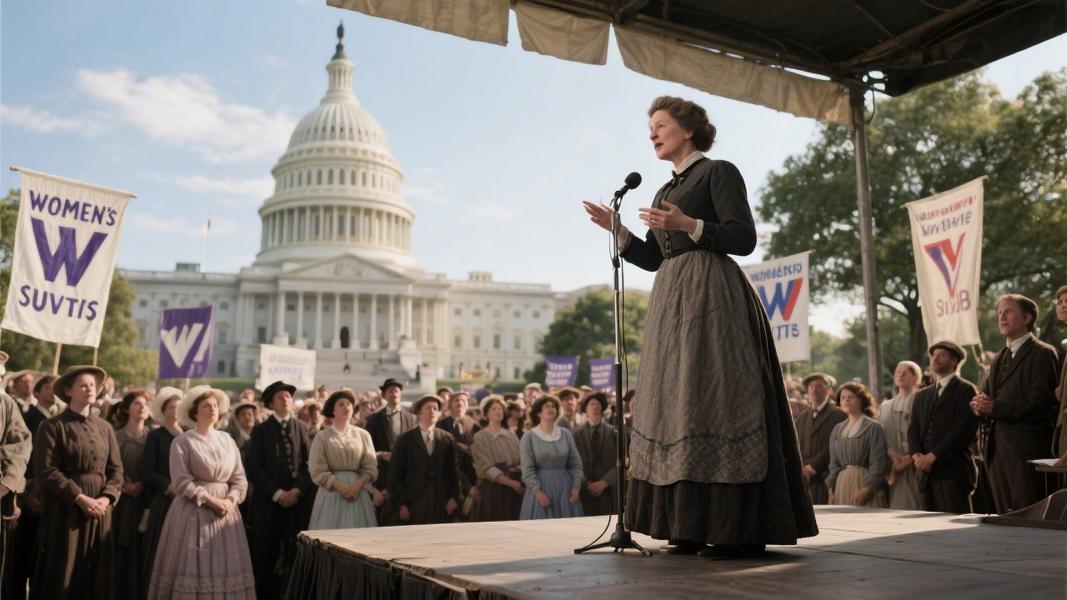
As the nation marks Susan B. Anthony Day, Americans commemorate the pioneering suffragist’s 206th birthday and the monumental legacy she left in the fight for women’s voting rights.
Born in 1820, Anthony dedicated her life to the radical notion that women deserved equal political participation, co-founding the National Woman Suffrage Association in 1869 alongside Elizabeth Cady Stanton, as archives show. Her tireless advocacy ultimately led to what many consider her crowning achievement: the 19th Amendment to the U.S. Constitution, which was approved by the Senate on June 4, 1919.
The amendment itself is remarkably straightforward: stating, “The right of citizens of the United States to vote shall not be denied or abridged by the United States or by any State on account of sex.” Yet the journey to those simple words required decades of struggle.
A Long Road to Ratification
Wisconsin became the first state to ratify what became known as the “Susan B. Anthony Amendment” on June 10, 1919, just days after congressional approval, according to records from the National Park Service. But the path to full ratification would prove challenging.
The amendment’s fate ultimately came down to Tennessee, where the vote was deadlocked until Representative Harry Burn cast the deciding vote in favor. His unexpected support, influenced by a letter from his mother urging him to “be a good boy” and support suffrage, secured the amendment’s ratification on August 18, 1920.
What many Americans may not realize is that the first women’s suffrage amendment had been introduced in Congress all the way back in 1878 — a full 42 years before final ratification. The amendment was officially certified on August 26, 1920, a date now commemorated as Women’s Equality Day.
Beyond Suffrage
Anthony’s advocacy extended well beyond voting rights. This year’s Presidential Message on Susan B. Anthony Day highlights her work as an abolitionist and her commitment to the dignity of work and the sanctity of life — demonstrating how her legacy continues to resonate across political divides.
The League of Women Voters, an organization with roots in the suffrage movement, notes that Anthony didn’t live to see the amendment’s ratification, having died in 1906. Still, her name has become synonymous with women’s right to vote in America.
Why does Anthony’s legacy matter over a century later? Perhaps because the right to vote — now taken for granted by many — reminds us how recently half of America’s citizens were excluded from the most fundamental democratic process.
As the nation commemorates Susan B. Anthony Day, her story serves as both celebration and caution: rights hard-won can never be taken for granted, and sometimes the most revolutionary act is simply insisting on equal treatment under law.
