
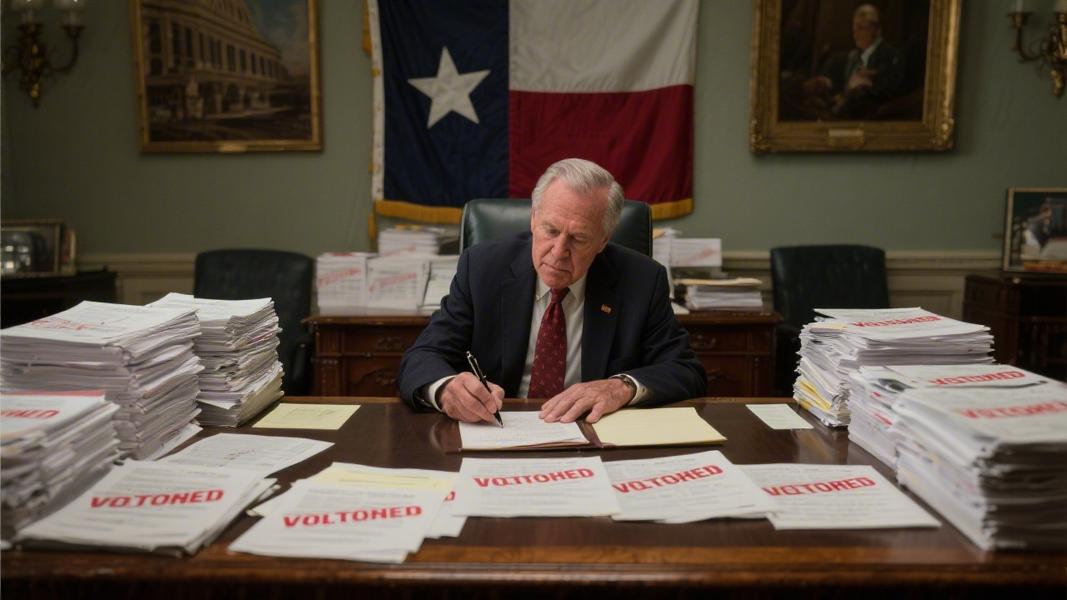
Texas Governor Greg Abbott has vetoed a controversial bill that would have banned THC products across the state, arguing the legislation would face insurmountable legal challenges while proposing a regulatory framework instead.
In a statement released Friday, Abbott rejected Senate Bill 3 (89R), saying that despite good intentions, the bill would never take effect due to “valid constitutional challenges.” The governor’s decision marks another twist in Texas’ complicated relationship with cannabis-adjacent products.
“Senate Bill 3 is well-intentioned. But it would never go into effect because of valid constitutional challenges,” Abbott wrote in his veto explanation.
Learning from Arkansas
Abbott specifically pointed to Arkansas as a cautionary tale. That state’s similar THC ban was halted by a federal court in 2023 and has been in legal limbo ever since.
“The result in Arkansas? Their law has sat dormant, meaningless, having no effect for nearly two years while further proceedings play out,” Abbott noted. “That result must be avoided in Texas.”
Instead of an outright ban, the governor has proposed a regulatory structure similar to how Texas handles alcohol. This would include enforcement by an agency like the Texas Alcoholic Beverage Commission, local opt-out provisions, excise taxes, and dedicated funding for enforcement.
Why take this approach? Abbott insists Texas needs immediate solutions rather than symbolic legislation. “Texas needs a bill that is enforceable and will make our communities safer today, rather than years from now,” he explained in his veto message.
Part of a Larger Pattern?
This isn’t Abbott’s first veto rodeo. In 2023, the governor rejected 76 bills from the regular session — the second-highest number in Texas history, trailing only former Governor Rick Perry’s 83 vetoes in 2001.
Many of last year’s vetoes came amid heated property tax debates, with Abbott frequently declaring: “At this time, the legislature must concentrate on delivering property tax cuts to Texans.”
The 2023 veto spree included multiple Senate bills killed on a single day in June, including SB 1772, SB 1458, SB 1109, and several others. Each rejection was formally invoked under Article IV, Section 14 of the Texas Constitution.
That approach sparked tension within Texas leadership. Lt. Governor Dan Patrick publicly criticized Abbott, suggesting some vetoes were politically motivated rather than policy-driven.
“This is targeted vetoing of bills that have nothing to do with the issue at hand except Paul Bettencourt is the author of those bills,” Patrick charged, referring to a state senator whose legislation was repeatedly struck down.
With the THC bill’s veto, Abbott appears to be charting a different course — one that acknowledges the complex legal landscape around cannabis products while still aiming for control. The question now: will legislators follow his regulatory roadmap, or push again for prohibition?
