
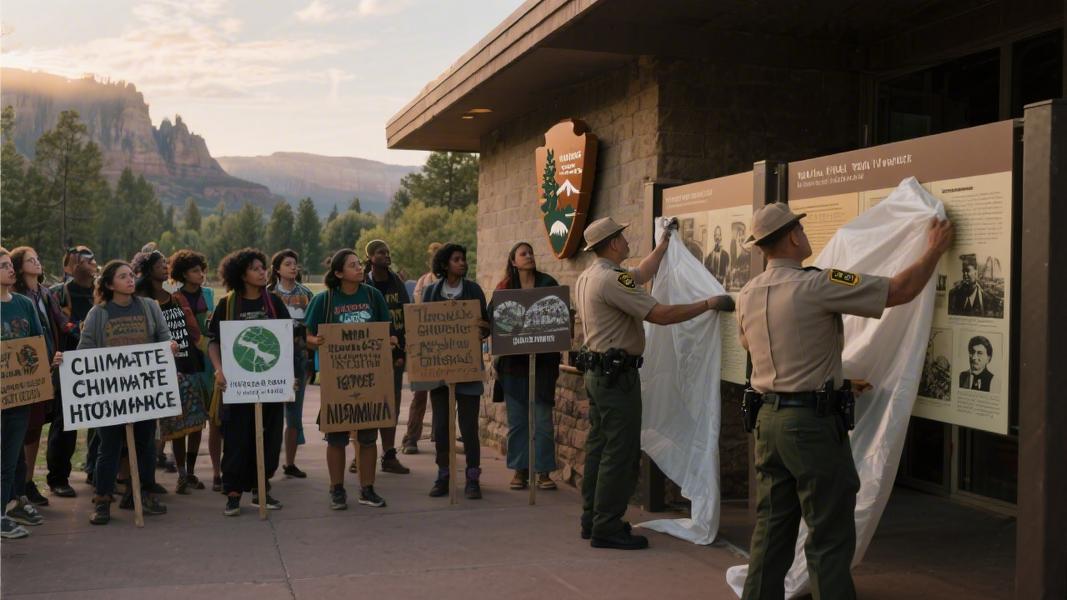
A coalition of six conservation and historical organizations filed a lawsuit Tuesday challenging former President Trump’s controversial executive order that has led to the removal of educational materials about slavery, civil rights, and climate change from national parks across the country.
The legal action, filed in federal court in Boston, targets Trump’s March 2025 directive “restoring truth and sanity to American history,” which instructed the Interior Department to review signage and displays for content deemed to “inappropriately disparage Americans past or living.” In practice, critics say the order has resulted in the systematic removal of historically accurate but sometimes uncomfortable truths from America’s most treasured public lands.
“Censoring science and erasing America’s history at national parks are direct threats to everything these amazing places, and our country, stand for,” reads a statement from the plaintiffs obtained by Politico. “As Americans, we deserve national parks that tell stories of our country’s triumphs and heartbreaks alike. We can handle the truth.”
What’s being removed?
The lawsuit alleges dozens of instances where national park displays have been altered or completely removed, with materials covering slavery, discrimination, the Civil Rights Movement, harm to Indigenous people, climate change, and pollution specifically targeted for elimination. Park visitors now encounter QR codes on newly installed signs asking them to report “negative information” about historical figures — essentially creating a complaint system for history itself.
Interior Department officials defend the changes as part of a broader initiative to present a more positive vision of American history. “Secretary Order 3431 directed a review of certain interpretive content to ensure parks tell the full and accurate story of American history,” a department spokesperson stated when asked about the controversy.
But data independently obtained by the National Parks Conservation Association suggests most visitors aren’t buying it. The majority of reports submitted through the administration’s new QR code system either commented on mundane maintenance issues or expressed “overwhelming support for Park Service rangers and factual interpretation of science and history,” according to documents reviewed for this story.
“In practice, this meant park rangers were told to discard valuable signs and educational materials created after years of historical scholarship and scientific research, because the administration deemed those materials ‘disparaging,’ or not focusing enough on the ‘beauty and grandeur,’ of parks,” the NPCA explained in a statement.
Who’s involved
The lawsuit names the Department of the Interior, Secretary Doug Burgum, and Jessica Bowron (acting National Park Service director) as defendants. The coalition bringing the case includes the National Parks Conservation Association, American Association for State and Local History, Association of National Park Rangers, Coalition to Protect America’s National Parks, Society for Experiential Graphic Design, and Union of Concerned Scientists, with legal representation from Democracy Forward.
This isn’t the first legal challenge to the administration’s approach to historical interpretation. Just one day before this lawsuit was filed, a federal judge ordered the reinstatement of an exhibit on slavery at Independence Hall in Philadelphia’s President’s House site, which described the role of nine enslaved people in the operation of George Washington’s home.
The Interior Department has dismissed the latest lawsuit as politically motivated. “This lawsuit, filed by radical left-wing organizations, is based on inaccurate and mischaracterized information,” a department spokesperson told reporters. “The Department of the Interior is engaged in an ongoing review of our nation’s American history exhibits in accordance with the President’s executive order to eliminate corrosive ideology, restore sanity, and reinstate the truth.”
But for park rangers on the ground — many of whom have dedicated their careers to education and preservation — the directive has created a professional crisis. How do you accurately interpret America’s complex history while avoiding topics now deemed too “negative” by political appointees?
The outcome of this case could determine whether national parks continue their long tradition of presenting America’s full history — uncomfortable truths and all — or whether political considerations will reshape the stories told at some of the country’s most significant historical and natural sites.
