
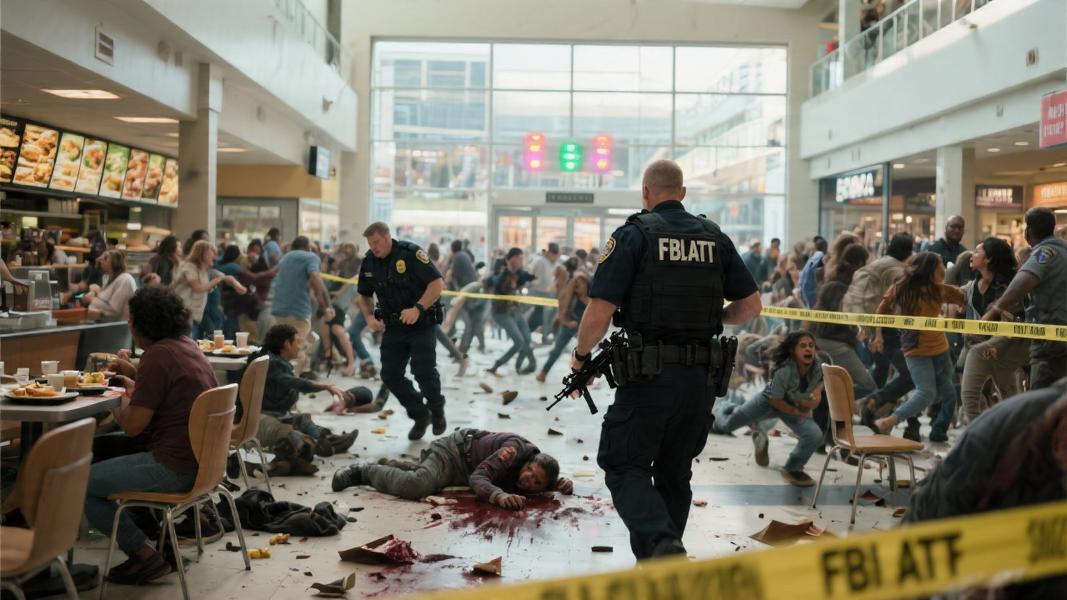
A crowded food court. A Thursday afternoon argument. And then gunfire — inside one of Baton Rouge’s busiest shopping malls.
At least 10 people were injured Thursday when two groups opened fire on each other inside the Mall of Louisiana, sending shoppers scrambling and triggering a massive law enforcement response that drew federal agencies and rattled a city already no stranger to gun violence. Some of the victims were taken to hospitals in critical condition. Others were simply people who’d stopped for lunch.
What Happened Inside the Food Court
Shots rang out around 1 p.m., according to Baton Rouge Police Chief Thomas S. Morse Jr., who confirmed the incident at a press conference shortly after. The trigger, he said, was a dispute between two groups that escalated fast — and ugly. “It looks like it was kind of a targeted situation,” Morse explained, describing how “two groups of people got into an argument inside the food court and started shooting at each other.”
The problem, of course, is that food courts don’t come with blast zones. Innocent bystanders were caught in the crossfire. “Unfortunately there was some innocent people in the area that might have also caught some rounds,” Morse told reporters. He was careful. Measured. But the weight of what he was describing was hard to miss.
Still, police were quick to note this wasn’t a random attack — no active shooter prowling the corridors, no indiscriminate rampage. The shooting was targeted, a feud between specific individuals that spilled into a very public, very crowded space. No arrests had been made as of Thursday, though officials said there was no ongoing threat to the public.
A Show of Federal Force
The response was anything but small. The FBI and ATF both descended on the scene, alongside local police, as the Louisiana Attorney General confirmed that weapons had been discharged inside the food court. Governor Jeff Landry posted on social media almost immediately: “I am aware of the active shooter scene at the Mall of Louisiana,” he wrote, urging residents to avoid the area.
It’s the kind of coordinated response that signals officials took the threat seriously — even after they’d determined it wasn’t a mass shooting in the traditional sense. The semantics, though, offer little comfort to the families of those rushed to hospitals.
The Human Cost
How do you put a political frame on something like this? Baton Rouge Mayor-President Sid Edwards didn’t really try. “The devil lives everywhere,” he said — a blunt, almost theological statement that cut through the usual carefully worded civic reassurances. Chief Morse, for his part, kept it human: “Definitely our hearts and prayers go out to all the victims involved in this,” he added.
Ten victims. Some critical. Some of them just happened to be hungry at the wrong time on a Thursday afternoon.
It Didn’t End There
Then Friday came. And it got worse.
A drive-by shooting outside the very same mall the following day left two teenagers dead and two others injured, according to investigators. Police linked the attack to a feud between violent groups — suggesting Thursday’s food court bloodshed may have been part of something larger, and uglier, still unresolved on the streets. Suspects in the drive-by had not been apprehended.
Two shootings. Two days. Same mall. Two dead teenagers and a city left asking questions that law enforcement, prayers, and press conferences can only partially answer.
The devil, it seems, didn’t go far.
