
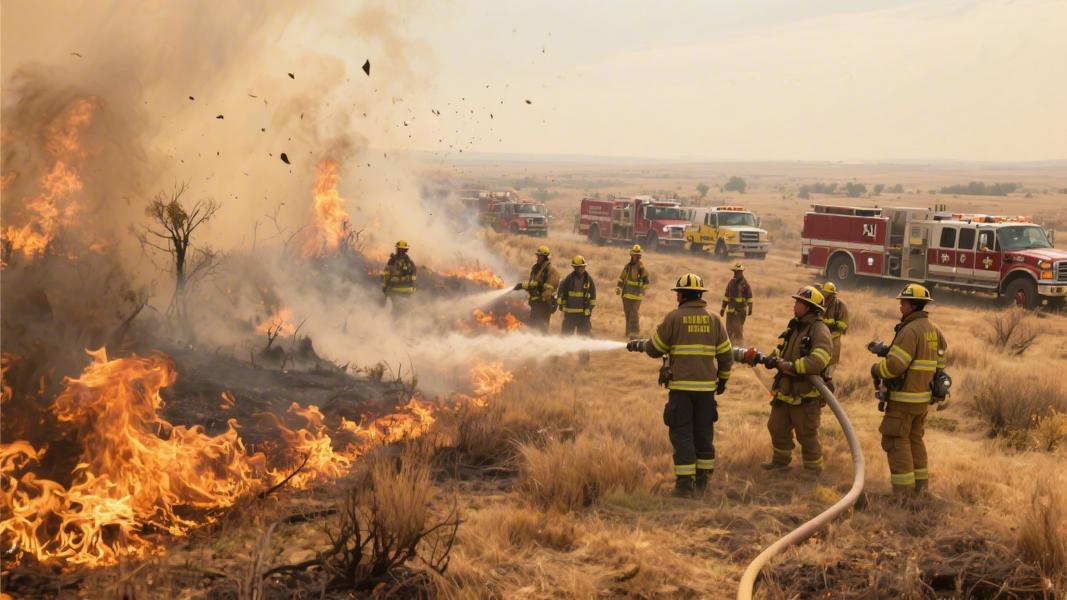
Fire crews from across North Texas rushed to the Panhandle this week as wildfires scorched more than 21,000 acres near Amarillo, straining local resources and prompting unprecedented power shutoffs affecting thousands of residents.
About 100 personnel from 32 North Texas fire departments deployed to battle the blazes as officials warned that dangerous conditions would likely persist. The fires erupted amid a troubling combination of high winds, bone-dry vegetation, and worsening drought that has put much of the state on high alert.
Perfect Storm for Fire Danger
The situation in the Panhandle has become increasingly precarious. Wind gusts exceeding 60 mph whipped across West Texas during the critical fire period, creating what meteorologists described as “extremely critical” wildfire conditions across large portions of the region.
“Right now, one of the biggest challenges firefighters on the ground are facing is rough terrain, dry vegetation and wind,” said Laura Stevens, a spokesperson for emergency operations coordinating the response.
The fires come as drought conditions have dramatically worsened across Texas. More than 60% of the state is now experiencing drought — a 10% increase in just two weeks — with 14% facing extreme or exceptional drought conditions, according to recent data.
Preventive Power Shutoffs
In an extraordinary move, Xcel Energy implemented a Public Safety Power Shutoff on February 17, cutting electricity to approximately 14,500 customers across 14 Texas Panhandle counties. The utility made the decision as forecasters warned of a dangerous mix of high winds, low humidity, and dry fuels creating severe wildfire risks.
“We make the difficult decision to shut off power only when the wildfire risk reaches a point where it’s necessary to protect our communities,” said Adrian Rodriguez, president of Xcel Energy for New Mexico and Texas, in a statement.
The company had been monitoring conditions for days before implementing the shutoff. “If extreme conditions materialize on Tuesday, shutting off power in specific high-risk areas may be necessary to protect public safety,” Rodriguez had warned as the situation developed.
Long-Term Concerns
What’s particularly worrying to fire officials? The combination of underlying drought and last year’s unusually productive growing season has created a perfect storm of fire fuel.
“Wildfire activity has increased across the state, driven by underlying drought conditions and above normal grass production from last year’s growing season,” said Jared Karns, Texas A&M Forest Service Fire Chief, who predicted increased fire activity through winter and spring.
The Texas Division of Emergency Management has designated the situation as disaster 26-0001, recognizing the severity of the February wildfires as they continue to threaten communities across the region.
For residents returning to areas where power was cut, officials urged extreme caution, particularly with any heating or cooking equipment that might have been left on before the outages. The combination of unseasonably warm temperatures, persistent drought, and strong winds means the wildfire threat is unlikely to diminish soon.
As one fire official put it, off the record: “We’re not even into traditional fire season yet. This could be just the beginning.”
