
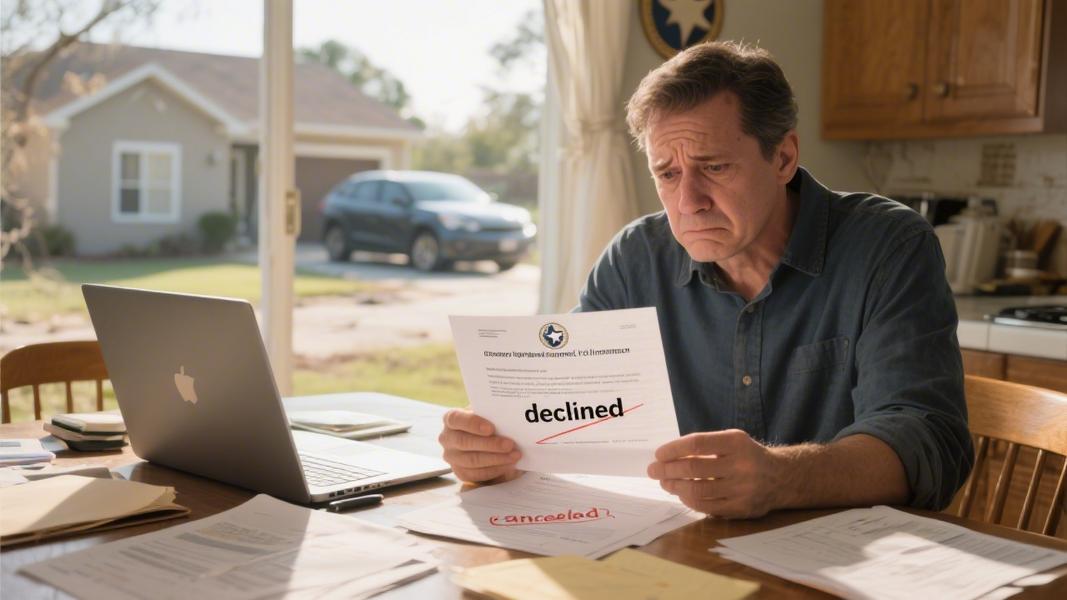
Texas homeowners and drivers who’ve ever stared at a denial letter wondering why their insurer dropped them are about to get some answers — whether their insurance company wants to give them or not.
Starting with decisions made after January 1, 2026, Texas insurers are legally required to automatically provide written explanations any time they decline, cancel, or choose not to renew a home or auto policy. The mandate comes from House Bill 2067, a new state law designed to pull back the curtain on an industry that has long left policyholders guessing. For millions of Texans navigating an already strained insurance market, the change could be significant — and long overdue.
What the Law Actually Requires
Under HB 2067, insurers can no longer stay silent when they walk away from a customer. The written explanation must come automatically — consumers don’t have to ask for it, chase it down, or know which form to file. That’s a meaningful distinction in a state where insurance literacy varies widely and where the consequences of losing coverage can be severe, reported Fox 7 Austin.
But it doesn’t stop there. The law also mandates that insurers submit quarterly reports to the Texas Department of Insurance (TDI), summarizing the reasons behind their policy actions. That data won’t just sit in a government filing cabinet — TDI is required to compile it and post it online, giving researchers, advocates, and everyday Texans a window into industry-wide patterns that were previously invisible.
A Phased Rollout — Not All at Once
The reporting requirements won’t hit every line of insurance simultaneously. TDI has outlined a three-phase approach: Phase 1 covers residential property and private passenger auto insurance — the policies most Texans actually hold. Phase 2 brings in certain commercial lines. Phase 3 extends the requirements to other property and casualty lines. It’s a deliberate, staged rollout, and the sequencing suggests regulators are being careful not to overwhelm an industry already under pressure — while still making sure the most vulnerable consumers get protections first.
Why It Matters to Policyholders
Here’s the practical reality: most people who lose insurance coverage have no clear idea what triggered it. Was it a claim filed two years ago? A credit score dip? A roof that’s seen better days? Without a straight answer, there’s no way to fix the problem — and no way to shop for coverage more strategically. The new law is built on a simple premise: if you know why, you can do something about it.
TDI made that point directly. “If you have prior home damage that you didn’t get repaired, a company might not renew your policy,” the department noted in guidance to consumers. “If you know this, you can make repairs to keep your home insurable. A company might not want to renew your auto policy if you caused multiple accidents or have been driving recklessly. Once you know, you can be more careful on the road.” Blunt, sure. But also useful — which is exactly the point.
Enforcement Has Teeth, Too
What happens if an insurer simply doesn’t bother sending the explanation? Consumers aren’t left without recourse. Under the law, policyholders can file a formal complaint with TDI if the required written notice never arrives. That complaint mechanism matters — without it, the mandate risks becoming a paper requirement that companies quietly ignore when it’s inconvenient.
Still, enforcement will depend heavily on whether consumers know their rights exist in the first place. A law that requires an explanation is only as powerful as the number of people who know to demand one.
The Bigger Picture
Texas has faced mounting insurance market stress in recent years — driven by catastrophic weather events, rising rebuilding costs, and insurers quietly retreating from high-risk areas. Against that backdrop, HB 2067 won’t fix the underlying economics. It won’t make hail cheaper or stop hurricanes from forming in the Gulf. What it does is give Texans something they haven’t had before: a right to an honest conversation with the companies that hold so much power over their financial security.
That’s not a small thing. Transparency rarely solves a crisis on its own — but you can’t solve one without it.
