
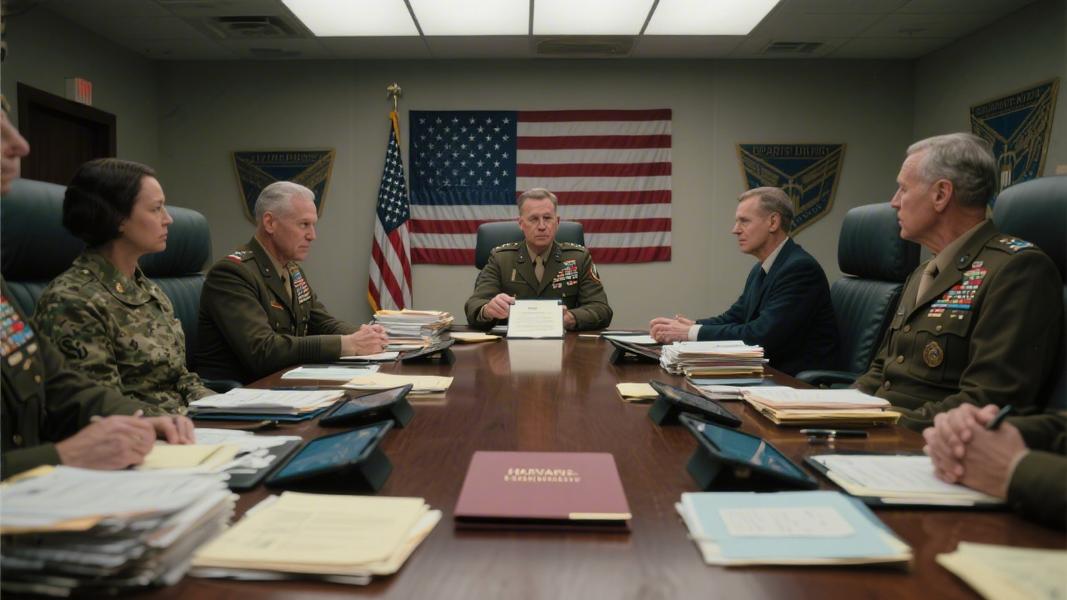
The Pentagon is done sending its officers to Harvard — and it’s not stopping there.
In a sweeping move that signals just how seriously the Defense Department is reshaping military education, Secretary of War officials signed a directive on February 27, 2026, formally cutting off graduate-level Professional Military Education fellowships and certificate programs at Harvard University — along with a broader set of legacy Senior Service College fellowship programs — effective the 2026–2027 academic year. The memorandum, titled “Aligning Senior Service College Opportunities with American Values,” makes clear this isn’t just about one Ivy League school.
It’s a statement. And the Pentagon wants everyone to hear it.
Broader Than Harvard
Harvard may be grabbing the headlines, but the reach of this policy goes well beyond Cambridge. The Defense Department is restricting active-duty troops from attending a wider range of elite universities — a detail that hasn’t gotten nearly enough attention. The full list of affected institutions hasn’t been made entirely public, but the direction is unmistakable: the military is pulling back from academic partnerships it now views as misaligned with its core values and mission.
That’s a significant pivot. For decades, sending promising officers to top-tier civilian universities was considered a prestige assignment — a sign that the military valued intellectual breadth, strategic thinking, and exposure to the broader world of ideas. Now, apparently, the calculus has changed.
Hegseth’s Warrior Ethos
The ideological engine behind these moves is hard to miss. Defense Secretary Pete Hegseth has been explicit about the direction he’s taking the department. The Pentagon, he has said, has spent the months since January focused entirely on “restoring the warrior ethos, rebuilding the military and reestablishing deterrence.” That framing — warrior ethos, deterrence, rebuilding — is doing a lot of work. It positions elite university fellowships not as assets, but as distractions. Maybe even as threats.
Still, critics would argue that educating senior officers at rigorous civilian institutions is itself part of how you build a lethal, adaptive force. That debate isn’t going away.
A Fight Over VMI, Too
Meanwhile, the Pentagon has picked another battle — this one in Virginia. The Defense Department has been watching closely as state lawmakers consider legislation affecting Virginia Military Institute, and it hasn’t been quiet about its feelings. Chief Pentagon Spokesman Sean Parnell made the stakes plain, describing VMI as a “vital source of commissioned officers for the Armed Forces” and calling the situation a matter of “direct national security interest.” That’s unusually strong language for a state-level legislative dispute.
How far is the Pentagon willing to go? Pretty far, it seems. The Defense Department has said it reserves the right to take “extraordinary measures” to protect VMI’s integrity — a phrase that’s vague enough to mean almost anything, and specific enough to sound like a warning. Virginia’s state leaders will have to decide whether they’re willing to call that bluff.
But it’s not that simple. VMI sits at the intersection of state authority, federal funding, and military tradition. Any “extraordinary” federal intervention would almost certainly trigger a legal and political firestorm — one the Pentagon may be calculating it can win, or at least survive.
What It All Adds Up To
Taken together, these moves paint a portrait of a Defense Department that’s aggressively reasserting control over how its officers are educated, trained, and shaped — and that’s increasingly skeptical of institutions it once embraced. Whether that’s a long-overdue correction or an overcorrection with real consequences for military readiness is the question hanging over all of it.
The officers who won’t be going to Harvard next fall might never know what they missed. Or the Pentagon might be betting they won’t need to.
