
The Pentagon is cutting ties with one of Silicon Valley’s most prominent AI companies — and threatening Harvard’s military pipeline in the same breath. It’s been a turbulent week inside the Department of War, and it doesn’t appear to be slowing down.
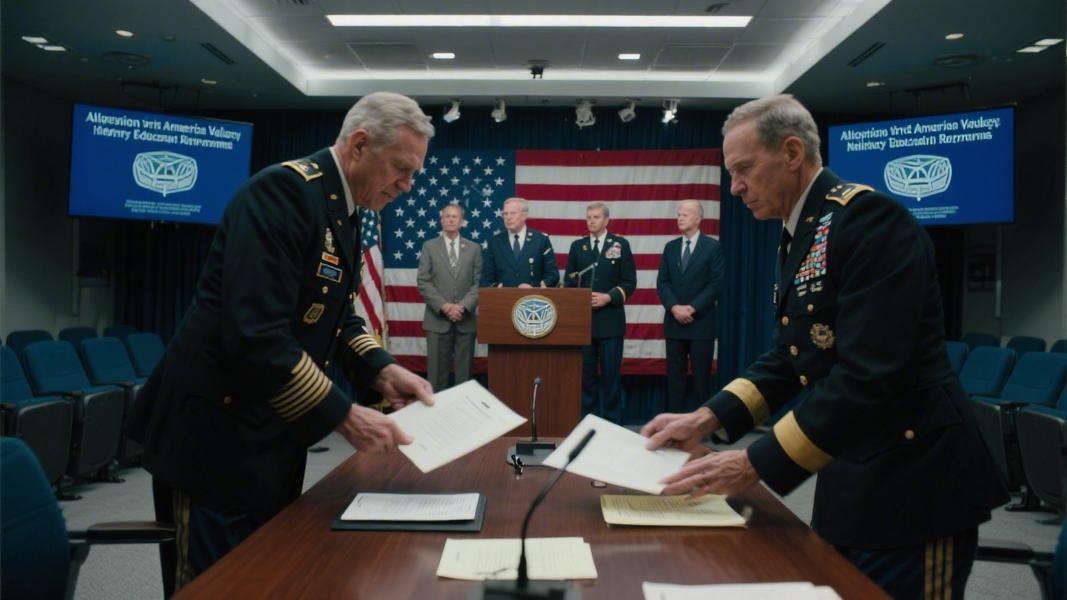
Two major decisions have rattled both the defense establishment and the tech world in the span of days. On February 27, 2026, Secretary of War Pete Hegseth signed a memorandum directing the Department of War to discontinue selected graduate-level Professional Military Education fellowships and certificate programs — including those at Harvard University — beginning with the 2026–2027 academic year. Almost simultaneously, the Pentagon escalated a bitter feud with Anthropic, the AI company behind the Claude family of models, over the company’s refusal to strip its systems of safety guardrails for military use. The fallout was swift and, by Washington standards, unusually personal.
Realigning the Classroom
The education memorandum, titled “Aligning Senior Service College Opportunities with American Values,” directs the military to “strategically refocus the education of senior military leaders to ensure alignment with the warrior ethos, the National Defense Strategy, and American values,” according to Pentagon spokesman Sean Parnell, who issued the formal statement. The move builds on a February 6 memo — “Rebuilding the Warrior Ethos in Professional Military Education” — suggesting this isn’t an isolated decision but part of a deliberate, ongoing effort to reshape how the military’s officer class is trained and credentialed.
Harvard, with its long-standing ties to national security and defense fellowships, is among the institutions directly affected. That’s a notable break from decades of tradition. Still, the Department was careful to note that service members and Department civilians already enrolled in the affected programs will be allowed to finish their studies. No one gets yanked out mid-semester. The changes are framed under the broader “Rapid Force-Wide Review of Military Standards” — a review that, based on recent weeks, appears to be generating rapid decisions indeed.
A Silicon Valley Showdown
Then there’s Anthropic. If the Harvard dispute is a slow institutional rupture, the Pentagon’s clash with the AI company is something else entirely — loud, public, and increasingly ugly.
Dario Amodei, Anthropic’s CEO, refused Pentagon demands to remove the AI safeguards his company has built into its systems. The concerns, he said, centered on mass surveillance and autonomous weapons. “I believe deeply in the existential importance of using AI to defend the United States and other democracies, and to defeat our autocratic adversaries,” Amodei wrote in a lengthy statement about the impasse. He also pushed back on the characterization that Anthropic was trying to interfere with military operations. “Anthropic understands that the Department of War, not private companies, makes military decisions. We have never raised objections to particular military operations nor attempted to limit use of our technology in an ad hoc manner,” he said.
The Pentagon wasn’t buying it. Spokesman Sean Parnell issued a blunt ultimatum: “They have until 5:01 PM ET on Friday to decide. Otherwise, we will terminate our partnership with Anthropic and deem them a supply chain risk for DOW,” he warned. That deadline, apparently, came and went without resolution.
The Gloves Come Off
What followed was the kind of rhetoric you don’t usually see directed at a tech company — at least not from the executive branch. President Trump directed the government to immediately cease using Anthropic technology and escalated the language to a level that left little ambiguity about where things stood. “Anthropic had better get their act together and be helpful during this phase out period, or I will use the full power of my Presidency to make them comply, with major civil and criminal consequences to follow,” he declared.
Secretary Hegseth went further still. In a statement that read more like a social media broadside than a formal defense communiqué, he accused Anthropic and its CEO of choosing “duplicity,” writing that the company, “cloaked in the sanctimonious rhetoric of ‘effective altruism,’ have attempted to strong-arm the United States military into submission — a cowardly act of corporate virtue-signaling that places Silicon Valley ideology above American lives.” The statement was published alongside the administration’s broader response.
Defense Undersecretary Emil Michael was even more direct — and more personal. “It’s a shame that @DarioAmodei is a liar and has a God-complex. He wants nothing more than to try to personally control the US Military and is ok putting our nation’s safety at risk,” Michael posted publicly.
The Pentagon’s Defense of Its Own Position
But it’s not that simple. Michael, despite the incendiary rhetoric, also argued that the Pentagon had genuinely tried to meet Anthropic halfway. The military offered compromises, including written acknowledgments of existing laws against mass surveillance and policies on autonomous weapons. “At some level, you have to trust your military to do the right thing,” Michael said in a separate interview. Whether those overtures were substantive or performative is, predictably, a matter of sharp disagreement between the two sides.
What isn’t in dispute is the scale of what’s unfolding. The government’s move to sever ties with Anthropic — one of the most well-funded and closely watched AI labs in the world — marks a significant moment in the still-evolving relationship between the defense establishment and the AI industry. And the Harvard fellowship cuts signal that the Pentagon’s appetite for institutional disruption extends well beyond Silicon Valley.
As Amodei framed it in his own statement, the core tension isn’t really about one company or one contract. It’s about who, ultimately, gets to decide how the most powerful AI systems in history are deployed — and what happens when the answer isn’t obvious. That’s a question neither a memorandum nor a social media post is likely to settle anytime soon.
