
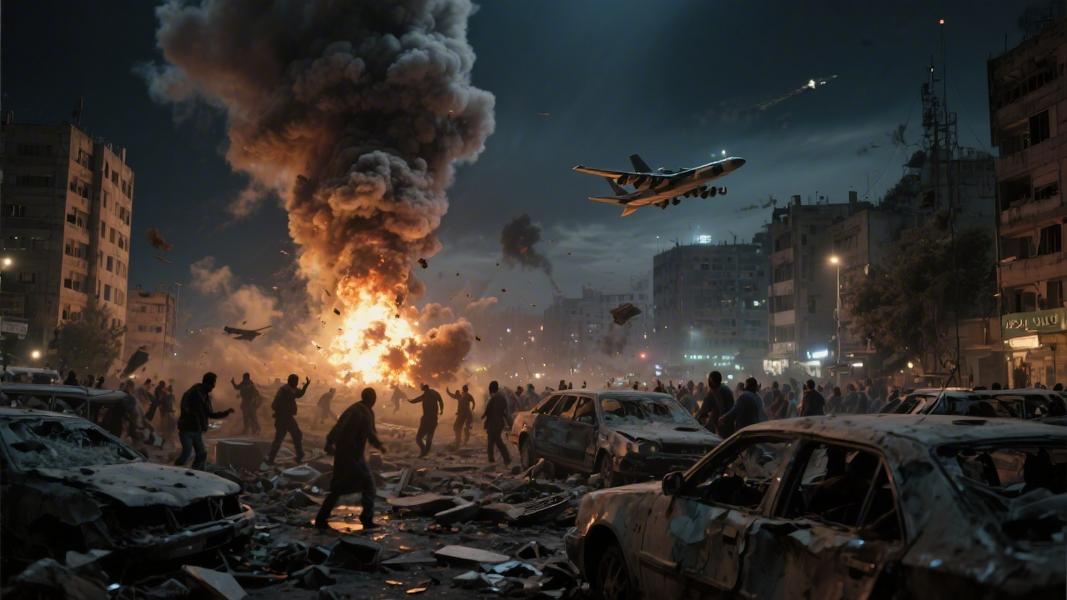
The Middle East changed overnight — and the world is still catching up. A sweeping joint military operation launched by the United States and Israel has killed Iran’s Supreme Leader Ali Khamenei, obliterated key military infrastructure, and set off a chain of events that analysts are already calling one of the most consequential military actions of the 21st century.
Operation Epic Fury — the American codename, with Israel calling it Operation Roaring Lion — began on February 28, 2026, targeting Iranian military sites, senior leadership, and critical facilities across the country. The death of Supreme Leader Ali Khamenei, confirmed in the operation’s opening hours, instantly rewrote the geopolitical map of the region. For 47 years, the Islamic Republic had outlasted every sanction, every threat, every near-miss. That streak is now over, at least in its current form.
What Washington Says It’s After
The objectives, as outlined by President Donald Trump, are sweeping in scope and blunt in language. The White House described the operation as a direct response to nearly five decades of Iranian aggression — targeting the country’s nuclear program, its ballistic missile arsenal and production sites, its network of regional proxy forces, and its naval capabilities. The political goal, stated plainly, is regime change.
That’s not a subtle ambition. Regime change as an explicit military objective puts this operation in rare company historically — and raises immediate questions about what comes next if the current government collapses entirely. Still, the administration has made clear it’s not interested in half-measures. The Center for Strategic and International Studies noted that the scope of targets suggests Washington intends to permanently degrade, not merely delay, Iran’s nuclear capabilities.
Early Costs — On All Sides
How bad is it on the ground? The Pentagon confirmed that by the operation’s second day, three U.S. service members had been killed and five others seriously wounded. CBS News reported that Trump acknowledged the operation had already struck hundreds of targets and said the campaign could last four weeks or less — a timeline that many military observers will watch closely, given how rarely these things go to schedule.
Iran hasn’t been passive. Retaliatory strikes have already been launched, including against Tel Aviv, drawing Israel deeper into the exchange and raising the stakes for the entire region. The footage circulating from both sides is grim, and the diplomatic fallout is only beginning to take shape. A YouTube broadcast capturing early strike footage showed the scale of coordinated hits on Iranian leadership targets — images that are almost certain to define the visual record of this conflict for years.
A Moment Decades in the Making
It’s worth pausing on how we got here. The Trump administration has framed this as the inevitable reckoning with an adversary that has spent decades building toward a nuclear weapon while funding proxy militias from Lebanon to Yemen. Whether you accept that framing or not, the strategic logic — at least internally — is coherent: hit everything at once, hit it hard, and don’t leave the infrastructure in place to rebuild. Whether the execution matches the ambition is a different question entirely.
But it’s not that simple, of course. Iran’s nuclear knowledge doesn’t disappear with its centrifuges. Its regional influence doesn’t evaporate when a Supreme Leader dies. Hezbollah, Hamas, the Houthis — these aren’t organizations that dissolve on cue. Degrading them is one thing. Eliminating them, quite another. The administration knows this, presumably. The question is whether the military pressure is sustained long enough, and smart enough, to actually change the underlying calculus.
The World Is Watching
Russia, China, and most of the Gulf states have yet to issue formal responses beyond boilerplate calls for restraint — which, in diplomatic terms, means they’re waiting to see how badly Iran bleeds before deciding how loudly to object. That silence is telling. Khamenei’s funeral, already underway amid the strikes, is drawing mourners and political figures whose attendance will itself become a map of who still stands with Tehran.
For now, the bombs are still falling, the casualty counts are still climbing, and a region that has lived under the shadow of this confrontation for decades is finally, violently, living through it. Whatever comes next — a fractured Iranian state, a negotiated pause, an escalation no one can fully predict — the world that existed on February 27, 2026 is already gone.
History has a way of making the unthinkable feel, in retrospect, inevitable. Whether that’s a comfort or a warning depends entirely on what happens next.
