
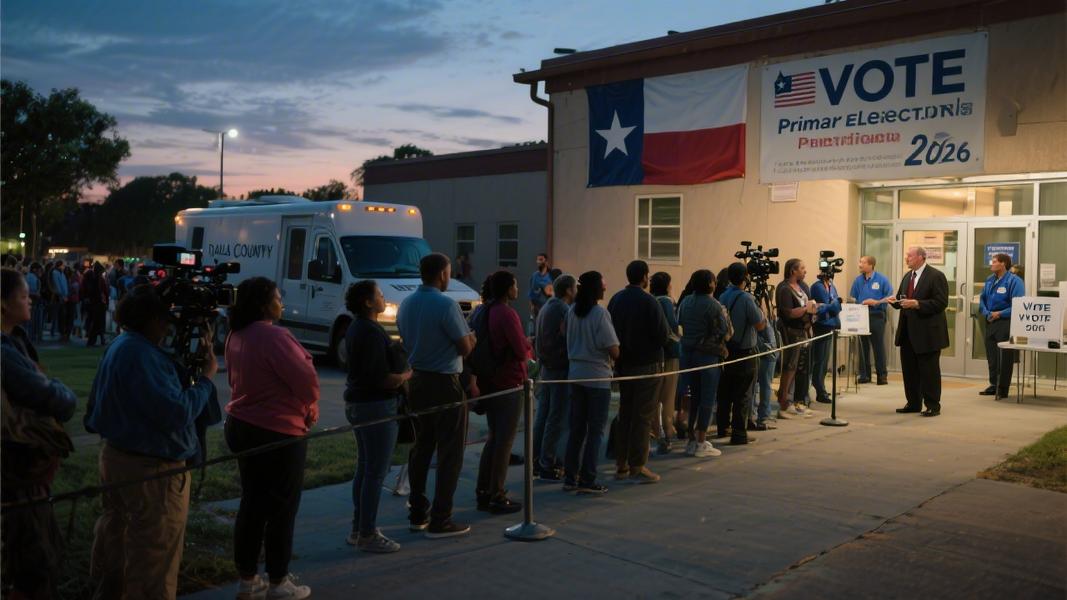
Voters across Dallas County headed to the polls Tuesday as Texas kicked off its 2026 primary election season — a day that will begin shaping the political landscape ahead of what promises to be a contentious November.
It’s primary day, and the stakes are real. Both Democrats and Republicans are casting ballots to determine who earns a spot on the general election ballot, with contests ranging from high-profile statewide races down to local judgeships that rarely make headlines but quietly define how justice gets administered in neighborhoods across the county.
What’s on the Line
Primary elections serve a deceptively simple function: they let each party pick its fighters before the real bout begins. Democrats choose their champion, Republicans choose theirs, and come November, voters get to decide. But primaries have a way of pulling candidates toward their base — sometimes dramatically so — which means the choices made today could echo well into the fall. FOX 4 News reported that results for Dallas County will be broadcast live once polls close at 7 p.m.
Among the races drawing attention on the Republican side is the contest for U.S. Senator, alongside a competitive race for Criminal District Judge in Dallas — a position that carries enormous weight for anyone who’s ever sat in a courtroom and wondered whether the system actually works. Texas Secretary of State election results covering those contests are being tracked in real-time as returns come in.
Early Voting Data Already Tells a Story
Still, the election didn’t really begin today. Early voting rosters, cumulative participation reports, and precinct-level data have been quietly accumulating for weeks. Dallas County Elections has made all of it available — early voting lists, election day materials, and a full accounting of which offices are up for grabs this cycle — documented in its historical results archive.
For the wonks and the campaigns alike, the granular data matters. Daily cumulative early voting lists for the March 3 Democratic Primary were made available broken down by commissioners court districts — a level of detail that lets campaigns, researchers, and curious citizens track turnout patterns with unusual precision. Those lists are downloadable directly from the county’s elections portal.
A County Worth Watching
Why does Dallas County matter so much in a statewide primary? That’s not a rhetorical question. Dallas has shifted dramatically in recent election cycles, trending blue in countywide races while still hosting fiercely contested suburban precincts that neither party fully owns. It’s a microcosm of the broader Texas political story — one where demographic change and partisan realignment are happening simultaneously, sometimes block by block.
That said, primaries don’t always reward the most broadly appealing candidates. Turnout tends to be lower, the electorate more ideologically concentrated, and the results can occasionally surprise even seasoned observers. Tuesday’s results won’t tell us everything about November — but they’ll tell us quite a bit about where each party’s energy actually lives right now.
When the polls close tonight, the count begins. And in a state where political momentum can shift faster than a Texas weather front, every number that comes in will be worth watching closely.
