
Texas held its March 3 primary elections Tuesday, and the night delivered everything a political junkie could want — record turnout, a courtroom extension, and a masked man with a trunk full of ammunition arrested outside a candidate’s watch party.
It was, in other words, a very Texas kind of election day.
The primary marked one of the most consequential off-cycle votes the state has seen in years, with major races spanning the full ticket: U.S. Senate, governor, lieutenant governor, attorney general, comptroller, land commissioner, agriculture commissioner, a railroad commission seat, and several state supreme court and appellate court positions. Early voting ran from February 17 through 27, and by the time polls closed Tuesday at 7 p.m., roughly 2.5 million Texans had already cast ballots statewide. As one outlet noted, “After months of political sparring and countless campaign ads, election day is finally here!”
Dallas County: Records, Confusion, and a Judge’s Order
Nowhere was Tuesday’s chaos more concentrated than in Dallas County. The county was operating under a new — or rather, newly revived — system: precinct-specific voting locations, something Dallas hadn’t done in 15 years. The shift came after the Dallas County Republican Party requested split primary elections, requiring Democrats and Republicans to vote at separate polling places rather than shared sites. That’s a logistical headache under the best circumstances. Tuesday was not the best circumstances.
The Texas Secretary of State’s website listed incorrect polling locations for some Dallas County precincts, and voters who showed up at the wrong sites were turned away. The fallout was swift. A Dallas County judge extended voting hours — but only for Democrats — until 9 p.m., with those casting ballots after the original 7 p.m. cutoff receiving provisional ballots. The Secretary of State’s office didn’t exactly fall on its sword. “The polling location data in this portal is maintained by the counties, not the Office of the Texas Secretary of State,” the office stated, adding that it had been “working with Dallas County to address these issues.”
Still, the damage to voter confidence — and to some voters’ Tuesday evenings — was already done.
That said, the turnout story in Dallas County is genuinely striking. Democrats set a county record with nearly 188,000 early votes. To find comparable numbers, you’d have to scroll all the way back to 2008. “You have to go back to 2008 when Barack Obama was on the ticket for the first time to get those types of numbers,” one analyst observed. Whether that energy translates into November results is a different question entirely — but it’s a number Republicans are almost certainly watching.
The Senate Race: A Three-Way Test for Cornyn
On the Republican side, the marquee matchup was the U.S. Senate primary, where incumbent John Cornyn — in his seat since 2002, re-elected three times — faced a serious challenge from two high-profile opponents: Attorney General Ken Paxton and Houston Congressman Wesley Hunt. The question heading into election night was simple: could Cornyn clear 50%? If not, he’d be heading into a May 26 runoff.
Cornyn’s longevity in Washington is both his calling card and, for some conservative voters, his liability. Paxton, who survived his own impeachment trial in 2023, has positioned himself as the insurgent outsider — which is a remarkable posture for a man who has been attorney general since 2015, but here we are.
For Democrats, the Senate primary featured Jasmine Crockett and James Talarico, both hoping to become the first Democrat to hold a Texas Senate seat since 1988. Crockett held her watch party in Dallas; Talarico was in Austin. Crockett has leaned hard into a combative brand — she’s called herself a “street fighter” and told voters that Texas needs “an independent voice who can fight toe to toe with Republicans,” as reported. Whether that pitch lands in a general election against a Republican in Texas is a longer conversation.
Attorney General Primary: Crowded Fields, Possible Runoffs
The attorney general’s race drew crowded fields on both sides. Democrats fielded three candidates: Nathan Johnson, a state senator from the Dallas area who’s held his seat since 2018; Joe Jaworski, the former Galveston mayor who ran unsuccessfully in 2022; and Tony Box, a first-time candidate. Republicans had four: Joan Huffman, Mayes Middleton, Aaron Reitz, and Chip Roy.
With fields that large, runoffs were not just possible — they were probable. As explained ahead of results, “If there are three or more candidates in a race and none of them win more than 50% of the vote, the top two finishers will advance to the May 26 primary runoff.” A full list of statewide results, including all contested positions, was compiled by local outlets as returns came in.
Paper Ballots and an Arrest Outside a Watch Party
Two other stories from Tuesday deserve mention — one procedural, one alarming.
In Collin County, voters encountered something new at the polls: hand-marked paper ballots, used in a primary for the first time. Elections administrator Kaleb Breaux confirmed the switch was designed to boost security and transparency. “There are some changes coming to the polls this Election Day, including new pens and the way ballots are counted,” as covered earlier in the day. It’s a shift that election security advocates have pushed for years, and Collin County is now among the counties putting it into practice.
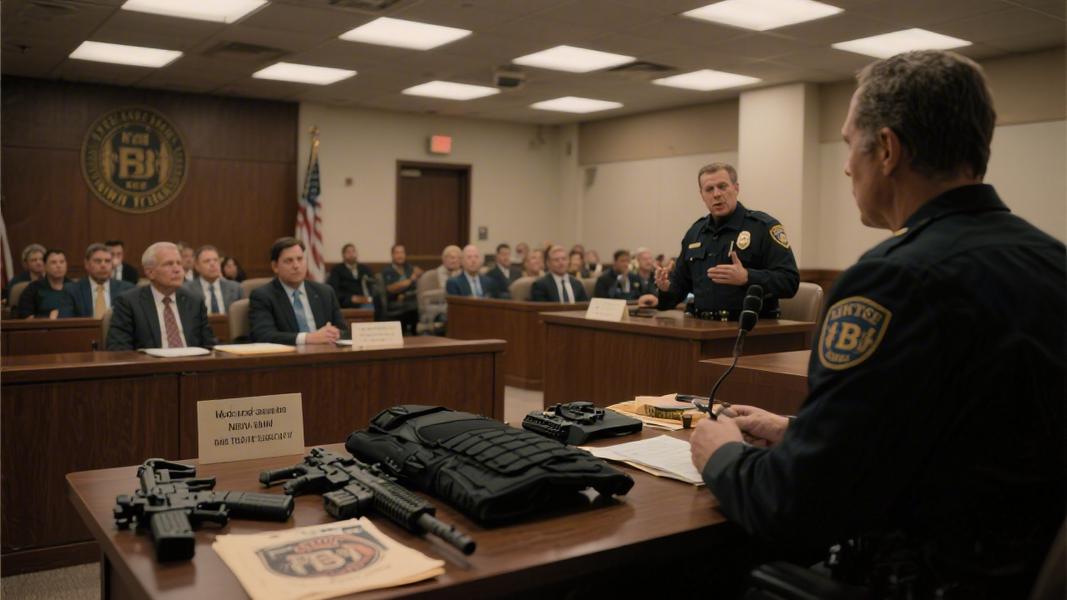
Then there was the scene outside Ken Paxton’s watch party in Dallas. Police detained a man wearing a mask, sunglasses, and dark clothing near the venue. Officers found ammunition in a vehicle with no license plates — and a large amount of additional ammunition in the trunk. The man was arrested. No further details on charges were immediately available, but it was the kind of incident that tends to cast a long shadow over an already tense election night.
What Comes Next
Texas primaries have a way of being previews rather than conclusions. With multiple crowded fields, May 26 runoffs are likely across several major races — meaning Tuesday’s results are, in many ways, just the opening act. The general election matchups won’t be set for months. And in a state that Democrats have been promising to flip for the better part of a decade, the record early vote numbers in Dallas County will fuel a familiar debate: is this the year Texas actually turns, or just another data point that looks more meaningful than it turns out to be?
For now, Texas has spoken — or at least started to. The rest of the sentence is still being written.
