
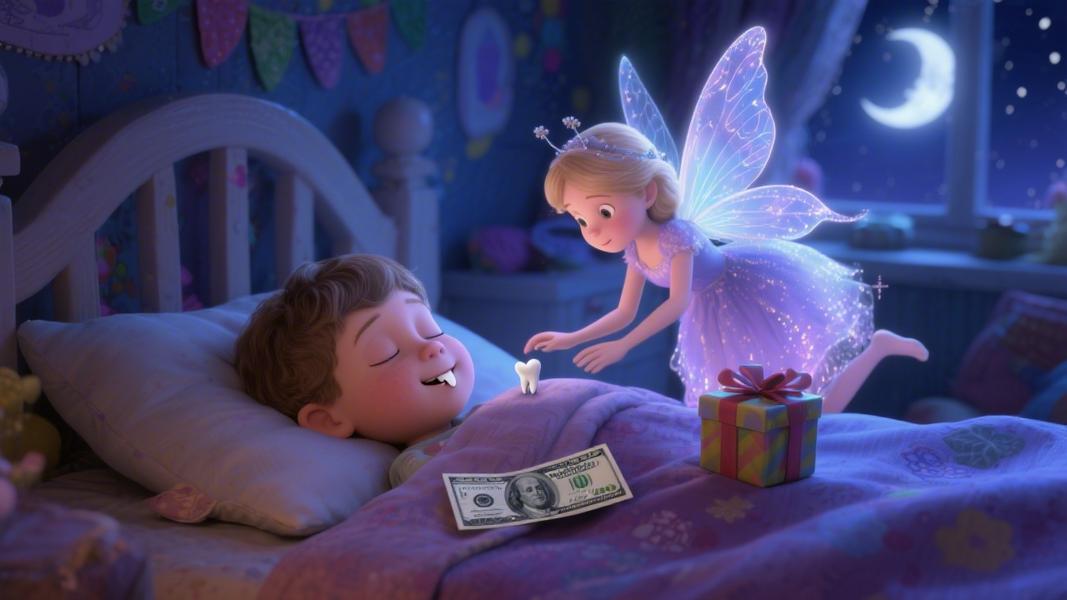
The Tooth Fairy is feeling generous again — and apparently, she reads the market.
After two consecutive years of declining payouts, the mythical childhood benefactor has given kids a meaningful raise. The average amount left under a pillow for a lost tooth climbed 17% to $5.84 in 2026, up from $5.01 last year, according to the latest Delta Dental Original Tooth Fairy Poll. It’s the first increase since 2023, and for millions of gap-toothed six-year-olds across the country, the timing couldn’t be better.
A Rebound With Real Numbers Behind It
The poll, conducted January 5–15 among 1,000 parents of children ages 6 to 12, carries a margin of error of plus or minus 3%. It’s a lighthearted survey, sure — but the data it tracks has proven surprisingly reliable as an economic bellwether. The so-called Tooth Fairy Index has mirrored S&P 500 trends since 1998, and this year’s rebound fits the pattern almost too neatly.
The S&P 500 jumped from roughly 5,960 in January 2025 to 6,941 by January 2026 — a gain of nearly 17%, which is, not coincidentally, the same percentage increase the Tooth Fairy delivered this year. Whether parents are consciously tying their generosity to portfolio performance or simply feeling a little richer, the correlation holds.
Not All Regions Are Created Equal
But it’s not that simple. Dig into the regional breakdown and a more complicated picture emerges — one where geography can mean the difference between a crisp five-dollar bill and something closer to pocket change.
The Northeast led the nation with an average payout of $6.45, a staggering 41% jump from just $4.59 in 2025, according to figures from Delta Dental of Tennessee. The West came in second at $5.99, a more modest 5% increase — though that number follows a notable drop from a regional high of $8.54 in 2024, as noted by Delta Dental of Washington. The South averaged $5.89, up 3%, while the Midwest — despite recording the second-highest year-over-year growth at 52% — still brought up the rear at $5.27.
That Midwest figure deserves a second look. A 52% increase sounds dramatic, but it also reflects just how far the region’s average had fallen in prior years. Recovery, in this case, looks like catching up.
What Parents Are Actually Doing
So what does all of this mean at the kitchen table? For most families, the Tooth Fairy’s payout isn’t calculated by checking futures markets. It’s a gut decision — shaped by what feels right, what the neighbors are doing, and maybe what their own parents left under the pillow back in the day. Still, the broader trend suggests that household confidence, however fragile, is influencing even these small, intimate rituals.
Delta Dental has tracked these numbers for decades, and the organization uses the poll partly to encourage parents to make the visit a teachable moment — a conversation about dental hygiene, saving money, or the basics of how the economy works. There’s something almost charming about that: a mythological figure moonlighting as a financial literacy tool.
The full national and regional data were released via PR Newswire earlier this month, confirming the poll’s methodology and scope.
The Bigger Picture
At its core, this is a story about optimism — the small, domestic kind. When the economy feels uncertain, people tighten up everywhere, including the envelopes they slip under their children’s pillows. When it loosens, even a little, generosity finds its way back in.
Five dollars and eighty-four cents isn’t going to change a kid’s life. But for a seven-year-old who just lost her first molar, it might as well be a fortune — and the fact that it’s going up again, after two years of going down, says something quietly hopeful about where families think things are headed.
