
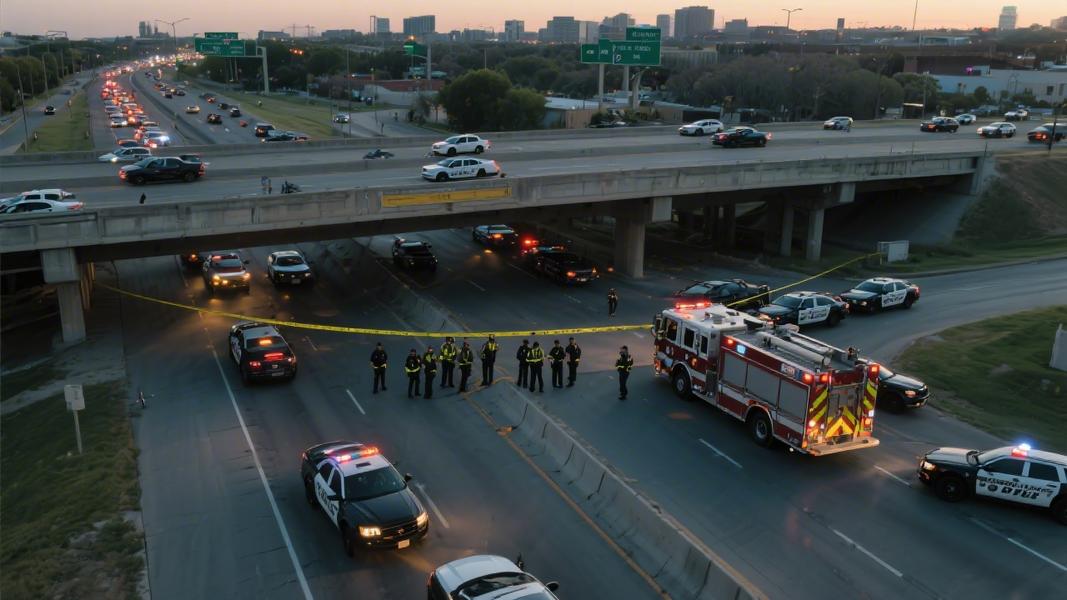
A Fort Worth restaurant owner got a lot more than he bargained for early Thursday morning when a routine response to a burglary alarm nearly turned fatal — and it was the police doing the shooting.
The incident unfolded in the early hours of March 12, 2026, near Terminal Road in Fort Worth, when officers responding to a burglary alarm encountered the building’s owner on the premises. Fort Worth police opened fire. The owner, whose name has not been publicly released, was not struck. He was later released without arrest — meaning, in the cold arithmetic of that night, he was both the victim of a break-in and the target of police gunfire, and walked away from both.
What We Know About the Shooting
Details remain limited, as they often do in the immediate aftermath of officer-involved incidents. What’s been confirmed is that Fort Worth officers arrived at the location in response to an alarm, encountered the restaurant owner, and discharged their weapons. No injuries were reported. The circumstances that led officers to perceive the owner as a threat — rather than the person who called in or triggered the alarm — have not been fully explained by authorities.
The owner’s release without arrest strongly suggests that investigators quickly determined he had no criminal involvement. That’s the obvious conclusion. But it also raises an uncomfortable question that doesn’t get any easier the longer you sit with it: if he wasn’t a criminal, why was he shot at?
A Pattern Bigger Than One Incident
This wasn’t an isolated moment in a vacuum. The Fort Worth-Arlington metro area has seen a string of officer-involved shootings in recent months, with documented incidents reported in Arlington, Mid-City, and Haltom City as well. Each comes with its own set of circumstances, its own chain of decisions made in fractions of a second. Still, the cumulative weight of those incidents is something community members and oversight advocates have been tracking closely.
Officer-involved shooting investigations in Texas are typically handled by an independent unit or referred to a separate agency to avoid conflicts of interest. Whether that protocol is being followed in this case — and how transparent the findings will be — remains to be seen.
The Owner’s Perspective
Put yourself in his position for a moment. You get an alert. Maybe it’s your phone buzzing at 2 a.m., maybe it’s a call from a monitoring service. You drive to your own restaurant. You’re on your own property. And then — gunfire. From the people who are supposed to be protecting it.
The psychological toll of that kind of encounter doesn’t disappear just because no one was physically hurt. It’s the sort of thing that changes how a person thinks about calling for help, about trusting that showing up to protect what’s yours won’t get you killed. That’s not a small thing. It doesn’t show up in a police report, but it’s real.
What Happens Next
Fort Worth police have not publicly named the officers involved, nor have they released body camera footage as of this writing — though Texas law does require the eventual release of such footage under specific timelines following a critical incident. Advocacy groups have already signaled they’ll be watching.
It’s also worth noting what didn’t happen: no one died here. That distinction matters, even if the margin was uncomfortably thin. In too many similar cases across the country, the story ends very differently — and the fact that this one didn’t shouldn’t be mistaken for the system working as intended.
A man went to check on his restaurant and was shot at by the officers who were supposed to be guarding it. He survived. The question Fort Worth now has to answer — honestly, not bureaucratically — is how close that came to being a very different headline.
