
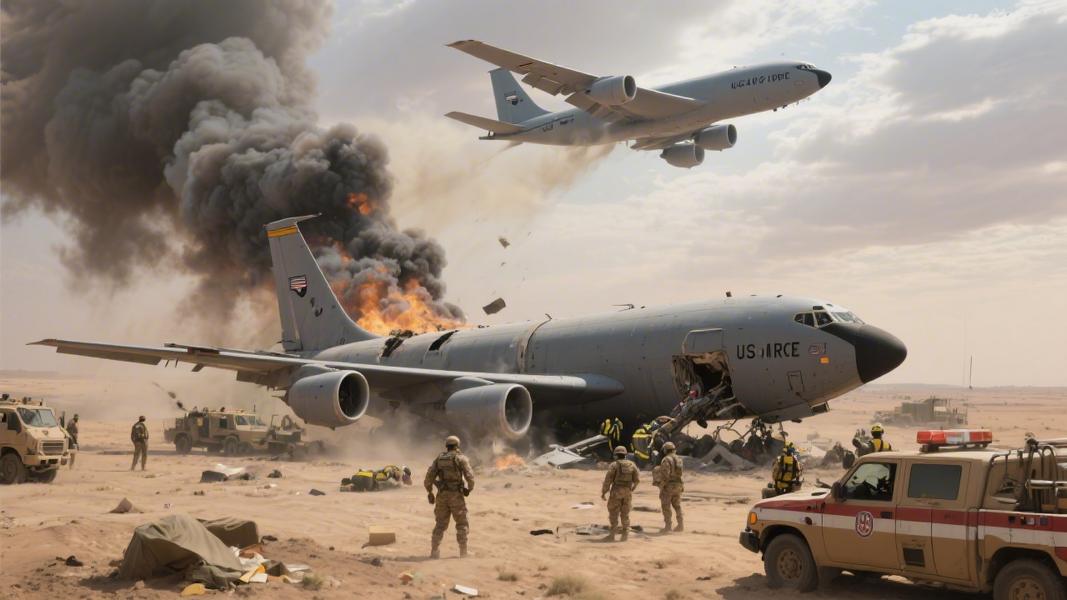
The United States and Israel have launched what officials are calling one of the most sweeping military campaigns in modern history — and in the span of just 36 hours, the Middle East may never look the same again.
President Donald Trump confirmed Thursday that Operation Epic Fury has struck hundreds of targets across Iran, killing more than 1,200 people according to Pentagon figures, destroying much of the country’s military infrastructure, and — in what may be the most seismic development of the conflict — resulting in the reported death of Iran’s former supreme leader, Ayatollah Khamenei. Three American service members were also confirmed killed in the operation. The strikes targeted Revolutionary Guard facilities, air defense systems, naval assets, and radar and telecommunications networks in a coordinated assault that officials say was months in the making.
Trump’s Message to Iran: Surrender or Die
The president didn’t mince words. In a video address following the strikes, Trump issued a direct warning to Iranian forces still in the field. “I once again urge the Revolutionary Guard, the Iranian military police, to lay down your arms and receive full immunity or face certain death,” he declared, the kind of blunt ultimatum that’s become something of a Trump signature — but one carrying considerably more weight now that bombs have already fallen.
He described the scope of what had been unleashed with unmistakable satisfaction. “Over the past 36 hours, the United States and its partners have launched Operation Epic Fury, one of the largest, most complex, most overwhelming military offensives the world has ever seen,” Trump said. Nine ships and naval buildings were knocked out. Radar systems, gone. Command infrastructure, obliterated.
How much is left? According to Trump, not much. Responding to a question during a briefing, he offered a sweeping assessment that bordered on the clinical: “They have no navy, they have no air force. They have no anti-aircraft equipment. It’s all been blown up. They have no radar. They have no telecommunications, and they have no leadership. It’s all gone,” he stated. Whether that picture is accurate on the ground remains to be independently verified — but the administration is clearly projecting total dominance.
The Strait of Hormuz: A Red Line Within a Red Line
Still, the war isn’t only being fought with missiles. Economic anxiety is already rippling through global oil markets, and Trump made clear he’s watching the Strait of Hormuz — the narrow chokepoint through which roughly a fifth of the world’s oil supply flows — with particular intensity. His message to Tehran on that front was characteristically blunt. “I will not allow a terrorist regime to hold the world hostage and attempt to stop the globe’s oil supply,” he warned, adding that “if Iran does anything to do that, they’ll get hit at a much, much harder level,” as noted by reporters covering the briefing. Twenty times harder, by one account.
That’s the kind of language that tends to move markets. Gasoline prices and global oil futures are already being closely monitored as the conflict unfolds, with the administration pushing to reassure allies and consumers that supply chains won’t be disrupted — even as the region braces for potential retaliation.
Rubio, Hegseth, and the Case for War
The legal and moral justifications for the strikes came fast from the administration’s top officials. Secretary of State Marco Rubio was emphatic on the question of provocation, insisting the campaign wasn’t preemptive aggression but a response to a credible and immediate danger. “There absolutely was an imminent threat,” Rubio affirmed to reporters, arguing that intelligence indicated Iran was preparing to act if it perceived an attack was coming — a kind of threat-within-a-threat logic that the administration says left little choice.
Defense Secretary Pete Hegseth, never one to shy from the rhetorical flourish, leaned into the moment with a blend of scripture and geopolitical conviction. He framed the US-Israel alliance in almost civilizational terms — “We share history, we share faith, and we share freedom” — and cast Israel as a nation uniquely despised: “enemy number one for both Islamists and international leftists,” as the Independent reported. It was the kind of language that plays well in certain corners of Washington and badly in others. Hegseth didn’t seem particularly concerned about which.
During the Iran briefing, he also quoted scripture and, in an unusual rhetorical inversion, described the United States and Israel — two of the most heavily armed nations on Earth — as Goliath. The implication seemed to be one of righteous, overwhelming force rather than scrappy underdog triumph. Whether that framing was intentional or off-the-cuff wasn’t immediately clear.
What Comes Next
The immediate military phase of Operation Epic Fury appears, by the administration’s own telling, to have been devastatingly effective. But wars rarely end cleanly after the first 36 hours. Iran retains proxy networks across the region — in Iraq, Syria, Lebanon, and Yemen — and the question of how or whether those forces respond is now one of the most consequential unknowns in an already volatile situation.
Trump, for his part, seemed to leave the door open to something beyond pure destruction. When asked whether this was the beginning of the end for Iran or the beginning of something new, he offered a telling answer — part threat, part possibility. “The beginning, it’s the beginning of building a new country,” he suggested.
A new country. Whether that’s a promise, a warning, or just a president reaching for something to say in a moment too large for easy words — that’s a question the next few days will start to answer.
