
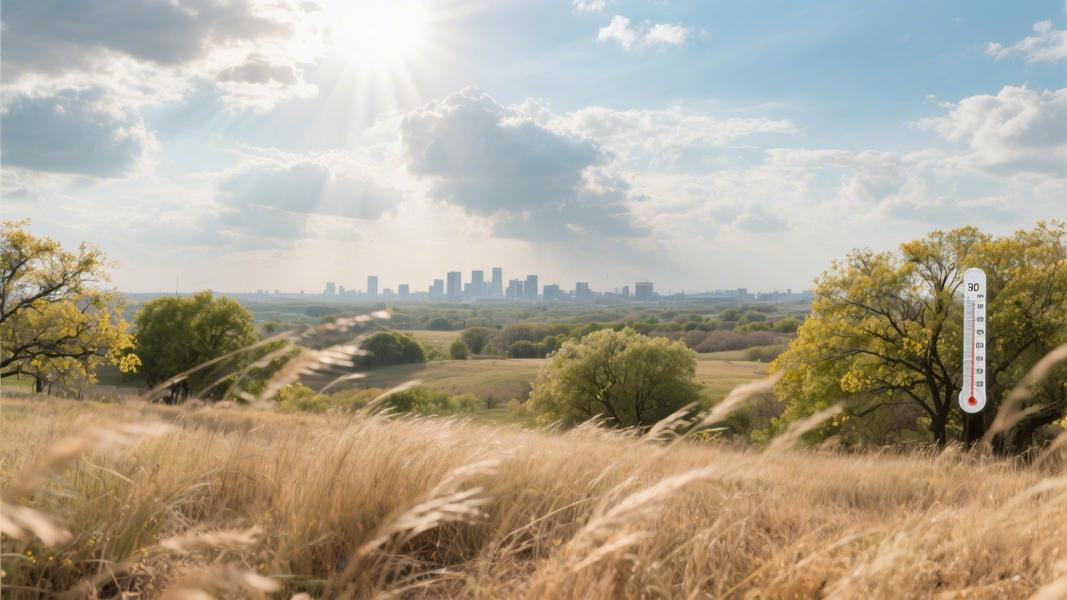
Texas doesn’t do anything halfway — and apparently, that includes winter. A relentless heat wave is baking the Lone Star State this March, pushing temperatures toward triple digits and raising serious questions about just how extreme the state’s weather has become.
The core story is this: North Texas is experiencing a prolonged stretch of anomalous warmth that meteorologists and market traders alike are tracking with growing alarm. Wednesday morning temperatures were already sitting in the mild 60s across the Dallas–Fort Worth area, with afternoon highs expected to climb near 90°F — numbers that would be remarkable in July, let alone the third week of March. CBS News noted the pattern shows no signs of breaking anytime soon.
Records Are Falling — Fast
How bad is it, really? Look south. In Laredo, a 103°F reading shattered the city’s daily record high, a number that was itself only set in 2024. But that wasn’t even the most jaw-dropping data point of the season. Falcon Dam, a small community straddling the Texas-Mexico border, logged a preliminary 106°F on February 26 — potentially the hottest temperature ever recorded in the United States during winter. Fox4 documented the finding, with weather officials noting that “preliminary data from the COOP site shows Falcon Dam reached a scorching 106°F yesterday, Feb 26.” Preliminary, yes. Staggering, regardless.
North Texas, meanwhile, is quietly approaching a record for the most winter days above 80 degrees in a single season. Heat index values topped 100°F on both Saturday and Sunday of last weekend — figures that belong on a July calendar, not a March one. CBS highlighted the milestone creeping closer with each passing warm afternoon.
Prediction Markets Are Paying Attention
It’s not just meteorologists watching the thermometer. Financial prediction markets — where real money rides on real outcomes — have priced in the heat with striking confidence. On Polymarket, traders were showing a 99.5% consensus that Dallas would hit a high of 80–81°F on March 23, drawing directly from National Weather Service forecast data. That’s not hedging. That’s near-certainty, according to market participants.
Still, the following day looks even hotter. On Robinhood’s prediction market platform, contracts tied to Dallas exceeding 81°F and 82°F on March 24 were trading near 97 cents on the dollar — a near-lock in the language of these markets. Traders priced in the heat as confidently as one might price in a sunrise.
Fire Danger Compounds the Concern
The heat itself isn’t the only worry. Texas Storm Chasers, tracking the broader pattern, warned of temperatures nearing 100 degrees across parts of the state, with no meaningful rain in sight and fire danger escalating rapidly. Dry vegetation, low humidity, and gusty winds — the combination is precisely what fire weather forecasters dread. That’s the catch with a March heat wave: the land hasn’t had time to dry out gradually the way it does in summer. It dries out fast, and it burns faster.
Texas has long been a state defined by weather extremes. Snowstorms knock out the power grid. Hurricanes reshape coastlines. Tornadoes carve paths through suburbs. But a winter that behaves like high summer — that’s a different kind of unsettling. It doesn’t announce itself with the drama of a named storm. It just keeps getting warmer, day after day, until someone checks the calendar and realizes it’s still technically March.
For now, Texans are cranking up the AC, and the records keep falling — quietly, relentlessly, one degree at a time.
