
He ate breakfast in Lubbock on an ordinary Friday morning. By that afternoon, Omar Salazar’s life had been upended in a way that would take seven months — and ultimately everything — to resolve.
Salazar, a Dallas community leader, SMU graduate, and immigrant rights advocate, was pulled over in August 2025 after Lubbock police said he failed to use a ramp properly while entering a loop and changed lanes unsafely. When he presented a Mexican ID instead of a valid U.S. driver’s license, ICE agents moved in. He was taken into custody and transported to Bluebonnet Detention Facility, where he would remain for the next seven months. On April 2, 2026, an immigration judge ruled against him. Salazar is now set to be deported to Mexico — a country he hasn’t called home since he was 11 years old.
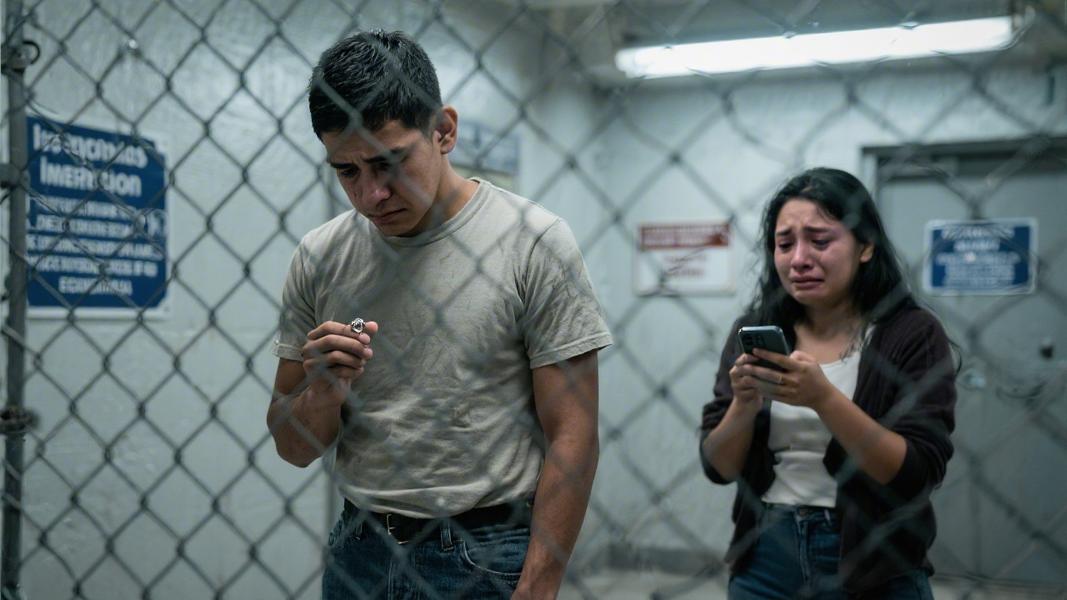
His wife, Ella, broke the news on social media with the kind of plainspoken grief that doesn’t need much dressing up. wrote, “Today, we received the news we were hoping not to get. We lost our case. Omar will be sent back to Mexico soon and I will be following him once I am able to get my passport in order.”
A Lane Change That Changed Everything
It’s worth pausing on how this started. An improper lane change. Not a violent crime, not a drug charge — a traffic infraction that most drivers have committed without consequence at least once. But Salazar didn’t have a valid U.S. driver’s license, and in the current enforcement climate, that distinction carries enormous weight. ICE didn’t mince words about its posture. As the agency stated following his arrest: “ICE officers will not wait for immigration violators to commit a crime before they are detained. For those who violate immigration laws, we are going to apprehend them and remove them.”
His attorney at the time tried to put the human stakes into focus. “Imagine this, Omar ate breakfast in Lubbock, never expecting that he’d be facing the fight of his life Friday afternoon,” the lawyer said. “Friday morning, he was just a normal resident of Texas enjoying the beginning of the long holiday weekend, and now he’s fighting to stay in the country that he loves.”
Salazar had been brought to the United States from Mexico at the age of 11 — old enough to remember leaving, young enough to have built his entire adult identity here. He went on to become his high school’s valedictorian, earned a degree from SMU, built a career in artificial intelligence, and became a visible figure in Dallas’s immigrant rights community. He has no criminal record. He also, through a combination of timing and technicality, didn’t qualify for DACA — missing the cutoff by just a few months. Asylum wasn’t an option either. While detained, he married his longtime girlfriend. His wife later dropped out of law school.
A System Under Strain
How did a man with no criminal history spend seven months behind bars without a resolution? The answer is complicated, and it says as much about the immigration system as it does about Salazar’s individual case.
A new DHS policy rendered people who entered the country without inspection ineligible for bond — regardless of whether they posed any danger or flight risk. Immigration attorney Veronica Franco explained the shift bluntly: “That’s kind of what led to this new wave of mandatory detention for a lot of people who previously would have been released on bond because they’re not a danger to the community, because they are not a flight risk, because they haven’t committed a crime,” she noted.
Texas is currently holding nearly 19,000 ICE detainees. Roughly 75 percent of them have no criminal record. The state’s immigration courts are contending with a backlog of nearly 400,000 cases, and judges are stretched well past any reasonable limit. Salazar cycled through three different judges in seven months. A decision that was expected in February 2026 didn’t come. Then March passed. Then came April, and the ruling — but not the one his supporters had prayed for.
Still, his attorney tried to project confidence even as the months dragged on. “He has been holding on. He hasn’t lost faith yet. He still believes that, you know, a decision is going to come,” Franco told reporters earlier this year. That decision did come. It just wasn’t the one they were waiting for.
Community and Congressional Response
Salazar’s case drew attention well beyond immigration advocacy circles. Congressman Marc Veasey weighed in early, his office confirming it had been in contact with Dallas leaders from the start. “My office has been in contact with Dallas community leaders regarding Omar Salazar’s detention by ICE following a stop by the Lubbock Police,” Veasey said in a statement.
Those who knew Salazar personally were less measured. “Omar is one of the best of the best our country has to offer,” one supporter said in a video that circulated widely, “and what we’re seeing right now is that our best are being detained for seven months.” That sentiment — admiration colliding hard with disbelief — captured the mood among Dallas’s broader community throughout the ordeal.
The case also put a spotlight on what critics describe as the cascading consequences of enforcement policies that offer little room for nuance. Someone who entered the country without documentation as a child, built a life, earned a college degree, and contributed to their community can find themselves detained indefinitely — not because of anything they did as an adult, but because of decisions made for them before they were old enough to vote, drive, or sign a contract.
What Comes Next
Ella Salazar has said she plans to follow her husband to Mexico once she gets her passport in order. That’s the kicker buried in this story — an American citizen preparing to leave the United States because the system left her no better option. Whatever one believes about immigration enforcement, it’s hard to look at that detail and call it a win for anyone.
Seven months. Three judges. A backlog of hundreds of thousands of cases. And at the end of it all, a man who came here at age 11, built something real, and still lost — deported on the strength of a lane change and a technicality of timing that kept him a few months outside the reach of protection he might otherwise have qualified for. As one account put it plainly: the line between staying and going, between belonging and being expelled, can be razor thin. Sometimes it’s measured in months. Sometimes, apparently, in the width of a lane.
