
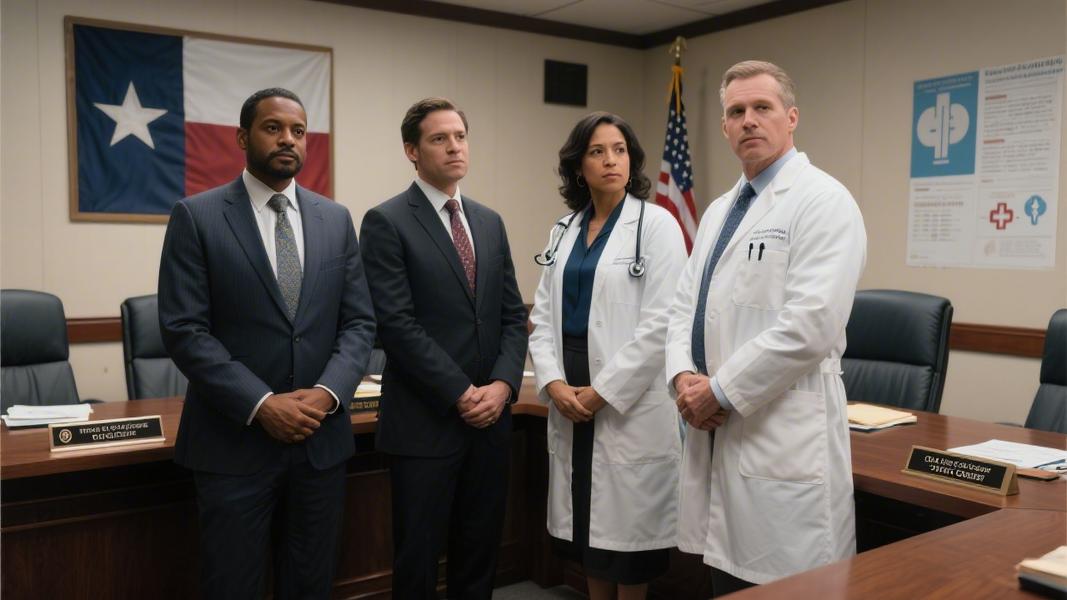
Texas Governor Greg Abbott has reshuffled the board overseeing health care for the state’s incarcerated population, tapping two new physicians and keeping two veterans in place — a quiet but consequential set of moves that will shape medical policy across one of the country’s largest prison systems.
Abbott announced the appointment of Brandon Cantazaro, M.D., and Robert Suter, D.O., alongside the reappointment of Robert “Bobby” Greenberg, M.D., and Divyansu Patel, M.D., to the Correctional Managed Health Care Committee. All four terms run through February 1, 2029. The committee doesn’t make headlines often, but its work is far-reaching — it’s responsible for coordinating statewide health care policy inside Texas’s criminal justice system, a sprawling network that touches hundreds of thousands of lives.
What the Committee Actually Does
It’s easy to gloss over an appointment announcement. But consider the scope. The Correctional Managed Health Care Committee oversees the development of policies governing how — and how well — incarcerated Texans receive medical treatment. From chronic disease management to emergency care protocols, the committee’s decisions ripple through every unit in the Texas Department of Criminal Justice. That’s not a small job.
Greenberg, who’s based in Belton, isn’t just returning to the table — he’s staying at the head of it. He continues as chair of the committee and brings his role as vice president and chief medical officer of Emergency Services at Baylor Scott & White Health Central Texas to bear on the work. Abbott’s office confirmed the reappointment, signaling confidence in the direction Greenberg has set.
The New Faces
Who’s coming in fresh? Cantazaro brings serious academic medicine credentials to the role. The McAllen-based physician serves as Chief Medical Officer of The University of Texas Health Rio Grande Valley and as Division Chief of Internal Medicine at the UTRGV School of Medicine — a dual role that puts him at the intersection of clinical care and medical education. His background suggests a familiarity with underserved patient populations, a relevant lens for a committee dealing with incarcerated individuals who often arrive with complex, untreated health needs.
Still, it’s Suter’s biography that might turn the most heads. The Conroe-based osteopathic physician currently serves as senior associate dean for clinical integration at Sam Houston State University College of Osteopathic Medicine. But before that? Forty-five years in the U.S. Army Medical Department — a career that ended with an honorable discharge in 2023. The TDCJ’s own committee records reflect his appointment. That kind of institutional experience — managing health systems under pressure, in resource-constrained environments — isn’t easy to replicate in a civilian résumé.
A System Under Constant Scrutiny
Texas’s prison health care apparatus has faced persistent criticism from advocates and watchdog groups over the years. Staffing shortages, aging infrastructure, and questions about the standard of care have made the CMHC’s work a subject of ongoing legal and legislative attention. The committee isn’t a cure-all — it sets policy, it doesn’t staff clinics — but the caliber of its membership matters. These aren’t ceremonial seats.
That’s the catch with appointments like these: they rarely generate the kind of attention they probably deserve. A new committee member can quietly influence how thousands of people receive — or don’t receive — medical treatment, and most Texans will never notice. Whether this particular lineup can move the needle on longstanding structural challenges remains to be seen.
Four doctors, four terms, one very large system. The clock starts now.
