
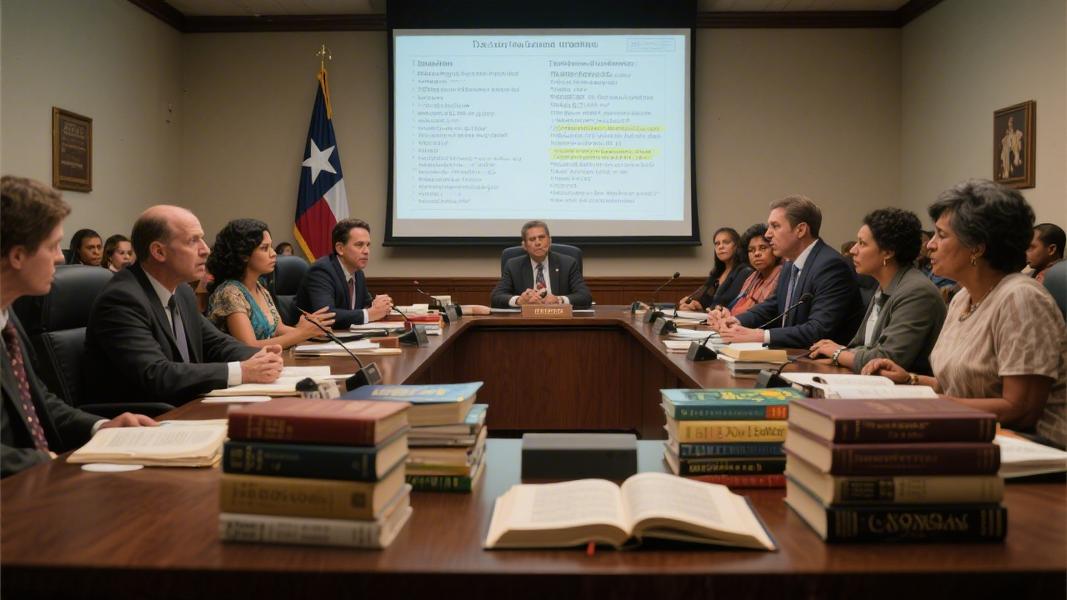
Texas public school students could soon be required to read passages from the King James Bible — and the debate over whether that’s education or indoctrination is already getting loud.
The Texas State Board of Education voted 13-1 in January to delay a final decision on a sweeping proposed K-12 required reading list until April, after a wave of public opposition forced lawmakers to pump the brakes. The list, which includes nearly 300 books ranging from literary staples like To Kill a Mockingbird to at least ten passages drawn directly from Christian scripture, would make Texas potentially the first state in the nation to mandate identical Bible-based texts for all students, from kindergarten through senior year. If approved, the changes would take effect in the 2030–31 school year.
What’s Actually on the List
The proposal is sweeping in scope. Among the religious texts included are stories like Jonah and the Whale, introduced as early as 7th grade, and The Book of Job, assigned to English IV students — that’s seniors. Fox7 Austin noted that the list draws from multiple versions of the Bible, though much of the emphasis falls on the King James Version. Parents would technically be allowed to opt their children out. But here’s the catch — the material may still appear on standardized tests, which puts opt-out families in a difficult position that’s more than a little uncomfortable.
Supporters aren’t backing down. One board member defended the selections by arguing, as Education Week captured, that “some of these passages of scripture that you mentioned have had a huge impact on our state, on our country.” That’s a position with real cultural weight behind it — the Bible’s influence on Western literature is genuinely hard to dispute. But the question of whether that influence justifies state-mandated reading in public schools is a different argument entirely.
Critics Say It Goes Too Far
Opposition has been swift and pointed. The Texas Freedom Network, along with other public education advocates, warned that the board’s proposal actually exceeds what state legislators originally required — meaning this isn’t just lawmakers following orders. It’s a deliberate expansion. KHOU reported that the religious content embedded in the curriculum goes beyond what the underlying legislation called for, raising immediate questions about where exactly this is coming from — and why.
Advocates representing non-Christian families have been especially vocal. “Texas public schools serve students from many faiths and belief systems, including Sikh families,” the Texas Freedom Network warned in a public statement. “Mandating a reading list that overwhelmingly centers specific Christian biblical translations raises serious concerns about religious favoritism in public education and risks excluding students whose identities and traditions are not reflected.” It’s a straightforward argument — and one that’s going to be very hard for the board to dismiss without a credible answer.
The Diversity Problem
It’s not just religious concerns driving the opposition. ABC13 documented that public commenters raised significant objections about the list’s lack of diversity — both in cultural representation and in the range of belief systems reflected across its more than 300 titles. A reading list that stretches from classic American literature to scripture isn’t inherently problematic, critics say. But one that leans so heavily on a single religious tradition while serving one of the most demographically diverse student populations in the country? That’s a harder case to make.
Still, the board isn’t done deliberating. The April vote will be the real moment of reckoning — and with public pressure mounting on both sides, it’s unlikely to be quiet. YouTube coverage of the board’s proceedings has already spread widely, pulling the debate well beyond Austin’s chambers and into the national conversation about religion, public education, and the First Amendment.
Whatever the board decides, one thing is already clear: Texas is testing a boundary that most states have been careful not to cross — and the rest of the country is watching closely to see whether it holds.
