
A convicted felon with a fake name, stolen guns, and a fraudulent security company was working as a bodyguard for a sitting U.S. congresswoman — and when Dallas police had the chance to stop him, they stepped aside and watched.
That’s the increasingly uncomfortable reality surrounding Rep. Jasmine Crockett (D-TX) and a man known to her office as “Mike King” — but whose real name was Diamon Robinson. Robinson oversaw Crockett’s personal security detail until March 13, 2026, when Dallas SWAT officers shot and killed him following a standoff. In the weeks since, a fuller picture has emerged: Robinson was a wanted fugitive, a repeat offender with seven theft arrests between 2009 and 2012, and a man who had been impersonating a federal agent while running not one but two fraudulent businesses — all while standing at the right hand of a member of Congress.
The Swearing-In Incident That Started It All
Long before Robinson’s death made headlines, his name — or rather, his alias — surfaced in a dispute at Crockett’s public swearing-in ceremony in January 2025 at Fair Park in Dallas. JJ Jefferson, a longtime political rival of the congresswoman, arrived with his brother Lamar to serve legal papers related to a lawsuit over Jefferson being allegedly removed from the 2024 ballot. What happened next, captured on video, is difficult to watch.
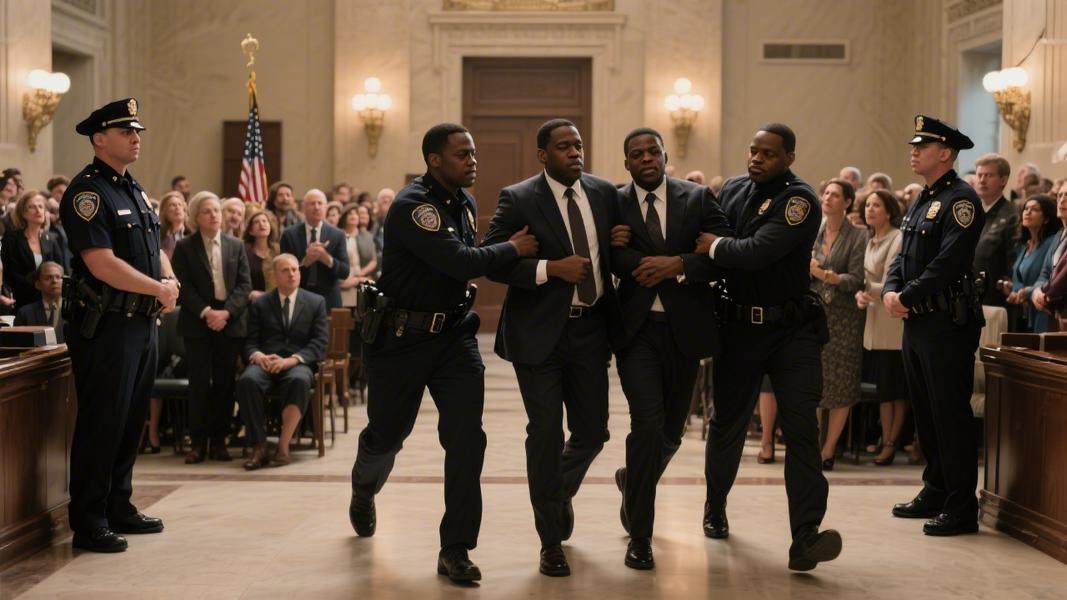
Robinson, flanked by two other unidentified guards, physically removed the Jefferson brothers from the event. JJ Jefferson says they were choked, dragged out, and handcuffed — in full view of Dallas police officers who did nothing. “You shouldn’t be assaulted while trying to exercise a lawful service,” Jefferson said afterward. “And that’s called obstruction. And when I asked the officers to intervene, we were ignored.”
Lamar Jefferson’s account is equally stark. He says he directly asked Robinson — who he knew only as Mike King at the time — whether they could serve the papers. The answer, he recalled, was blunt: “No, you are getting the hell out of here.” JJ Jefferson says Robinson told him, “‘I’m about to slam you on this ground,'” to which Jefferson pleaded, “Do not slam me on this ground. Just let me up. I’ll walk out.“
Police Stood By. Then Pointed Him Elsewhere.
Here’s where it gets worse. When JJ Jefferson appealed to the Dallas police officers present, he was told they simply couldn’t help. “We don’t have the jurisdiction to intervene, we’re just here to assist them,” a sergeant and two other officers reportedly told him, Jefferson recounted. Then, in what might be the most surreal detail of the entire saga, an officer later sent Jefferson a letter directing him to file a complaint — with Mike King at U.S. Dignitary Services.
That company, it turns out, didn’t really exist. Jefferson’s own investigation eventually revealed that U.S. Dignitary Services was not a legitimate organization. The address it pointed to was, effectively, Crockett’s congressional office. Robinson had also been running a separate outfit called Off Duty Police Services — another fraudulent enterprise — while impersonating a federal agent. He used stolen firearms and vehicles, according to Dallas Police Department officials who later pieced together his background.
Assault charges against Robinson stalled early on. DPD’s chief determined no investigation was warranted. Jefferson pressed on anyway, but Robinson denied any involvement despite what the video showed. The case went essentially nowhere — until Robinson turned up dead in a SWAT standoff fourteen months later.
A Rap Sheet Nobody Apparently Checked
So how does a convicted felon with seven theft arrests end up running security for a U.S. congresswoman? That’s the question that’s now drawing scrutiny from Capitol Hill to Dallas City Hall — and the answers so far aren’t reassuring.
Crockett’s campaign paid Robinson at least $340 for security services, according to available records. When the story broke following his death, Crockett acknowledged that a member of her security team had been shot by SWAT and conceded that the vetting process had gaps. But she was notably measured in her response, saying, “We are fortunate that this is someone who used those loopholes without malice.” She also pointed out — accurately, it should be noted — that Robinson’s record didn’t include violent crimes.
Still, that framing struck critics as a stretch. Robinson was, by all accounts, impersonating a federal agent, operating fake businesses, carrying stolen weapons, and allegedly choking a man trying to serve legal papers. Whether or not his priors were violent, the conduct itself clearly was.
Rep. Pete Aguilar, the top House Democrat on the relevant oversight question, moved to dismiss calls for a formal probe into how Crockett came to hire Robinson — a decision that drew its own share of criticism given the breadth of what’s now known.
What Happens Now
In the immediate aftermath, the Dallas Police Department announced plans to tighten its rules around off-duty work — a direct response to the revelation that its own officers had been, in effect, taking direction from a wanted fugitive at a congressional event. It’s a policy fix, but it doesn’t address the broader accountability questions the case has raised.
JJ Jefferson, for his part, hasn’t let the matter drop. His brother was physically assaulted. He was denied legal recourse. The man responsible is now dead, meaning criminal prosecution is off the table. And the officers who stood by while it happened told him — in writing — to take it up with the very man who allegedly put his hands on him.
That’s not a loophole. That’s a system that failed at nearly every level — and the fact that it took a SWAT standoff to bring any of it to light says something about how these things tend to end.
Robinson is gone. The questions he leaves behind are not.
