
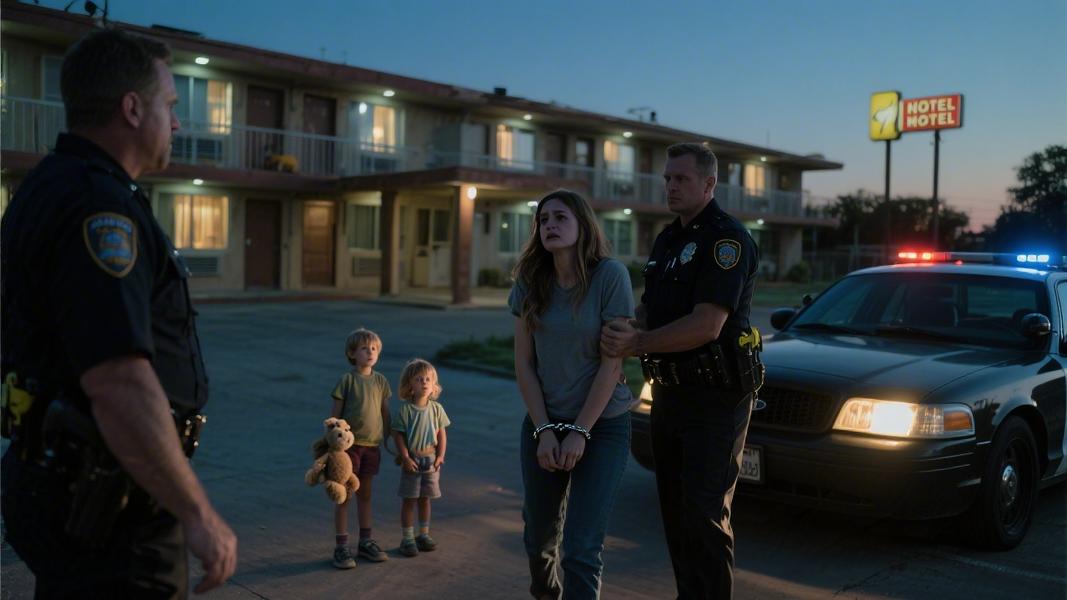
A Texas mother is accused of fabricating her toddler’s illnesses so severely that the boy endured unnecessary surgeries, a feeding tube, a wheelchair, and a cocktail of nearly two dozen drugs — all before his fourth birthday.
Kaitlyn Laura, 30, of Glen Rose, Texas, was taken into custody after a Tarrant County Sheriff’s Office investigation revealed a deeply troubling pattern of what authorities are calling medical child abuse — a form of harm that can be extraordinarily difficult to detect, let alone prosecute. The case has drawn widespread attention not only for its severity, but for what it reveals about the vulnerabilities of a medical system that, by design, trusts the people bringing children in for care.
A Mother’s Web of Deception
According to an arrest warrant, Laura allegedly convinced physicians across Fort Worth and Dallas that her 3-year-old son required interventions he simply didn’t need. We’re not talking about one misdiagnosis or a single disputed prescription. Investigators say she subjected the child to unnecessary surgeries, a feeding tube, a wheelchair, and at least 17 different medications — all while, documented, she was simultaneously running GoFundMe campaigns, presumably soliciting sympathy and financial support tied to her son’s supposed conditions.
The child was removed from her care and placed in medical foster care in February, once investigators had gathered enough evidence to act. By that point, the boy had already been through more medical procedures than most people see in a lifetime.
How Does This Happen?
That’s the question that haunts every case like this one. How does a child end up on 17 drugs before he’s old enough to tie his shoes, and no one catches it sooner? The answer, uncomfortable as it is, lies in the nature of the medical system itself. Doctors rely on parents for patient history, especially with young children who can’t speak for themselves. A skilled, determined manipulator can exploit that dependency almost indefinitely.
“There are professional manipulators, basically,” one source familiar with the investigation noted — a blunt summation that cuts right to the heart of why these cases are so maddening. Laura allegedly moved between multiple hospital systems, a tactic that can prevent any single physician from seeing the full picture. It’s a playbook, and it works — until it doesn’t.
A Broader, Darker Pattern
Still, as alarming as Laura’s case is, it doesn’t exist in isolation. Investigators and child welfare advocates have flagged a separate Texas case in which a mother’s son was prescribed at least 77 unnecessary medications. Seventy-seven. That number is almost impossible to process — and yet it happened, reportedly within the same state, within the same fragmented system of pediatric care.
Medical child abuse — sometimes referred to as Munchausen syndrome by proxy, or factitious disorder imposed on another — is notoriously underreported. Victims are too young or too dependent to advocate for themselves. The abuse is hidden behind the language of parental love and medical concern. And the abuser, more often than not, is the person the child trusts most.
The Charges and What Comes Next
Laura now faces charges tied to the abuse outlined in the arrest warrant, as detailed by investigators. The specifics of how the Tarrant County Sheriff’s Office first became suspicious haven’t been fully disclosed publicly, though cases like these often begin with a single skeptical nurse or a physician who notices that a child’s symptoms don’t quite add up — or that they mysteriously improve the moment a parent leaves the room.
What happens to the boy now is, in some ways, the more pressing story. Children who survive medical child abuse often carry both physical and psychological consequences long into adulthood — the legacy of unnecessary procedures, dependency on medications they never needed, and a foundational betrayal by someone who was supposed to protect them. His path to recovery, whatever form that takes, will be long. Advocates who work these cases say that’s almost always the hardest part — not the arrest, but everything that comes after.
For now, the boy is in medical foster care. He’s safe. And somewhere in the distance between those two facts lies a story that the courts will spend months, maybe longer, trying to fully tell.
The cruelest part of cases like this isn’t just that a child was harmed — it’s that he was harmed in the name of being helped.
