
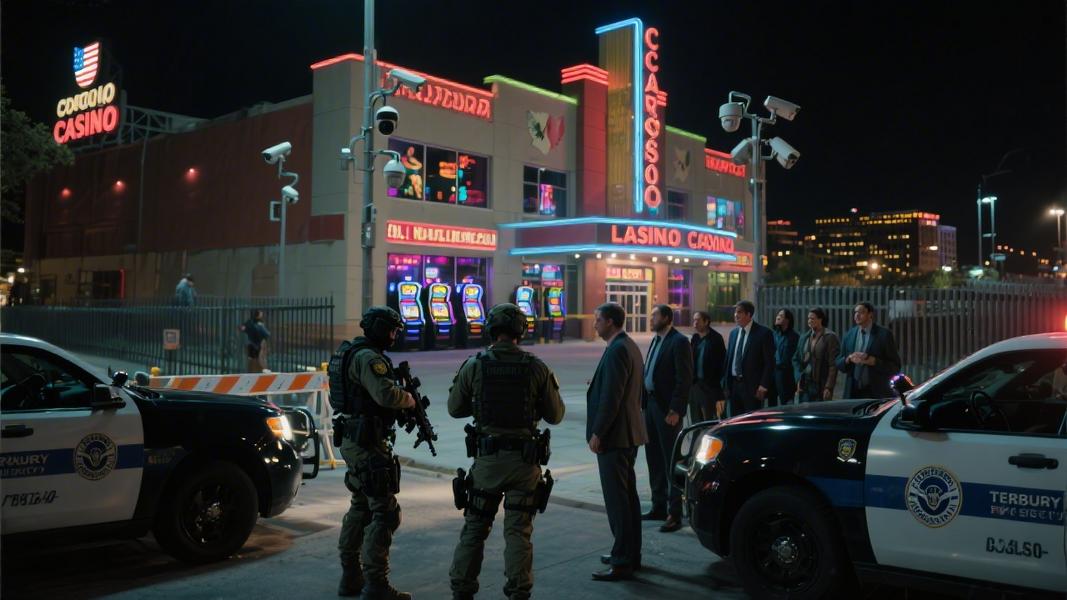
The U.S. Treasury Department took aim Tuesday at one of Mexico’s most dangerous border cartels — and this time, the targets included a pair of casinos doubling as cartel infrastructure. It’s the kind of story that sounds almost cinematic, until you realize the violence it represents is very much real.
On April 14, 2026, the Treasury’s Office of Foreign Assets Control (OFAC) announced sanctions against six entities and individuals tied to a sprawling money laundering and cash smuggling network run by Cartel del Noreste (CDN). The targets included two casinos, a front company, and three individuals — each playing a distinct role in keeping the cartel’s financial machinery humming.
A Cartel Built on the Busiest Border Crossing in America
CDN isn’t some peripheral outfit. The cartel controls the Nuevo Laredo plaza in Tamaulipas, Mexico — sitting directly across the border from Laredo, Texas, the single busiest land port of entry on the entire southern border. That’s not a coincidence. It’s a business strategy. And for years, CDN has exploited that geography to move fentanyl, smuggle people, and launder money with a level of operational sophistication that goes well beyond street-level crime.
The group was formerly known as Los Zetas, and its history of brutality is well-documented. In February 2025, the Trump administration designated CDN as both a Foreign Terrorist Organization (FTO) and a Specially Designated Global Terrorist (SDGT) — a designation that carries serious legal and financial consequences for anyone doing business with them.
Casinos With a Very Different House Edge
Two casinos are now on the sanctions list, and the details are grim. Casino Centenario, located in Nuevo Laredo and operated by a company called Comercializadora y Arrendadora de Mexico, S.A. de C.V. (CAMSA), wasn’t just washing cartel cash — it was allegedly being used as a stash house for fentanyl pills and cocaine, and, according to Treasury, as a site for torturing enemies. That’s not a business model you typically find in a gaming commission filing.
The second casino, Diamante Casino, also operated by CAMSA, has a location in Tampico, Tamaulipas, and even runs a gambling website at diamantecasino.com.mx. Both properties were designated for being owned or controlled by CAMSA, which is itself now blacklisted. Under sanctions issued pursuant to Executive Orders 14059 and 13224, all U.S.-held property of the designated parties is blocked, and American persons are prohibited from conducting any transactions with them.
Three Individuals, Three Very Different Roles
The human targets in this action tell a story about how modern cartels operate — not just with guns, but with lawyers, logistics managers, and propagandists.
Eduardo Javier Islas Valdez, known by the alias “Crosty,” oversees CDN’s human smuggling operations in Nuevo Laredo. That means managing pateros — the guides who ferry migrants across the border — as well as a network of cash stash houses. It’s a dual-revenue operation: charge for the crossing, then launder what you earn.
Then there’s Juan Pablo Penilla Rodriguez. He’s a defense attorney, which makes his role here particularly striking. Treasury says he’s been acting as an intermediary between CDN’s imprisoned leader, Miguel Angel “Z-40” Treviño Morales, and active cartel leadership on the outside. In other words, the jailhouse wall apparently hasn’t been much of a wall at all.
And perhaps the most unusual figure on the list: Jesus Reymundo Ramos Vazquez, also known as Raymundo Ramos. Treasury says he poses as a human rights activist while actually leading CDN’s disinformation campaign — filing false complaints against rivals and organizing protests on the cartel’s behalf. It’s a cynical inversion of civil society, and it’s exactly the kind of soft-power operation that traditional law enforcement tools struggle to address.
Third Strike, Not the Last
This is OFAC’s third action targeting CDN during the Trump administration, following earlier rounds of designations on May 21, 2025, and August 6, 2025. The pace suggests a deliberate, sustained campaign rather than a one-off headline grab — though whether that pressure is translating into meaningful disruption on the ground in Tamaulipas is a harder question to answer from a Treasury press release.
Secretary of the Treasury Scott Bessent framed the action in characteristically direct terms. “As President Trump has made clear, Treasury will use all tools to protect our nation from violent cartels looking to reign terror on innocent Americans,” Bessent stated. “Treasury will continue to target the diverse revenue streams that cartels rely on to sustain their operations, which include trafficking fentanyl and illegal aliens into the United States.”
Still, sanctions are only as effective as the enforcement ecosystem around them. Freezing assets and cutting off U.S. financial access matters — but CDN operates primarily in cash, in a region where it has deep local influence. The casinos may be designated now, but the question of whether they’ll actually close, or simply rebrand, is one that no Treasury announcement can fully answer.
What Tuesday’s action does make clear is that the cartel’s revenue model — casinos, smuggling routes, disinformation, jailhouse legal networks — is far more layered than a simple drug operation. Dismantling it, if that’s truly the goal, will require a lot more than three rounds of sanctions.
