
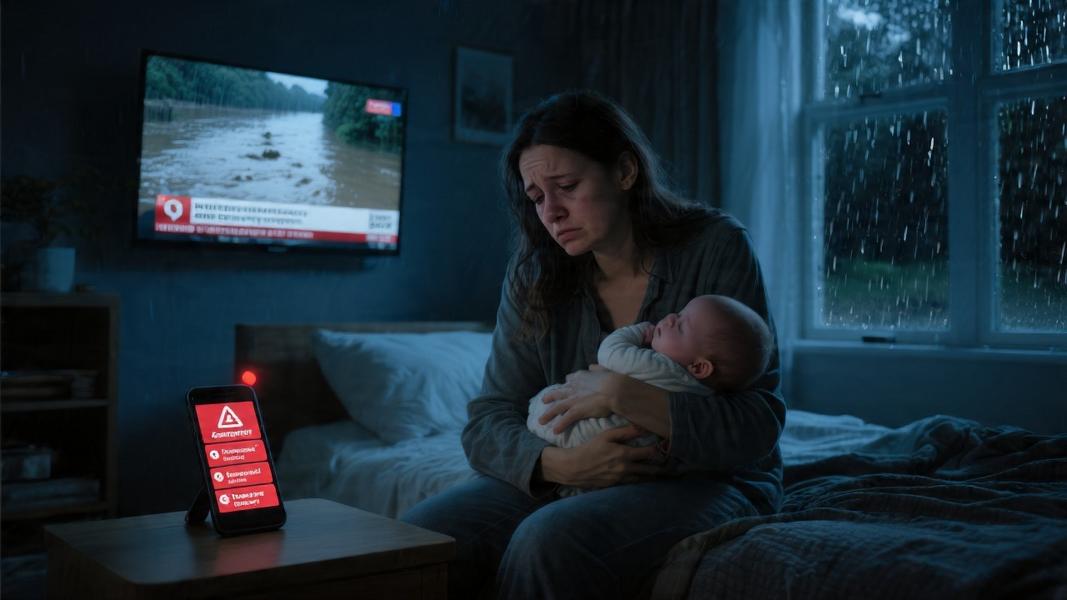
Texas is screaming into the void. And increasingly, nobody’s listening.
The Lone Star State issued 54 Amber Alerts in 2024 — more than a quarter of every such alert sent across the entire United States that year. The next closest state, California, managed just 16. That’s not a gap. That’s a canyon. And as the volume of alerts has climbed, so has something far more troubling: the number of Texans who’ve simply stopped paying attention.
A State Drowning in Its Own Warnings
The numbers tell a story of escalation that’s hard to ignore. Between 2016 and 2024, the number of Amber Alerts issued in Texas tripled, according to data reported by CBS News. What was once a jarring, rare interruption to daily life has become, for many residents, just another noise in the background — like a car alarm that won’t quit on a Tuesday afternoon.
That fatigue has real consequences. Texas now holds the dubious distinction of having the highest opt-out rate in the country for wireless emergency alerts. A RAND study commissioned by the federal government found that 29.5% of Texans have turned off those alerts entirely. Nearly one in three. Think about that for a moment.
The Spillover Nobody Wanted
Here’s where it gets worse. Researchers didn’t just find that Texans were tuning out Amber Alerts. They found what appeared to be a “spillover effect” — Texans opting out of other public safety alerts at higher rates, too, including those involving imminent threat and weather warnings. In a state that knows its way around a tornado and a hurricane, that’s not a footnote. That’s a crisis waiting to happen.
So the problem isn’t contained to missing children. It’s bleeding into the broader emergency alert ecosystem, quietly eroding the infrastructure that’s supposed to keep people alive when things go sideways fast. And it didn’t happen overnight — it was built, alert by alert, over nearly a decade of volume that outpaced restraint.
Does Distance Matter?
Why does any of this matter if a missing child is, say, 400 miles away? It’s a fair question — and the data from the National Center for Missing and Endangered Children offers a pointed answer. Most children featured in Amber Alerts are recovered within 50 miles of where they were last seen, and often within just 10. The system, in theory, is designed to mobilize the people closest to the danger. But that only works if those people are actually receiving the alert.
Still, critics of Texas’s alert frequency argue the state has been too loose with its criteria — issuing alerts that don’t meet the spirit of the original program, which was built for the most urgent, time-sensitive abductions. More alerts, the argument goes, means less urgency attached to each one. It’s the boy who cried wolf, written in push notifications.
A System at War With Itself
That’s the catch. The Amber Alert system’s entire value proposition rests on public trust and public attention. Flood the zone, and you don’t just lose the audience — you actively push them toward opting out of alerts that could save their own lives. Texas, whether by design or negligence, has stress-tested that proposition harder than any other state in the country. And the results aren’t encouraging.
Reforming the system won’t be simple. Tightening criteria means accepting that some alerts won’t go out — a politically and morally fraught position when a child’s life may be on the line. Loosening opt-out restrictions raises civil liberties concerns. And doing nothing means watching opt-out rates climb while the alerts keep screaming into an increasingly empty room.
The alert was always meant to be a last resort — a collective cry for help from a community that would stop what it was doing and look. Texas turned it into wallpaper. And now, when the next alert goes out, the hardest question isn’t where the child is. It’s whether anyone’s phone is still on to receive it.
