
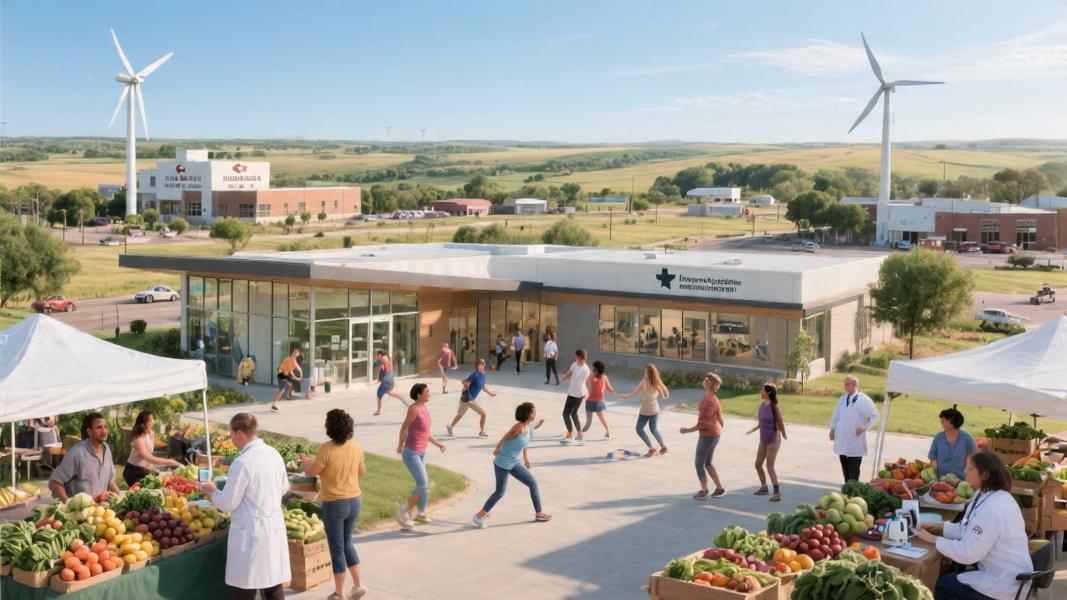
Texas is about to pump more than a billion dollars into rural health care — and for communities that have spent years watching hospitals close and specialists disappear, the timing couldn’t be more urgent.
On December 29, 2025, Governor Greg Abbott announced a $1.4 billion federal investment spread across five years — from 2026 through 2030 — to overhaul rural health care infrastructure across the state. The money flows from the Rural Health Transformation Program, a provision tucked inside the One Big Beautiful Bill Act, which carves out $50 billion nationwide for rural health initiatives. Texas, as it often does, landed a sizable chunk: roughly $281.3 million per year. The initiative is being branded as Rural Texas Strong.
What the Money Is Actually For
“Rural Texans across the state will benefit from this historic federal investment,” Abbott said in the announcement. “We will strengthen our rural hospitals, expand access to critical mental and physical health care and help reduce chronic disease through wellness and nutrition initiatives.” That’s a broad mandate — deliberately so. Rural Texas doesn’t have one problem. It has a dozen layered on top of each other.
The funding will be administered through the Texas Health and Human Services Commission (HHSC), which is already moving on an early piece of the package. An initial $60 million in federal dollars has been made available to rural hospital districts specifically for community-based prevention, wellness, and nutrition programs — operating under a separate banner called “Make Rural Texans Healthy Again.” It’s a nod to the current political moment, but the underlying need it addresses is anything but new.
“Every community in Texas deserves to have a health system that works as hard as them,” Abbott noted, a line that reads more like a campaign slogan than a policy brief — but one that resonates in places where the nearest emergency room might be an hour’s drive away.
What Could Actually Change on the Ground
So what does $1.4 billion look like when it lands in a small Texas town? Potentially, quite a lot. Specialty care, mental health services, preventative screenings — these are the kinds of offerings that rural communities have historically had to travel hours to access, if they could access them at all. “This funding could add specialty services, preventative screenings and mental health services in rural areas,” explained a spokesperson identified as Perez, reflecting the broad optimism surrounding the announcement.
Still, optimism and implementation are two different things. Federal funding announcements have a long and complicated history in rural health care — money gets announced, bureaucracies get involved, timelines slip. The five-year window gives administrators room to build something sustainable, but it also means that a family in West Texas or the Panhandle won’t see a new specialist next month.
The Bigger Picture
Texas has more rural hospitals than almost any other state — and has watched more of them struggle or shutter in recent decades than most. The pressures are familiar: thin margins, aging populations, workforce shortages, the uninsured. Federal Medicaid reimbursements that don’t always keep pace with actual costs. It’s a structural problem, and $1.4 billion won’t fix all of it. But it’s not nothing, either. Not even close.
What’s notable here is the scale of federal buy-in — $50 billion nationally is a serious commitment, not a pilot program. And Texas, with its sprawling geography and enormous rural population, has an argument for why it needs a disproportionate share of that investment. Whether the state’s HHSC can deploy it effectively, equitably, and without the usual bureaucratic drag is the question that rural health advocates will be watching closely over the next five years.
For now, the announcement is a signal — that the federal government is, at least on paper, paying attention to the zip codes that tend to get left out of health policy conversations. Whether the money follows the mission will be the real story. As one observer might put it: Texas has the check. Now it has to cash it right.
