
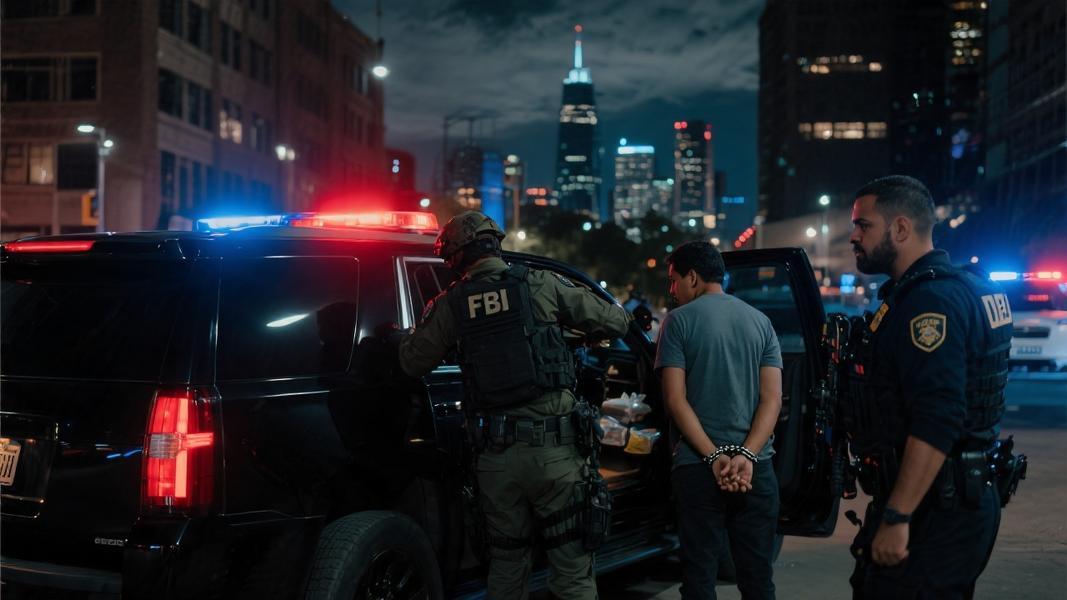
A Dallas man who thought he could rob federal agents and walk away learned otherwise on Wednesday — to the tune of three decades behind bars.
Angel Flores, 36, was sentenced on April 22, 2026, to 30 years in federal prison by U.S. District Judge Ed Kinkeade for assaulting a federal officer with a deadly weapon and conspiring to possess with intent to distribute methamphetamine and heroin. The sentence caps a case that federal prosecutors described as both a major drug trafficking operation and something far more brazen: a calculated ambush of federal law enforcement agents.
A Trafficker With a Taste for Violence
Flores wasn’t just moving product. Investigators say he was also running a sideline operation robbing other drug traffickers — a high-risk hustle that eventually put him in the crosshairs of the very agents he’d try to ambush. The narcotics he distributed were sourced from a Mexico-based organization, funneling large quantities of heroin and methamphetamine into North Texas communities, according to the Justice Department.
U.S. Attorney Ryan Raybould didn’t mince words after sentencing. “Angel Flores was not only a drug trafficker who poisoned our communities with massive amounts of deadly heroin and methamphetamine,” Raybould said, “he was also a predator in the violent business of robbing other narco-traffickers.” That last part — the predator angle — is what makes this case stand out from a typical drug conviction.
The Ambush That Sealed His Fate
So what exactly happened? Federal authorities say Flores was part of a planned ambush targeting federal agents — a move that transformed what might have been a drug trafficking case into something with far higher stakes. Assaulting a federal officer with a deadly weapon is the kind of charge that doesn’t come with much sympathy from the bench, and Judge Kinkeade’s sentence made that clear.
The Dallas Homeland Security Task Force, which worked the case alongside the FBI, framed the outcome as a direct message to anyone else thinking along similar lines. “The sentence imposed in this case underscores the seriousness of the defendant’s role in distributing large quantities of narcotics and assaulting a federal law enforcement officer,” an FBI official stated, adding that the Bureau would “continue working with our partners to dismantle the infrastructure of drug trafficking organizations in our communities.”
Part of a Bigger Problem
It’s worth stepping back for a moment. The Flores case isn’t an isolated incident — it’s a window into the ongoing battle federal authorities are waging against cross-border drug networks that have deeply embedded themselves in cities like Dallas. The Mexico-based supply chain feeding operations like Flores’s remains stubbornly intact, and dismantling it one conviction at a time is slow, grinding work.
Still, prosecutors and law enforcement agencies were quick to call this a significant win. Raybould emphasized that Flores had been removed from the streets — framing the sentence not just as punishment but as a form of community protection, noting that his operation had done real damage to real neighborhoods before it was stopped.
Thirty years is a long time. Flores will be well into his sixties before he’s eligible for release — if he ever is. For the agents he allegedly targeted that day, it’s probably the right number.
