
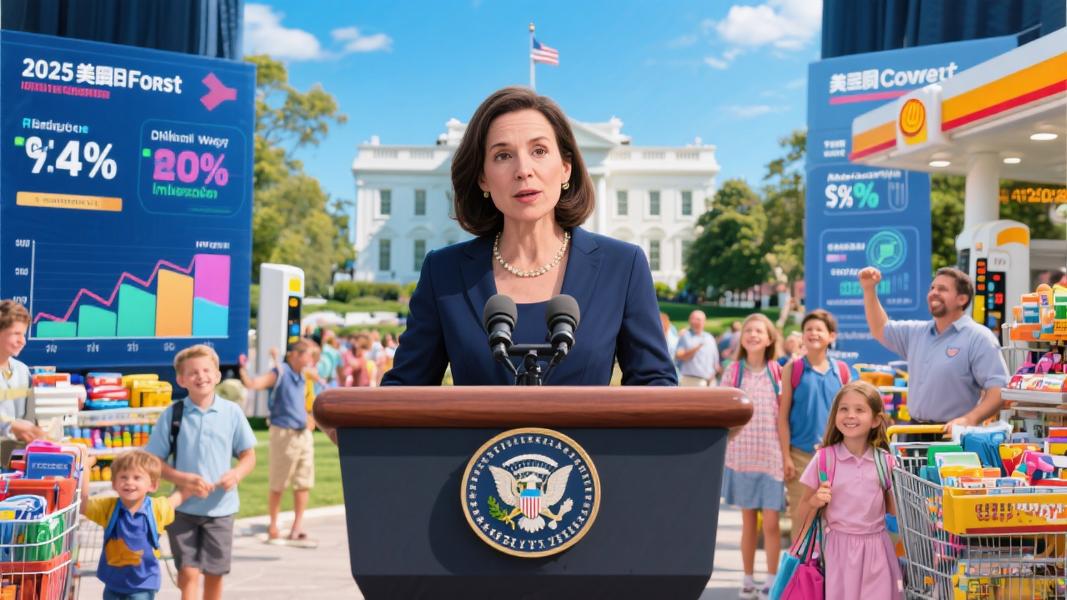
Inflation remains relatively stable as wages inch upward, according to the latest economic data from July 2025, showing mixed signals about the overall health of the U.S. economy under President Trump’s second term.
The annual inflation rate accelerated slightly to 2.8% in July, up from 2.7% in June, reaching its highest level since February. This modest uptick comes as shelter costs — the largest contributor to overall inflation — fell to their lowest level since October 2021, providing some relief to consumers struggling with housing expenses.
Mixed Price Signals
Energy costs continue to be a bright spot for consumers’ wallets. Gasoline prices have dropped nearly 10% compared to last year, while fuel oil is down 2.9%. “Energy prices fell in July — including gasoline, which is down nearly 10% over last year, and propane, which is down 2.5% over last year,” the White House noted in a recent statement.
What about those grocery bills? The news is mixed. Egg prices fell once again in July and are down 20% since Trump took office, though they still remain over 16% higher than a year ago. Other food items showing price decreases include butter and margarine (-1.8%), rice and pasta (-1.5%), frozen vegetables (-2.2%), tinned fish (-1.3%), and peanut butter (-3.3%).
Core inflation, which excludes volatile food and energy prices, increased 3.1% over the year ending in July, tracking at just 2.1% since President Trump returned to office. The White House has highlighted this figure as evidence that inflation remains under control despite concerns about the impact of tariffs on consumer prices.
Wages and Consumer Impact
Americans’ purchasing power appears to be improving modestly. Real average weekly earnings increased in July, with wages up 1.3% over last year. Production and nonsupervisory workers — often viewed as a barometer for middle-class economic health — have seen similar wage growth of 1.3% year-over-year.
Technology and travel sectors have delivered some of the most significant price drops. Smartphone prices have plummeted 14.7% compared to last year, while hotels (-4.8%), ship fares (-4.9%), and internet services (-2.4%) all showed meaningful declines.
Is the inflation picture as rosy as the administration suggests? Not entirely. While certain categories have seen price decreases, the overall inflation rate continues its gradual climb from earlier this year. Transportation services inflation increased to 3.4% from 2.8% in May, and used cars and trucks saw prices rise 2.8%, up from 1.8% previously.
Political Implications
The White House has seized on the mixed economic data as validation of Trump’s economic policies. Press Secretary Karoline Leavitt stated, “Today’s CPI report revealed that inflation beat market expectations once again and remains stable, underscoring President Trump’s commitment to lower costs for American families and businesses.”
Small business sentiment offers a potential bright spot for the administration. Optimism among U.S. small businesses reached a five-month high in July as owners became more upbeat about the economic outlook, potentially signaling increased confidence in the direction of the economy.
Critics, meanwhile, point to the gradual uptick in headline inflation as evidence that the administration’s tariff policies may eventually lead to broader price increases. The administration has repeatedly dismissed these concerns, asserting that “the data proves that President Trump is stabilizing inflation and the Panicans continue to be wrong about tariffs raising prices.”
For now, consumers remain caught between competing economic forces: declining prices in some categories offset by increases in others, with modest wage growth providing a thin cushion against rising costs. Whether this balance can be maintained in the face of continuing tariffs and economic pressures remains the question economists will be watching closely in the months ahead.
