
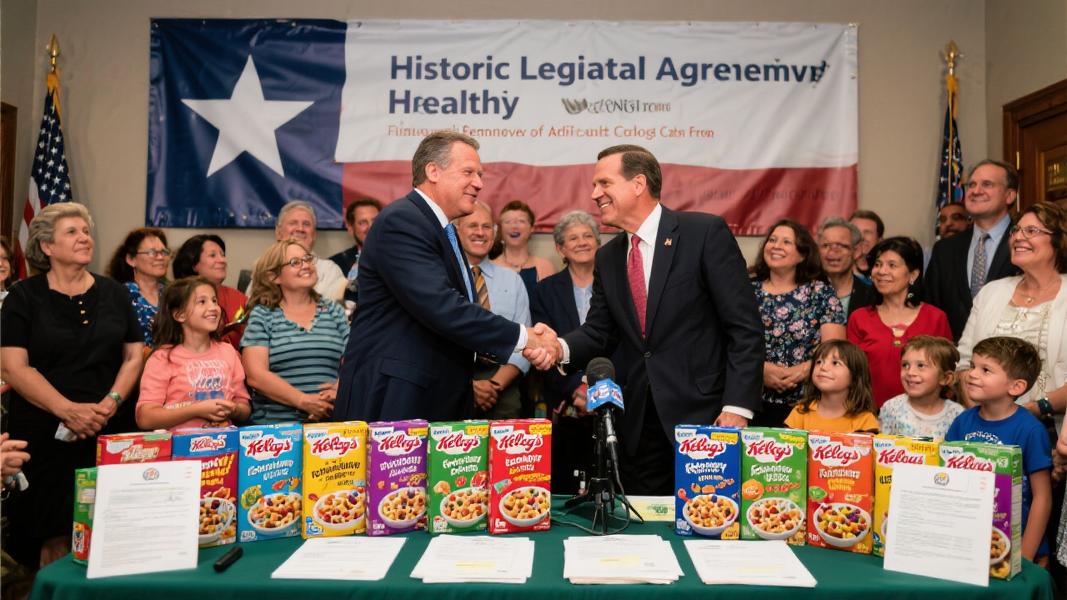
The colorful cereals that have lined American breakfast tables for generations are about to undergo a significant transformation. In a groundbreaking move, major cereal manufacturers Kellogg’s and General Mills have agreed to remove artificial food dyes from their products following legal action by Texas Attorney General Ken Paxton.
First-of-its-kind legal agreement targets artificial dyes
Attorney General Paxton and WK Kellogg Co. have signed a legally binding Assurance of Voluntary Compliance (AVC) requiring the complete removal of artificial food colorings from Kellogg’s cereals by the end of 2027. This marks the first such legal agreement with a major food company to permanently eliminate what Paxton’s office has described as “toxic dyes” from their products.
“Following months of investigating and negotiating, I’m proud to officially say Kellogg’s will stop putting these unhealthy ingredients in its cereals,” said Attorney General Paxton. “The signed AVC demonstrates that Kellogg’s is committed to keeping this pledge, and I commend the company for doing the right thing.”
The investigation revealed that Kellogg’s had already removed petroleum-based food colorings from products sold in Canada and Europe while continuing to use them in American cereals — a disparity that triggered the legal action.
General Mills follows suit after investigation
Not to be left behind with artificially colored cereals, General Mills has also agreed to eliminate petroleum-based artificial colorings from its U.S. cereals. The company plans to remove these substances from foods served in K-12 schools by summer 2026 and from all U.S. retail products by the end of 2027.
The agreement came after Paxton’s office issued a Civil Investigative Demand to General Mills, examining what they characterized as deceptive marketing of products labeled as “healthy” despite containing artificial dyes that have been linked to neurological and behavioral issues.
“General Mills removing these toxic artificial dyes is an incredible win for the health of our children and all Americans,” Paxton stated. “I look forward to finalizing an agreement with General Mills to ensure that this promise is kept.”
What makes this case particularly interesting? General Mills had previously pledged to remove such dyes in 2015 but only briefly complied before reintroducing colored cereals to American shelves, according to the Attorney General’s investigation.
Broader implications for food industry
The agreements with these cereal giants could signal a sea change in how artificial ingredients are regulated in American food products. Paxton has made it clear he’s putting other manufacturers on notice, encouraging them to follow Kellogg’s example by signing legally binding agreements to remove artificial dyes.
“Under my watch, big food companies that deceptively market their products and fill their foods with unhealthy ingredients have been put on notice that they will be held accountable for their actions,” Paxton declared. “I will never back down from defending Texas consumers and will continue to stand shoulder to shoulder with President Trump and Secretary Kennedy to help Americans get healthier.”
The Texas Attorney General has positioned these agreements as just the beginning, stating, “I encourage other food manufacturers to sign similar agreements to demonstrate their commitment to helping Americans live healthier lives.”
For consumers who’ve grown up with brightly colored breakfast cereals, the change might be jarring. But for parents concerned about the potential health impacts of artificial ingredients, the morning bowl of cereal is about to become a little less colorful — and potentially a lot more wholesome.
