
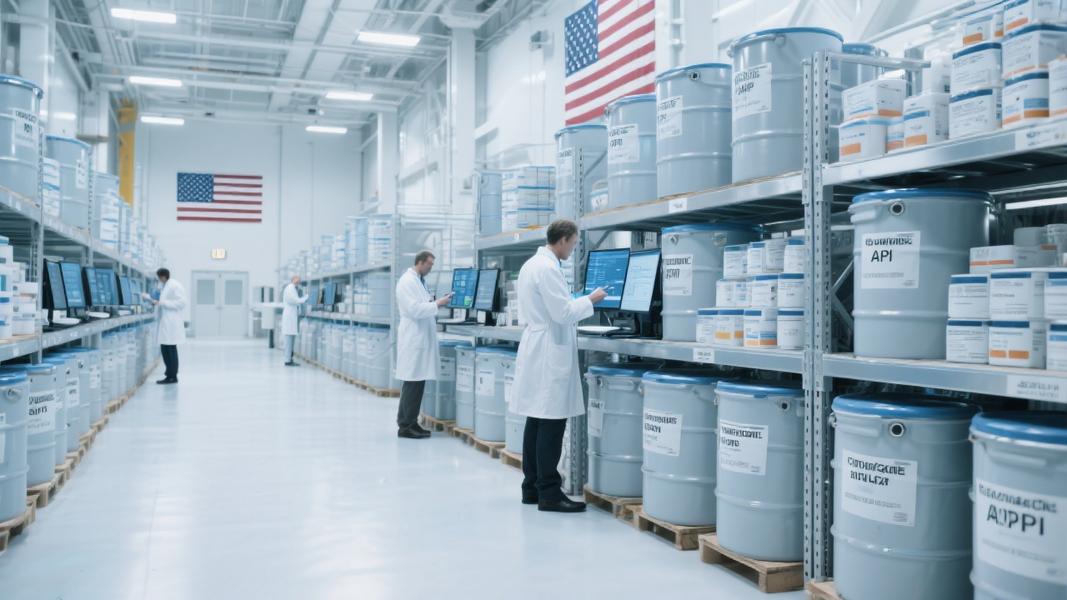
America is doubling down on its pharmaceutical independence, and it’s starting with a reserve of raw materials that’s been sitting mostly vacant.
President Trump signed a new Executive Order this week directing the Office of the Assistant Secretary for Preparedness and Response (ASPR) to identify approximately 26 critical drugs and begin filling the Strategic Active Pharmaceutical Ingredients Reserve (SAPIR) — a stockpile designed to reduce America’s dependence on foreign suppliers for essential medicines. The order aims to secure a six-month supply of key drug ingredients, preferably from domestic manufacturers, addressing what officials describe as a critical national security vulnerability.
The API Gap
Why focus on Active Pharmaceutical Ingredients rather than finished medications? The numbers tell a concerning story. While nearly 40% of prescription drugs are manufactured in the United States, only about 10% of the APIs — the biologically active components that make medicines work — are produced domestically. This imbalance has left America vulnerable to supply chain disruptions and dependent on foreign nations, including some adversaries, for essential medical supplies, according to White House documents.
“Stockpiling APIs is advantageous as APIs are generally lower-cost and have longer shelf lives than the finished drug products they make,” the Executive Order states. Beyond practical storage benefits, the administration believes government purchases to fill the SAPIR could stimulate more domestic production of these crucial ingredients.
The plan calls for ASPR to update its 2022 list of 86 essential medicines within 90 days and develop a comprehensive strategy for obtaining a six-month supply of APIs. Officials must also submit a proposal for opening a second SAPIR repository within a year, expanding the nation’s storage capacity for these critical materials.
Previous Efforts Fell Short
This isn’t the first attempt to shore up America’s pharmaceutical supply chain. The Biden Administration invested billions in securing supply chains, but according to the White House, those efforts yielded disappointing results. “Domestic production and procurement did not increase and the SAPIR is nearly empty,” the order notes, highlighting the urgency behind this renewed push.
But stockpiling ingredients is just one piece of the puzzle. What about actually making more medicines here?
The administration is simultaneously working to reduce regulatory barriers that have historically slowed domestic pharmaceutical manufacturing. New facilities typically take 5 to 10 years to build due to regulatory hurdles — a timeline the administration considers unacceptable. The FDA and Environmental Protection Agency have been directed to “review and streamline regulations related to the approval of new and expanded manufacturing sites” and eliminate “duplicative or unnecessary requirements,” according to industry analysis.
Pressure and Incentives
For pharmaceutical companies, these moves create both pressure and opportunity. The Executive Order increases expectations for domestic production while offering incentives to bring operations back to American soil. Still, the transition won’t be simple.
“Pharmaceutical companies now face heightened pressure—and new incentives—to relocate operations domestically, as well as new challenges to manufacturing or sourcing finished pharmaceuticals and their components abroad,” according to legal experts at Morgan Lewis who reviewed the order.
The administration’s focus on APIs rather than finished drugs represents a strategic calculation. By securing the raw materials with their longer shelf lives, officials believe they can build resilience more efficiently than by stockpiling completed medications that might expire before they’re needed.
Whether this approach will succeed where previous efforts failed remains to be seen, but one thing is clear: America’s pharmaceutical supply chain is getting a prescription for change — and this time, the doctor is ordering American-made medicine.
