
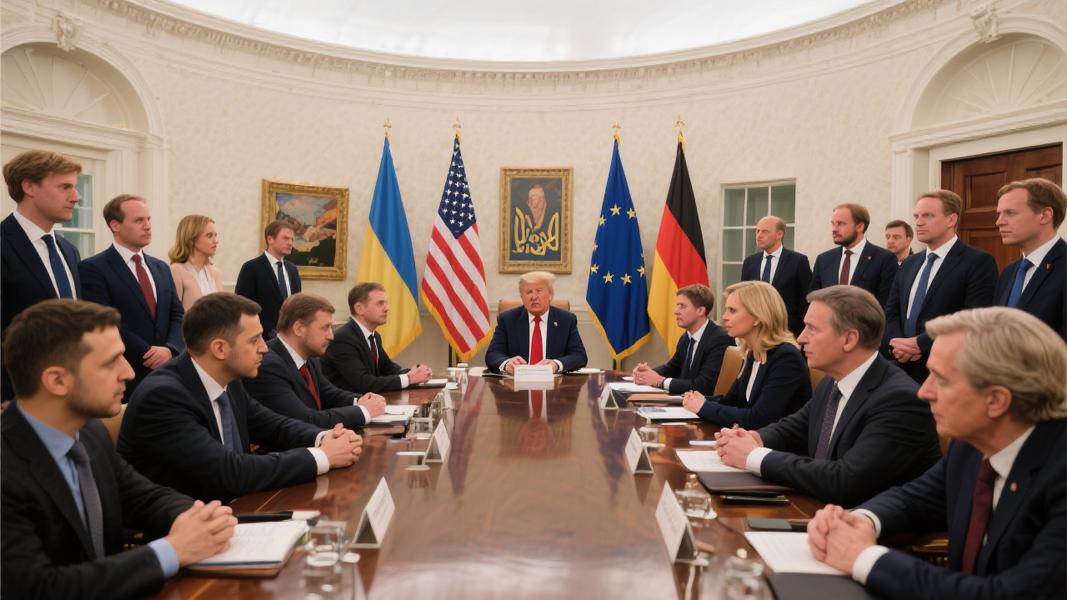
In a dramatic shift from years of diplomatic deadlock, world leaders converged at the White House Sunday as President Trump hosted what many are calling a pivotal meeting aimed at ending the protracted Ukraine conflict.
The high-stakes summit brought Ukrainian President Volodymyr Zelenskyy face-to-face with Trump and key European allies, marking what multiple participants described as the most significant progress toward peace since Russia’s invasion began more than three years ago.
Breaking the Diplomatic Ice
NATO Secretary General Mark Rutte didn’t mince words about Trump’s role in reviving negotiations. “I really want to thank you, President of the United States, dear Donald, for the fact that you, as I said before, broke the deadlock basically with President Putin by starting the dialogue,” Rutte stated during the meeting, adding, “From there, here we are today.”
Finnish President Alexander Stubb offered perhaps the most striking assessment of recent developments. “I think in the past two weeks, we’ve probably had more progress in ending this war than we have in the past three-and-a-half years,” he remarked, underscoring the sudden momentum in what had been a seemingly intractable situation.
For his part, Zelenskyy characterized his discussions with Trump as “very good,” noting they addressed “very sensitive points” regarding potential paths to peace, according to a post shared by the White House Rapid Response team.
European Leaders Unite
The gathering showcased a remarkable display of transatlantic unity, with leaders from across Europe praising the American president’s intervention. Italian Prime Minister Giorgia Meloni highlighted the significance of the moment: “It is an important day — a new phase — after three years that we didn’t see any kind of sign from the Russian side that they were willing for dialogue, so something is changing — something has changed — thanks to you.”
UK Prime Minister Keir Starmer echoed this sentiment, suggesting the meeting would be remembered as “a very important day in recent years” and acknowledging Trump’s unique ability to advance negotiations where others had failed.
Is this finally the breakthrough that war-weary Ukrainians have been waiting for? German Chancellor Friedrich Merz seemed cautiously optimistic but realistic about the challenges ahead. “The path is open. You opened it last Friday — but now the way is open for complicated negotiations,” Merz observed, addressing Trump directly.
French President Emmanuel Macron stressed the importance of trilateral discussions, saying, “Thank you, Mr. President, for organizing this meeting and for your commitment… everybody around this table is in favor of peace… this is why the idea of a trilateral meeting is very important because this is the only way to fix it.”
Beyond Ceasefire
Secretary of State Marco Rubio clarified that the administration’s ambitions extend beyond a temporary pause in hostilities. “What we’re aiming for here is not a ceasefire — what we ultimately are aiming for is an end to this war,” Rubio explained in comments from the White House. He emphasized America’s unique position: “We happen to be in the role of the only country in the world with the only leader in the world that can actually bring Putin to a table to even discuss these things.”
The summit comes amid other diplomatic achievements. European Commission President Ursula von der Leyen referenced concurrent developments, noting, “We had a fantastic NATO Summit… We had the largest trade deal ever — agreed. And now, we are here to work together with you on a… lasting peace for Ukraine. Stop the killing. This is really our common interest.”
That said, significant hurdles remain. Neither side has publicly detailed potential territorial concessions or security guarantees that might form the basis of any agreement.
As the meeting concluded, the White House struck a tone of cautious optimism, describing the gathering as evidence of “the resurgence of American leadership” and Trump’s “unrelenting commitment to peace.” For millions caught in the crossfire of Europe’s deadliest conflict since World War II, the question now becomes whether this diplomatic momentum can translate into a durable peace — or merely another false dawn in a war that has defied previous attempts at resolution.
