
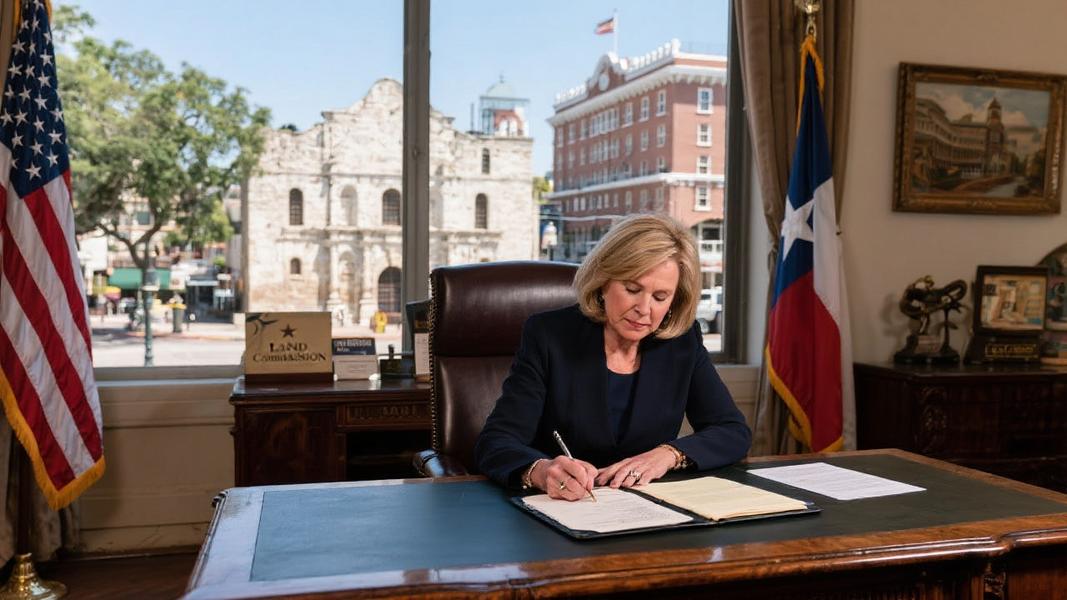
Texas has secured a significant piece of its heritage with the acquisition of two historic hotels adjacent to one of the state’s most iconic landmarks. The Texas General Land Office (GLO) has purchased the historic Menger and Crockett hotels, expanding state control around the Alamo in a move officials describe as protecting the “Shrine of Texas Liberty.”
The properties, which hadn’t been available for purchase in decades, represent a key piece in the larger $400 million Alamo Plan that aims to transform the visitor experience at the San Antonio landmark. This acquisition brings under state ownership buildings that have stood witness to Texas history since 1859, when the Menger first opened its doors next to the former mission.
Securing the Alamo’s Footprint
Texas Land Commissioner Dawn Buckingham, the first woman to hold the position, called the acquisition a historic milestone. “By securing the footprint around the Alamo Complex for the State of Texas, we are protecting these hallowed grounds and enhancing one of our nation’s most sacred historical sites,” Buckingham stated. “This investment ensures the Shrine of Texas Liberty, the Alamo, will become the most prominent battlefield site in the country – charting its own destiny for generations to come.”
The purchase is part of an ambitious revitalization effort that received over $400 million in state appropriations as of June 2023. The broader plan includes preserving the 300-year-old church, recapturing the original mission footprint, and creating a world-class visitor center and museum, according to information shared by the Alamo Trust.
Why does this matter beyond mere real estate? These hotels have been more than just neighbors to the Alamo — they’re repositories of Texas and American history in their own right.
A Historic Connection
The Menger Hotel stands as one of the oldest continuously operating hotels west of the Mississippi. For more than half the time that the Alamo has stood at its present location, the Menger has been its next-door neighbor, serving as a gathering place for travelers, dignitaries, and military personnel. Its story intertwines with American history, perhaps most famously when future president Theodore Roosevelt recruited his Rough Riders from inside the hotel bar before the Spanish-American War.
Dr. Kate Rogers, Executive Director of Alamo Trust, Inc., emphasized the significance of bringing these properties into the Alamo’s official footprint: “These properties have been part of the Alamo’s legacy since 1859. Their acquisition allows us to bring that rich history full circle. As we continue moving forward with the Alamo Plan, these additions represent a powerful opportunity to create a more immersive and seamless guest experience—one where visitors can explore 300 years of history like never before.”
The GLO, which operates with a 2025 budget of approximately $1 billion and manages 13 million acres of state land, will partner with Rockbridge and the Alamo Trust to integrate the hotels into the broader Alamo experience. This collaboration aims to support visitors while providing a seamless connection between the hotels and the overall Alamo visit.
Looking Forward
The purchase comes at a time when historic preservation and tourism development increasingly intersect in Texas. Governor Greg Abbott signed into law the more than $400 million appropriations request for the Alamo Plan in June 2023, demonstrating the state’s commitment to elevating the site’s prominence.
Officials haven’t yet detailed exactly how the hotels will be integrated into the visitor experience, but the acquisition is expected to preserve their historic character while enhancing their connection to the Alamo story.
For San Antonio, a city where tourism drives a significant portion of the economy, this expansion of state ownership around its most famous landmark represents both opportunity and responsibility—a chance to tell a fuller story of Texas history while ensuring these historic buildings remain accessible to future generations.
