
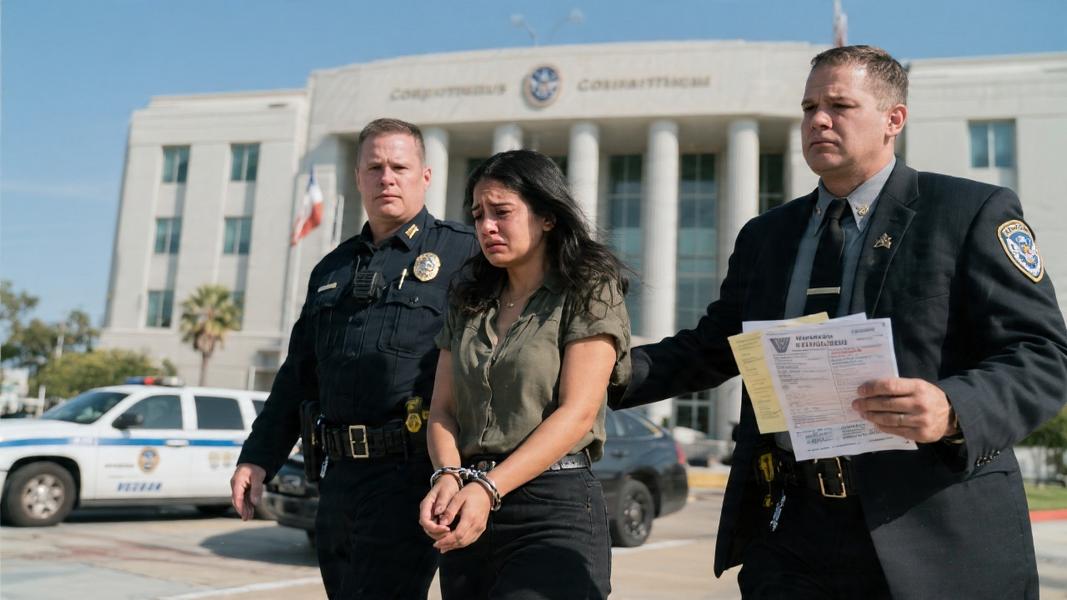
A scheme built on forged paperwork and false promises has landed two Texas women in serious legal jeopardy — and left a trail of vulnerable immigrants holding worthless documents they believed would change their lives.
Federal authorities have unsealed charges against Irma Hernandez, 45, of the Houston area, and Ana Maria Hernandez, 53, of El Paso, in separate but strikingly similar immigration fraud cases that prosecutors say exploited undocumented individuals who had few other places to turn. Both women allegedly posed as qualified legal representatives, collected fees, and delivered nothing but fabricated paperwork — and in some cases, made things significantly worse for their clients.
The Houston Taco Truck Scheme
Irma Hernandez didn’t run a law office. She ran a taco truck — and, according to federal prosecutors, a parallel business built entirely on deception. Authorities say she collected thousands of dollars from undocumented immigrants seeking legal status, then submitted fraudulent applications on their behalf without any legitimate credentials to do so. She was not a licensed attorney. She was not an accredited immigration representative. She was, investigators allege, simply someone who saw an opportunity.
How long did it go on? Long enough that the number of alleged victims runs into the dozens. Prosecutors say Hernandez charged clients anywhere from $500 to $3,000 per case — fees that represent enormous sums to individuals working low-wage jobs and scraping together every dollar they had. In return, many received forged government documents or applications that were never actually filed. Some victims, upon discovering the fraud, found themselves in a worse immigration position than when they started.
Still, what makes the case particularly striking is how it allegedly operated in plain sight. Clients were recruited through word of mouth in tight-knit immigrant communities where trust — and desperation — run deep. “These defendants preyed on the most vulnerable members of our community,” prosecutors stated in court filings, framing the scheme not just as financial fraud but as a calculated exploitation of fear.
El Paso: A Different City, A Familiar Playbook
Roughly 750 miles to the west, Ana Maria Hernandez was allegedly running a near-identical operation out of El Paso. Federal charges against her describe a years-long fraud in which she presented herself as capable of navigating the U.S. immigration system — accepting clients, taking their money, and submitting applications riddled with false information or, in some cases, not submitting them at all.
That’s the catch with so many notario fraud cases: victims often don’t realize they’ve been deceived until months or years later, when an immigration court date arrives and their paperwork doesn’t exist — or worse, when they receive a deportation notice based on a fraudulent filing they didn’t even know had been submitted in their name. Ana Maria Hernandez faces multiple counts of fraud, and prosecutors say the financial toll on her clients was substantial, with some families losing their entire savings.
El Paso’s proximity to the U.S.-Mexico border makes it a particularly active market for this kind of scheme. Demand for immigration legal services in the region vastly outpaces the supply of qualified attorneys and accredited representatives, a gap that bad actors have long exploited with devastating results. Community advocates have warned for years that the problem is endemic — and that prosecutions, while meaningful, represent only a fraction of what’s actually happening.
Notario Fraud: An Old Crime With a Persistent Grip
Both cases fall under what immigration enforcement officials broadly call “notario fraud” — a term borrowed from the Latin American legal tradition in which a notario público holds significant legal authority. In the United States, a notary public holds no such power. But the title carries weight in immigrant communities, and unscrupulous operators have used that confusion to devastating effect for decades.
The Department of Justice and Department of Homeland Security have made periodic pushes to crack down on unauthorized immigration practice, but advocates say enforcement remains inconsistent and penalties often insufficient to deter repeat offenders. Some individuals convicted of immigration fraud have, after serving time, returned to the same communities and resumed similar schemes under different names or business fronts. It’s a grim cycle, and it’s one that federal officials say they’re working to break — though the caseload is enormous and resources are finite.
Immigration attorneys who work in affected communities describe the downstream damage in stark terms. Clients who’ve been victimized often arrive at legitimate legal offices with scrambled case histories, missed deadlines, and deep distrust of anyone claiming to offer help. “The fraud doesn’t end when the money is taken,” one Houston-area immigration attorney noted at a recent advocacy briefing. “It echoes through every interaction that person has with the legal system afterward.”
What Comes Next
Both women are expected to face federal proceedings in their respective districts. If convicted, each could face significant prison time alongside financial penalties — though restitution for victims in fraud cases of this nature is notoriously difficult to recover in full. Many victims, wary of drawing attention to their own immigration status, may decline to fully participate in proceedings, a dynamic that defense attorneys sometimes leverage and that prosecutors openly acknowledge as a challenge.
Authorities are urging anyone who believes they may have been a victim of either Hernandez to contact the FBI or the Department of Homeland Security’s tip line. They’re also reminding the public that legitimate immigration legal help is available through accredited nonprofit organizations and licensed attorneys — and that verifying credentials before handing over money or personal documents is, quite literally, a life-altering precaution.
Community organizations in both Houston and El Paso say they plan to use both cases as a renewed opportunity to spread awareness — hosting know-your-rights sessions, distributing multilingual guides on how to identify fraud, and connecting residents with vetted legal resources. It’s outreach work that never really stops, because the need never really does either.
In the end, the most sobering detail in both cases isn’t the dollar amounts or even the charges — it’s the image of someone sitting across a table from a stranger, handing over documents and savings and hope, trusting that the person on the other side of that table is actually there to help them. They weren’t. And for dozens of families, that moment of misplaced trust is still unraveling.
