
Justice Department Secures Agreement to Improve Access for Deaf Inmates in North Carolina Prisons
Deaf and hard-of-hearing inmates in North Carolina prisons will soon have better access to sign language interpreters, hearing aids, and other crucial services following a new agreement with federal authorities.
The U.S. Justice Department announced an agreement with the North Carolina Department of Adult Corrections (NCDAC) to address longstanding accessibility issues for incarcerated individuals with hearing disabilities. The settlement resolves complaints that the prison system, which houses more than 30,000 people across 50+ facilities, failed to provide necessary communication aids required under the Americans with Disabilities Act.
Breaking Down Barriers Behind Bars
What does this mean for deaf inmates? For many, it represents the first real chance to participate equally in prison programs that could determine their future success upon release.
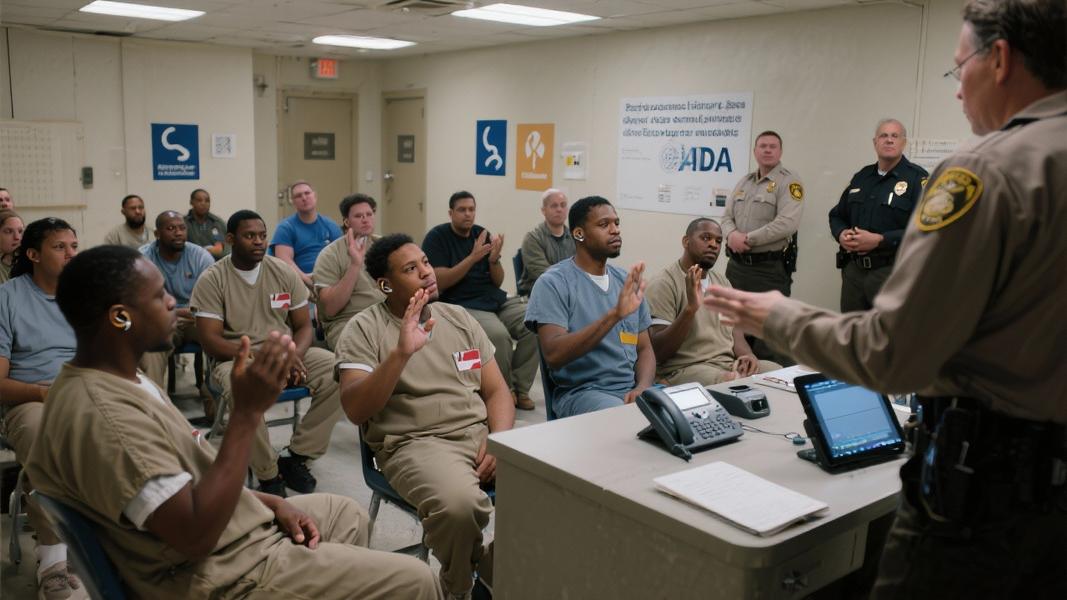
Under the agreement, NCDAC will identify incarcerated individuals with hearing disabilities and provide them with appropriate auxiliary aids and services, including sign language interpreters, hearing aids, cochlear implants, text telephones, and videophones. The department will also implement comprehensive ADA training for staff to ensure compliance across all facilities.
Assistant Attorney General Harmeet K. Dhillon emphasized the critical nature of these changes: “The ADA requires effective communication for incarcerated individuals with hearing disabilities so they have access to critical programs, including religious and vocational services.”
For deaf inmates, the lack of communication accommodations doesn’t just mean missing announcements or struggling with phone calls. It can mean complete exclusion from educational opportunities, religious services, medical appointments, and even basic safety instructions — potentially extending their effective sentences through missed rehabilitation opportunities.
A Broader Push for Accessibility
The North Carolina agreement isn’t happening in isolation. It represents part of a broader effort by the Justice Department’s Civil Rights Division to address discrimination against disabled inmates nationwide.
“The Civil Rights Division is committed to eliminating barriers, including communication barriers, that prevent individuals with disabilities from participating fully in prison programs,” Dhillon stated.
Advocates have long argued that deaf inmates face a form of double punishment — their court-ordered sentence plus the additional isolation and exclusion that comes from communication barriers. Without proper accommodations, even routine interactions with staff and other inmates become difficult or impossible.
The agreement doesn’t specify a timeline for full implementation, but it does require NCDAC to begin identifying inmates with hearing disabilities and developing accommodation plans immediately.
For thousands of current and future inmates with hearing disabilities in North Carolina’s prison system, these changes could transform their incarceration experience from one of isolation to one with at least the possibility of rehabilitation and reentry preparation — the difference between serving time and making use of it.
