
U.S. Treasury Sanctions Iraqi Businessman’s $300 Million Iranian Oil Smuggling Network
The U.S. Treasury Department has unveiled sanctions against a sophisticated smuggling operation that blended Iranian and Iraqi oil to evade international restrictions, reportedly generating hundreds of millions in illicit revenue for Tehran’s regime annually.
At the center of the scheme is Waleed Khaled Hameed al-Samarra’i, an Iraqi-Kittitian businessman based in the United Arab Emirates, whose network allegedly disguised Iranian oil as Iraqi product through an elaborate maritime shell game involving ship-to-ship transfers and falsified documentation. Treasury officials estimate the operation funneled approximately $300 million each year to both Iran and al-Samarra’i himself.
Sophisticated Maritime Deception
“Iraq cannot become a safe haven for terrorists, which is why the United States is working to counter Iran’s influence in the country,” said Treasury Secretary Scott Bessent in a statement. “By targeting Iran’s oil revenue stream, Treasury will further degrade the regime’s ability to carry out attacks against the United States and its allies.”
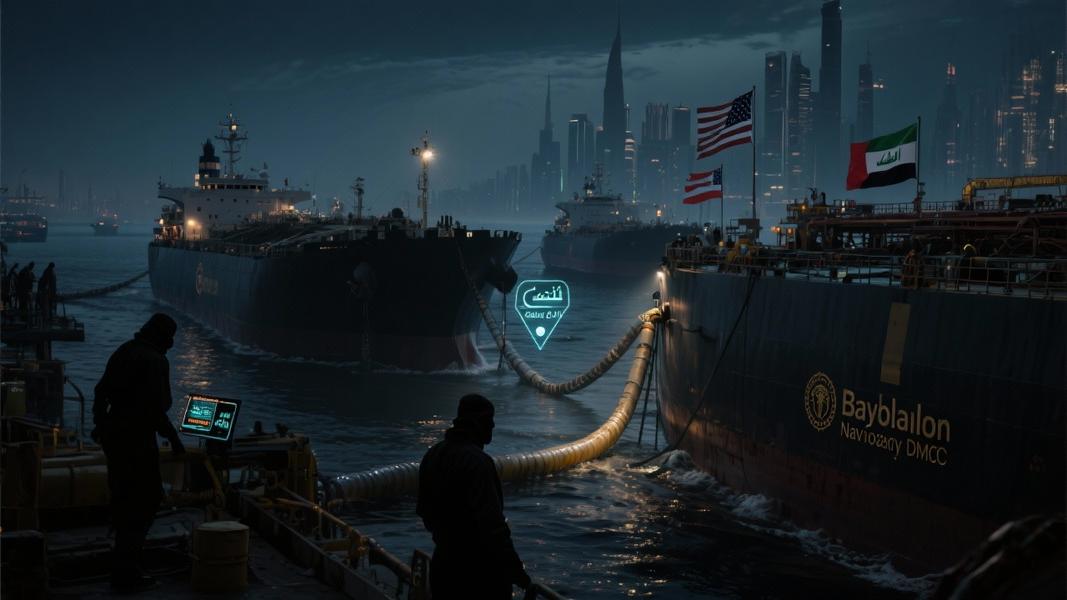
How did the scheme work? According to investigators, al-Samarra’i controlled multiple companies including Babylon Navigation DMCC and Galaxy Oil FZ LLC, which operated a fleet of nine Liberia-flagged vessels. These ships would conduct clandestine blending operations, mixing Iranian and Iraqi oil through transfers in the Persian Gulf and at Iraqi ports before marketing the resulting product as purely Iraqi in origin.
The network went to extraordinary lengths to conceal its activities. Ships would conduct transfers under cover of darkness, manipulate their automatic identification systems (AIS) to hide their movements, and operate through a labyrinth of shell companies registered in the Marshall Islands to obscure true ownership.
Part of Broader Enforcement Campaign
This isn’t the first such network Treasury has targeted. The sanctions build upon a previous action taken on July 3, 2025, against a separate smuggling operation run by Salim Ahmed Said that employed similar tactics. Both actions fall under the broader campaign established by National Security Presidential Memorandum-2, which aims to maximize economic pressure on Iran.
“Today, the United States is acting to stem the flow of revenue the Iranian regime uses to support terrorism abroad and oppress its own people,” the Treasury declared in its announcement.
The consequences for those named in the sanctions are severe. Under Executive Order 13902, all property and interests belonging to al-Samarra’i and his associates within U.S. jurisdiction are now blocked. American persons are prohibited from engaging in transactions with designated parties, with violations potentially resulting in civil or criminal penalties.
Foreign financial institutions that knowingly facilitate significant transactions for sanctioned entities could also face secondary sanctions themselves — effectively cutting them off from the U.S. financial system.
A Persistent Problem
Despite these enforcement efforts, evidence suggests Iranian oil continues to flow through Iraq at significant volumes. Chinese import records reveal a telling discrepancy: for two consecutive years, imports of “Iraqi” oil to China have exceeded Iraq’s officially declared shipments by approximately 100,000 barrels per day — representing more than $2.5 billion in annual value.
This persistent gap highlights the challenges facing both Iraq’s oil minister and U.S. enforcement efforts. The sanctions against al-Samarra’i’s network may disrupt one channel, but the economic incentives for such smuggling operations remain powerful.
As Treasury continues its campaign against Iran’s shadow oil trade, the cat-and-mouse game between sanctions enforcers and smugglers shows little sign of abating — with billions of dollars and critical geopolitical interests hanging in the balance.
