
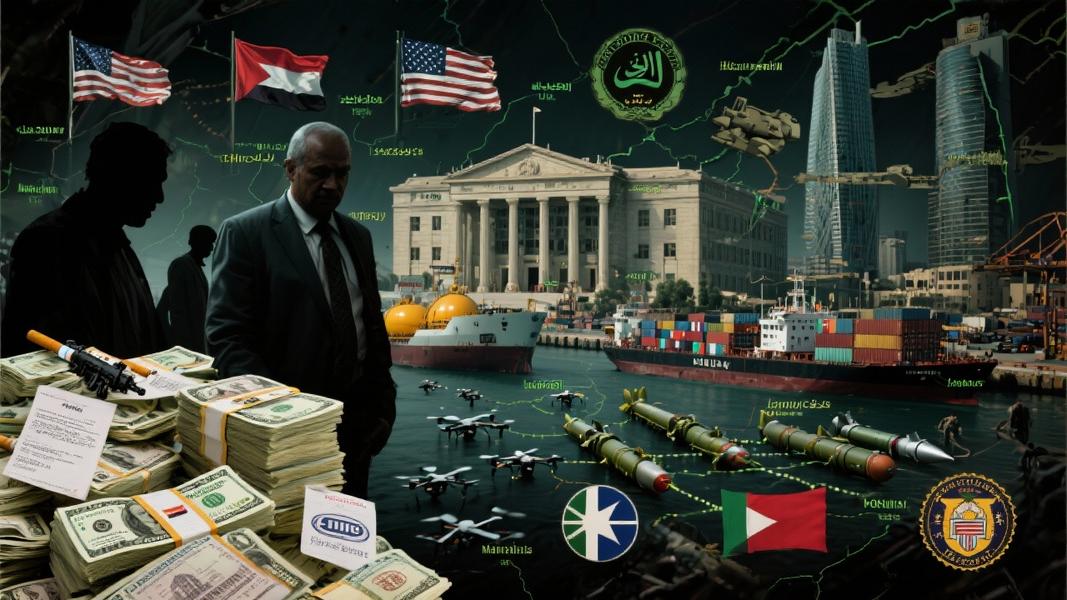
The U.S. Treasury Department has unleashed its largest-ever sanctions package against Yemen’s Iran-backed Houthi militants, targeting a sprawling network that stretches from the dusty streets of Sana’a to corporate offices in China and the UAE.
In a sweeping action announced Tuesday, the Office of Foreign Assets Control (OFAC) designated 32 individuals and entities while identifying four vessels involved in what officials describe as a sophisticated global operation funding the group’s attacks on shipping in the Red Sea and wider regional destabilization efforts.
“The Houthis continue to threaten U.S. personnel and assets in the Red Sea, attack our allies in the region, and undermine international maritime security in coordination with the Iranian regime,” said Under Secretary of the Treasury for Terrorism and Financial Intelligence John K. Hurley in a statement accompanying the sanctions.
Following the Money
The sanctions target a complex web of financial and procurement channels that have kept the Houthis armed with increasingly sophisticated weaponry. Officials say these networks have facilitated the acquisition of ballistic missiles, cruise missiles, and UAV components used in attacks against U.S. forces, allies, and commercial shipping that have disrupted global trade routes.
How extensive is this operation? According to Treasury officials, the Houthis generate “substantial revenue” through oil imports, smuggling operations, and money laundering schemes that funnel vast sums to senior leadership, who then direct these funds toward weapons procurement.
“The Houthis collaborate with opportunistic businessmen to reap enormous profits from the importation of petroleum products and to enable the group’s access to the international financial system,” said Deputy Secretary of the Treasury Michael Faulkender.
Asset Seizure Machine
Among the most lucrative Houthi operations uncovered by investigators is a systematic campaign of asset confiscation. The group has seized state and private assets under fraudulent legal pretenses, installing loyal operatives to manage properties and businesses worth hundreds of millions of dollars.
This operation was previously overseen by Saleh Mesfer Alshaer, who was sanctioned in 2021 for his role as “Judicial Custodian” directing violent seizures exceeding $100 million. His replacement, Salih Dubaysh, has continued these practices, often accusing legitimate owners of treason to justify confiscations.
The Treasury Department notes that “during his tenure as Judicial Custodian, Alshaer distributed a portion of the seized assets to his family members to manage, with the goal of enriching the Houthis and preserving the group’s control over the assets.”
One such family member, Abdullah Mesfer Al-Shaer, has been appointed chairman of the General Holding Corporation for Real Estate and Investment while simultaneously running a private security company. The sanctions also target Shibam Holding, which controls assets estimated at $500 million and serves as a money laundering vehicle through real estate and communications investments.
Oil’s Dark Pipelines
Perhaps the most critical revenue stream fueling Houthi operations comes from petroleum smuggling. This network, overseen by Mohammad Abdulsalam, includes a roster of operatives and shell companies that facilitate oil transactions outside international sanctions regimes.
Key players in this scheme include Zaid Ali Yahya Al Sharafi and Saddam Ahmad Mohammad Al Faqih, who manage companies with names like Al Faqih International Trade, Sam Oil Company, and Royal Plus Petroleum. These entities generate critical funding that the Treasury says directly supports the group’s military activities.
The maritime dimension of these operations involves shipping companies and vessels with global connections. Four ships – the STAR MM, NOBEL M, BLACK ROCK, and SHRIA – have been identified for their role in discharging oil at Houthi-controlled ports. Treasury officials report that “Tyba operates the Barbados-flagged STAR MM and Antigua and Barbuda-flagged NOBEL M oil tankers, which discharged oil for Arkan Mars Petroleum DMCC at Houthi-controlled port Ras Isa in late May 2025.”
The China Connection
In what may be the most alarming aspect of the Treasury’s findings, several Chinese companies have been identified as key suppliers of military components and dual-use technologies to the Houthis.
Hubei Chica Industrial Co., Shenzhen Shengnan Trading Co., and Shanxi Shutong Import and Export Trade Co. have all been implicated in supplying chemical precursors and components used in the production of ballistic missiles, explosives, and UAVs.
These firms don’t merely sell products – they actively assist in evading detection. “Representatives of Hubei Chica have assisted the Houthis in falsifying shipping documents, enabling the Houthis to hide their ongoing procurement of chemical precursors and circumvent China’s export controls,” the Treasury Department revealed.
Front companies like Yiwu Wan Shun Trading Company Limited in China and Irtiqa for Development and Qualification Technical Institute in Yemen serve as procurement vehicles for acquiring sensitive technologies. According to the sanctions announcement, “Prominent Houthi procurement operatives, including U.S.-designated Houthi procurement operative Ibrahim Al-Nashiri, have used Yiwu Wan Shun to purchase industrial equipment in support of Houthi militants.”
The shipping network itself involves multiple companies that specialize in obfuscating military shipments among legitimate cargo. Guangzhou Yakai International Freight Forwarding Co. “has facilitated numerous shipments of dual-use components and other military-grade materials in support of the Houthis’ weapons development efforts,” the Treasury noted.
Maximum Pressure
Will these sanctions actually impact Houthi operations? That remains to be seen. Previous rounds of sanctions have failed to deter attacks on shipping in the Red Sea, which have disrupted global supply chains and driven up insurance costs for vessels navigating these waters.
The Treasury Department insists it will “continue applying maximum pressure against those who threaten the security of the United States and the region.” But cutting off the group’s access to funding and supplies has proven challenging, particularly given the complex web of front companies and the involvement of entities in countries with sometimes limited cooperation with U.S. sanctions regimes.
For shipping companies and navies patrolling the region, the sanctions represent just one piece of a puzzle that continues to grow more complex as the Houthis demonstrate increasingly sophisticated attack capabilities – capabilities that suggest their procurement networks remain at least partially intact, despite the mounting international pressure.
