
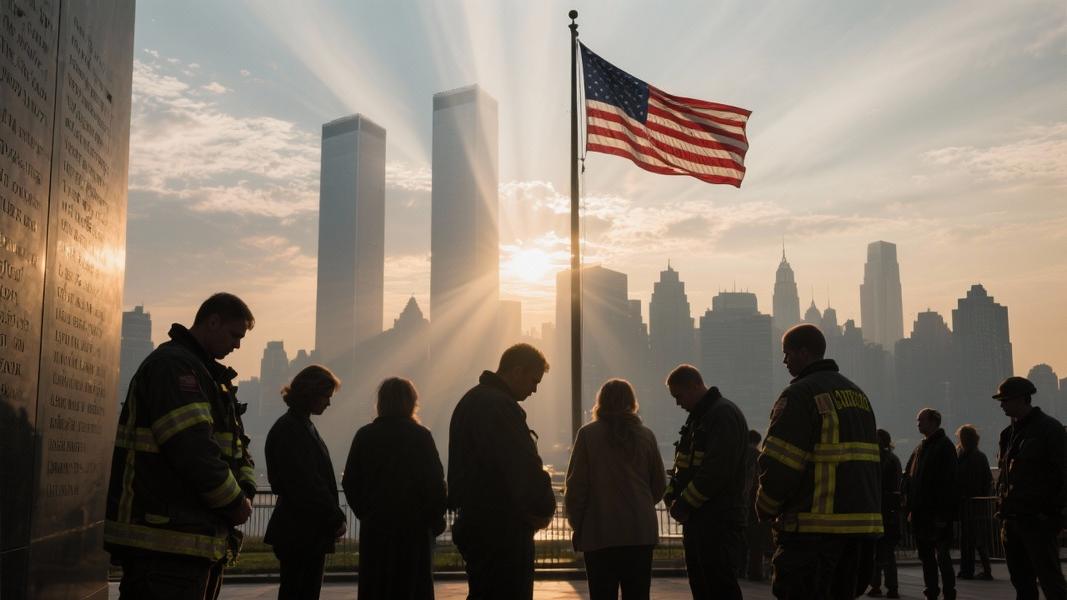
The September 11 attacks remain seared into America’s collective memory as the deadliest terrorist incident in the nation’s history, claiming 2,977 innocent lives on what began as an ordinary Tuesday morning in 2001. The coordinated hijacking of four commercial airliners transformed a clear September day into an unimaginable nightmare that would reshape American foreign policy and national security for decades to come.
A Nation Forever Changed
“September 11, 2001, will forever live in the collective consciousness of those who witnessed four commercial jetliners converted into weapons of terror to target innocent Americans on a beautiful Tuesday morning in September, 24 years ago,” reads a presidential proclamation marking the somber anniversary. The attacks claimed victims from all walks of life — from financial workers in the Twin Towers to children on a school trip.
The toll was staggering. In total, 2,996 people died, including the 19 hijackers who commandeered the planes. The FBI reports that among the victims were eight children, including three 11-year-olds aboard Flight 77, which crashed into the Pentagon. Nearly 3,000 children lost a parent that day.
The destruction began when American Airlines Flight 11 slammed into the North Tower at 8:46 a.m., followed by United Airlines Flight 175 hitting the South Tower at 9:03 a.m. The impact on the North Tower was particularly devastating — destroying all staircases and elevator shafts from the impact zone upward. Between 1,344 and 1,402 people trapped above the crash site had no path to escape and perished, many choosing to jump rather than face the advancing flames.
Collapse and Aftermath
The South Tower collapsed at 9:59 a.m., followed by the North Tower 29 minutes later. The devastation was incomprehensible. Fires at Ground Zero would continue to smolder for more than three months afterward, a grim testament to the scale of destruction.
What often gets overlooked in the casualty counts? The extraordinary sacrifice of first responders. More than 400 police officers and firefighters lost their lives after rushing into the burning towers, showing remarkable courage as they climbed stairs while thousands fled in the opposite direction.
Meanwhile, at the Pentagon, American Airlines Flight 77 claimed 125 lives when it crashed into the western façade of the building. And in a Pennsylvania field, United Airlines Flight 93 went down after passengers, having learned of the other attacks via airphone calls, mounted a heroic resistance against the hijackers.
“With the rallying cry, ‘Let’s roll,’ they stormed the cockpit to overcome the terrorists, forcing the plane to crash in a field in southwestern Pennsylvania,” notes a presidential proclamation. “Their bravery saved countless lives and preserved our Nation’s capital as a symbol of the enduring strength of our Republic.”
A Nation’s Response
How did America respond to this unprecedented attack? President George W. Bush set the tone for what would become the War on Terror with his declaration: “We will make no distinction between the terrorists who committed these acts and those who harbor them.” This stance would shape American foreign policy for the next two decades, leading to wars in Afghanistan and Iraq.
The attacks also inspired a surge of patriotism and national unity rarely seen in modern American history. By joint resolution on December 18, 2001 (Public Law 107-89), Congress designated September 11 of each year as “Patriot Day” to honor both victims and heroes of the attacks.
Twenty-four years later, the ripple effects of 9/11 continue to influence American life, from airport security protocols to surveillance policies, from military engagements abroad to the architecture of our cities. For a generation born after 2001, the attacks exist as history rather than memory — yet the day remains, as one historian put it, the moment that defined the beginning of the 21st century for Americans.
