
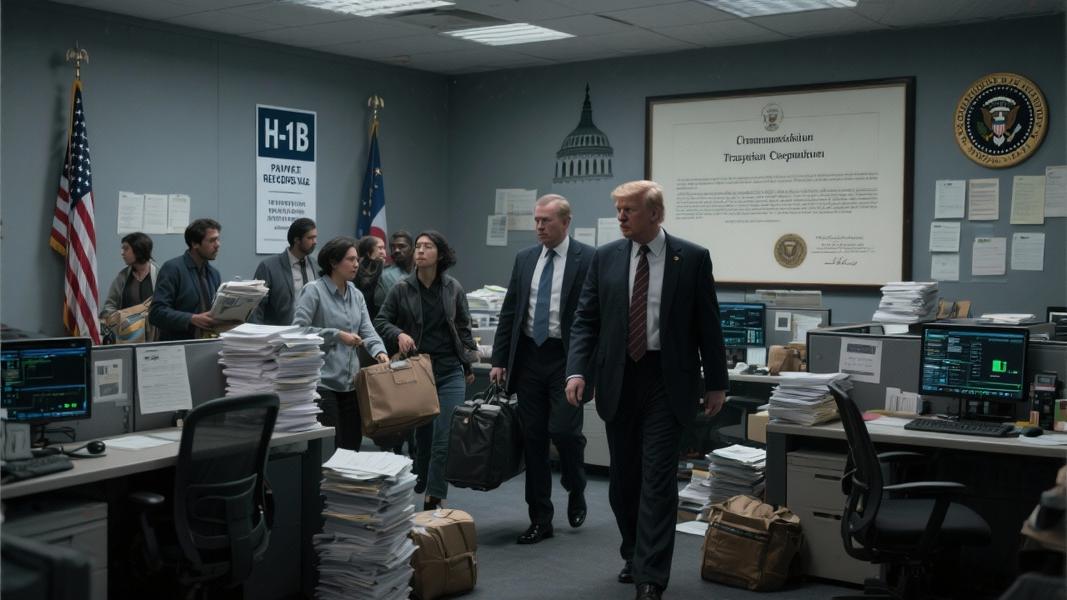
The White House has launched a dramatic overhaul of the H-1B visa program, imposing a steep $100,000 fee on employers seeking to bring in foreign specialty workers and citing widespread abuse that has undermined American tech workers for decades.
The sweeping restrictions, set to take effect September 21, 2025, come after years of mounting evidence that the program has strayed far from its original purpose of supplementing the American workforce with specialized talent. Instead, according to a presidential proclamation released yesterday, it has “been deliberately exploited to replace, rather than supplement, American workers with lower-paid, lower-skilled labor.”
From Supplement to Replacement
The numbers tell a troubling story. Between 2000 and 2019, the number of foreign STEM workers in the United States more than doubled from 1.2 million to nearly 2.5 million, while overall STEM employment grew by just 44.5 percent during the same period. In computer and math fields specifically, the foreign share of workers jumped from 17.7 percent to 26.1 percent, according to White House data.
Perhaps more alarming are the hiring patterns that have emerged. IT workers now comprise over 65% of all H-1B visas issued in recent years — up dramatically from 32% in 2003. Many of these workers come through outsourcing companies that have found a profitable niche in the visa program, offering what one study showed was a 36% discount compared to traditional full-time workers.
“American IT workers have reported they were forced to train the foreign workers who were taking their jobs and to sign nondisclosure agreements about this indignity as a condition of receiving any form of severance,” the proclamation states, highlighting practices that critics have long decried as particularly cruel.
Tech Layoffs and H-1B Approvals: A Troubling Paradox
The timing couldn’t be worse for American tech workers. Unemployment among recent computer science and engineering graduates ages 22 to 27 has risen to 6.1% and 7.5% respectively — more than double the rates faced by biology and art history graduates, according to Federal Reserve Bank of New York figures cited in the proclamation.
The broader tech industry has shown similar trends, with unemployment in computer occupations climbing from 1.98% in 2019 to 3.02% in 2025.
Meanwhile, several major tech firms have been conducting massive layoffs while simultaneously receiving approval for thousands of new H-1B workers. How bad is it? One software company that received approval for over 5,000 H-1B workers in fiscal year 2025 announced layoffs totaling more than 15,000 employees during roughly the same period. Another firm, approved for nearly 1,700 H-1B workers, announced in July it was laying off 2,400 American workers at its Oregon facilities, according to White House documents.
Beyond Economics: National Security Concerns
The proclamation goes beyond economic arguments, citing national security risks associated with the program’s abuse. Domestic law enforcement agencies have investigated H-1B-reliant outsourcing companies for “visa fraud, conspiracy to launder money, conspiracy under the Racketeer Influenced and Corrupt Organizations Act, and other illicit activities,” according to the proclamation.
The economic impact on American workers has been substantial. A 2017 study indicated that without the influx of foreign workers, wages for American computer scientists would have been 2.6 to 5.1 percent higher, and employment in computer science for American workers would have been 6.1 to 10.8 percent higher in 2001.
The New Rules: $100,000 Fee and Major Reforms
The central reform — a $100,000 payment requirement for employers seeking H-1B workers — represents one of the most dramatic changes to the program in its history. The restriction will last for 12 months unless extended and includes exceptions at the discretion of the Secretary of Homeland Security, as outlined in the proclamation.
But the changes don’t stop there. The Secretary of Labor has been directed to initiate a rulemaking process to revise prevailing wage levels, while the Secretary of Homeland Security will develop rules to prioritize admission of “high-skilled and high-paid aliens” consistent with the policy’s goals.
The restrictions apply specifically to foreign H-1B workers currently outside the United States. The proclamation tasks the Secretary of Homeland Security and Secretary of State with implementing the payment requirement and restricting petitions that don’t include the payment.
Tech industry groups have yet to respond formally to the announcement, though previous attempts to reform the H-1B program have met with significant pushback from Silicon Valley and outsourcing firms that have built business models around the existing system.
For American tech workers who have watched their industry transform over two decades, the changes may come too late for those who already lost jobs or saw wages stagnate. But for recent STEM graduates facing unexpectedly challenging job markets, the administration’s move signals what could be a significant shift in how America balances global talent recruitment with protection of its domestic workforce.
