
The Trump administration’s campaign to tackle rising autism rates has hit an early stumbling block: funding cuts that appear to contradict its own public commitments.
Just three months after establishing the high-profile Make America Healthy Again Commission to address what President Trump called a childhood chronic disease crisis, NIH data reveals the administration has actually slashed autism research funding by 26% compared to 2024 levels. This reduction comes despite Trump’s public emphasis on addressing autism spectrum disorder, which now affects 1 in 36 American children.
Bold Promises, Budget Contradictions
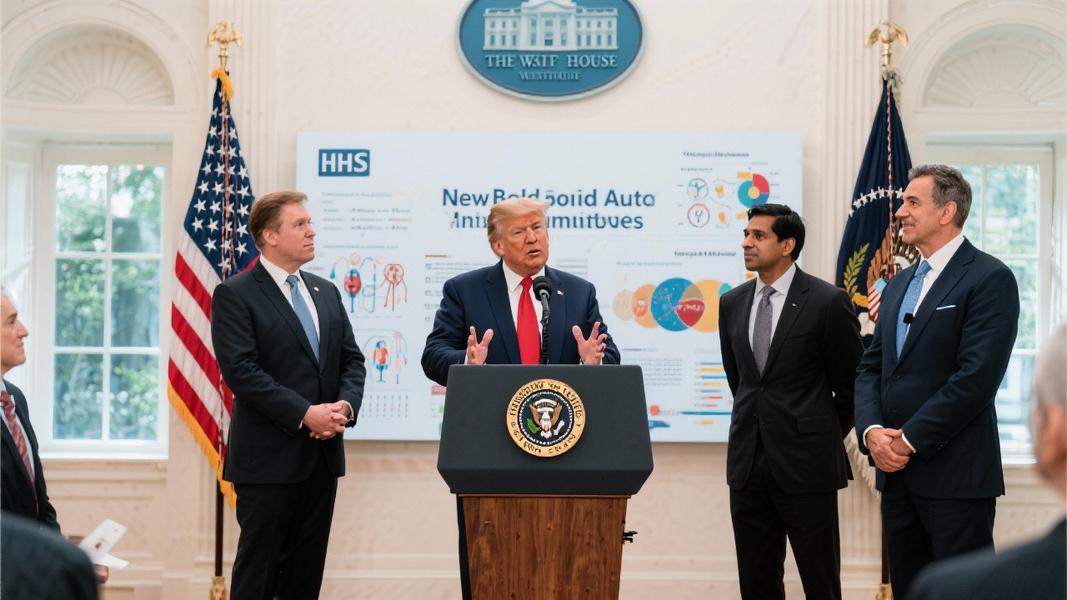
In February, the administration launched the MAHA Commission, chaired by controversial Health and Human Services Secretary Robert F. Kennedy Jr., with a mandate to investigate the causes behind rising autism rates. “There’s something wrong… So, we’re going to find out what it is,” Trump stated at the commission’s unveiling.
The initiative was presented with considerable fanfare, promising to examine everything from environmental factors to medical treatments that might contribute to the five-fold increase in autism diagnoses seen in recent decades. Just last month, the administration announced “unprecedented cooperation” between NIH, FDA, and CMS to address what it called the “autism epidemic.”
Yet the numbers tell a different story. During the first four months of 2025, NIH funding for autism-related research dropped from $147 million to $116 million compared to the same period in 2024 — a reduction of $31 million.
Data Collection Amid Funding Concerns
Why the disconnect between rhetoric and resources?
The administration has emphasized its data-driven approach, including a partnership between CMS and NIH to create an autism spectrum disorder data bank that would leverage medical records, insurance claims, and consumer wearables to research root causes. “We’re using this partnership to uncover the root causes of autism and other chronic diseases,” Kennedy said in a statement. “We’re pulling back the curtain – with full transparency and accountability – to deliver the honest answers families have waited far too long to hear.”
But the funding cuts have raised eyebrows among researchers and advocacy groups. Some autism projects were reportedly cancelled due to their focus on diverse populations, while others faced scrutiny based on the research institutions involved.
Dr. Melissa Hartwell, director of the Autism Research Alliance, who wasn’t involved in the government initiatives, expressed concern about the administration’s approach. “You can’t solve a crisis by cutting the very research designed to understand it,” she told this reporter. “The contradiction between bold proclamations and budget realities is troubling.”
Treatment Pathways and Agency Coordination
The administration has highlighted several initiatives beyond research funding, including what it describes as “opening the door to the first FDA-recognized treatment for autism.” Officials have emphasized that despite the sharp rise in autism prevalence, there remains no scientific consensus on what’s driving the increase.
“Despite the sharp rise in autism prevalence, there is no scientific consensus on what is causing rates to grow, and families have few effective tools to prevent or treat it,” read a joint statement from the heads of NIH, FDA, and CMS.
Still, the administration’s commitment to these initiatives will likely be judged against its willingness to fund the necessary research. The 26% reduction in autism-related funding stands in stark contrast to the urgency conveyed in public statements.
For families navigating the challenges of autism spectrum disorder, the gap between promises and funding presents yet another obstacle in an already difficult journey. As one parent advocate put it at a recent forum: “We don’t need more commissions or statements. We need sustained investment in finding answers and developing support.”
