
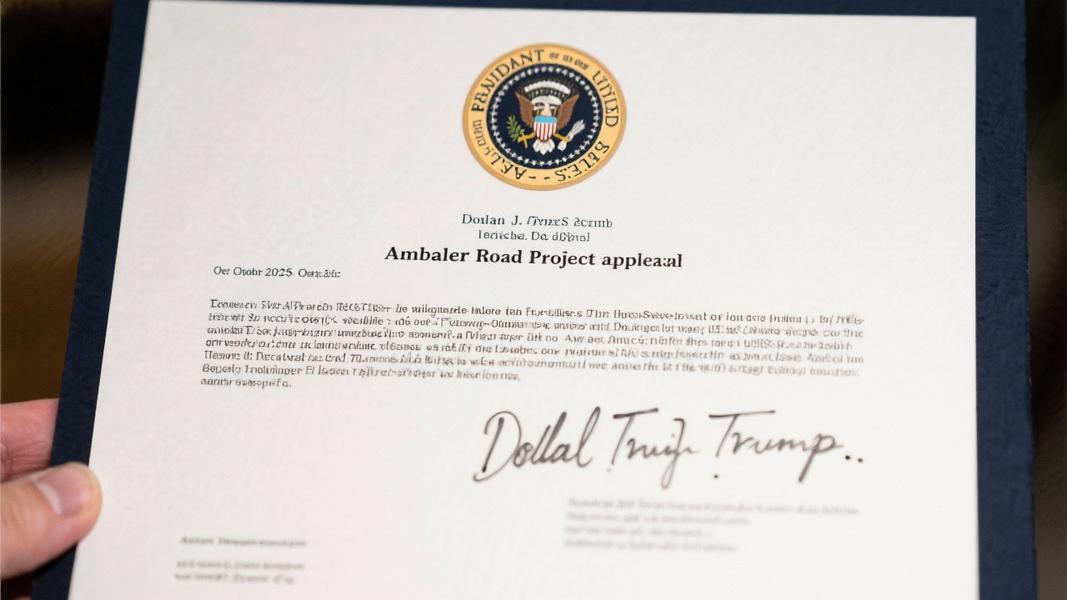
President Trump has approved the controversial Ambler Road Project in Alaska, greenlighting a 200-mile industrial access road that will cut through pristine wilderness and national parklands to reach mineral-rich deposits in the state’s northwestern interior.
The decision, made on October 6, 2025, represents a major victory for the Alaska Industrial Development and Export Authority (AIDEA), which has pursued the project for years despite fierce opposition from environmental groups and Alaska Native communities. In his approval statement, Trump directed federal agencies to “issue necessary authorizations” for the transportation system.
A Long-Contested Project
The Ambler Road has been a flashpoint in Alaska’s development battles for over a decade. The proposed industrial haul road would connect the Dalton Highway to the Ambler Mining District, opening up access to significant copper, zinc, lead, gold, and silver deposits. Proponents argue it’s vital for economic growth, while critics warn of devastating environmental and cultural impacts.
“The Ambler Road would permanently disrupt the lives and subsistence practices of over 30 Alaska Native communities,” according to the Tanana Chiefs Conference, which has opposed the project. “It would cause irreversible damage to critical habitats, including those of Arctic caribou, sheefish, and salmon.”
What’s particularly controversial? The road would slice through Gates of the Arctic National Park and Preserve, one of America’s most remote and pristine wilderness areas.
A Dramatic Reversal
Trump’s approval overturns a 2024 Bureau of Land Management decision that had denied permits for the project. This reversal follows his January 2025 Executive Order 14153, which mandated the Department of Interior to review and accelerate resource development across Alaska.
“In January 2025, Executive Order 14153 was signed, and it included a long list of items for the Department of the Interior to review and act upon in order to accelerate resource development in Alaska,” notes advocacy group Brooks Range Council, which has fought against the road’s construction.
The president’s decision comes after AIDEA filed an appeal on June 6, 2025, under section 1106(a) of the Alaska National Interest Lands Conservation Act (ANILCA), pushing for reconsideration of their 2016 application.
Massive Land Transfers Underway
Implementation of the Ambler Road project will involve the revocation of approximately 370,000 to 420,000 acres of federal lands, according to BLM documents. This first phase of land transfers is designed to accommodate both the Ambler Road and other infrastructure projects like the Alaska Liquefied Natural Gas (AKLNG) pipeline.
The land revocation means these areas will no longer be available for federal subsistence uses under ANILCA, a significant blow to rural residents who depend on these lands for traditional hunting and fishing activities. BLM has characterized the plan as attempting to balance state development goals with rural subsistence access needs.
Environmental groups, including the National Parks Conservation Association, have condemned the project as an unacceptable intrusion into protected lands. Much of the proposed route crosses state and Native corporation lands, further complicating the legal and cultural landscape.
Still, AIDEA and mining interests maintain that the road is essential for accessing what they describe as one of the richest mineral belts in the world. The road would be closed to public use and dedicated solely to industrial traffic.
With Trump’s approval now secured, federal agencies are expected to move quickly on permitting, though legal challenges from environmental and tribal groups seem all but certain. The decision sets up what will likely be the next major battle over Alaska’s resource development future — and how much wilderness America is willing to sacrifice for it.
