
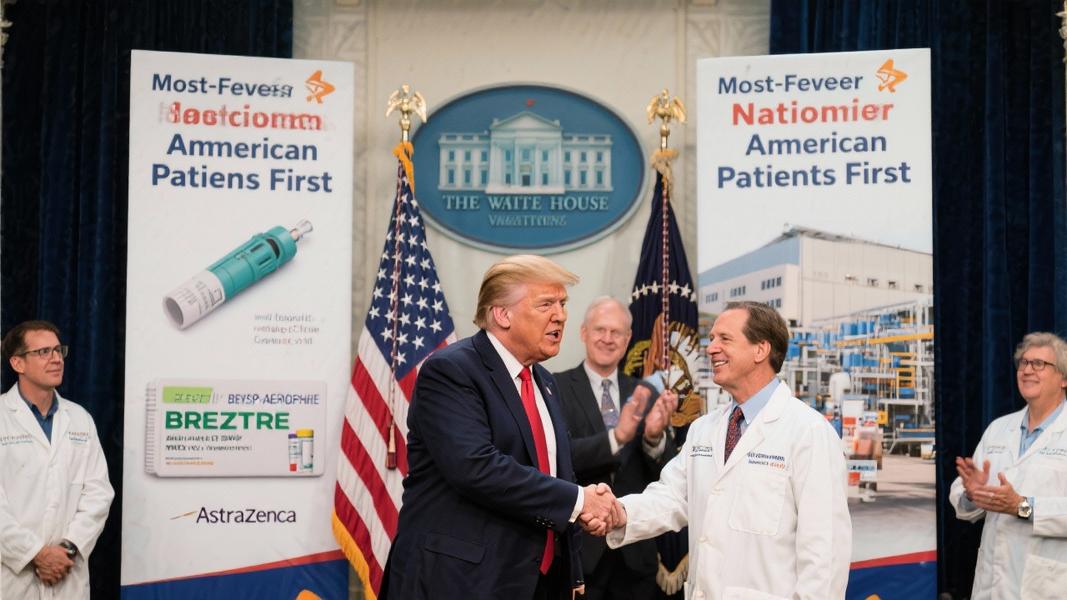
In a move that could significantly alter prescription drug costs for millions of Americans, the Trump administration has struck a deal with pharmaceutical giant AstraZeneca to implement “most-favored-nation” pricing — a framework that promises to bring U.S. drug prices in line with those paid in other developed countries.
The agreement, announced Wednesday, marks the second major pharmaceutical company to sign onto President Trump’s drug pricing initiative, following Pfizer’s similar commitment last month. Under the terms, AstraZeneca will provide State Medicaid programs with access to dramatically reduced pricing on its product line and make a substantial $50 billion investment in American manufacturing and research facilities.
The Price Gap Problem
For years, Americans have paid substantially more for prescription medications than patients in other wealthy nations. President Trump highlighted this disparity in stark terms: “In case after case, our citizens pay massively higher prices than other nations pay for the same exact pill, from the same factory, effectively subsidizing socialism abroad with skyrocketing prices at home.”
The numbers tell the story. Americans typically pay more than three times what other OECD nations do for brand-name drugs, despite representing only a fraction of the global population. This pricing structure has essentially meant U.S. patients subsidize both pharmaceutical profits and foreign healthcare systems.
How dramatic will the price reductions be? For some medications, the changes border on astonishing. Patients purchasing directly could see discounts of 654% for BEVESPI AEROSPHERE, a COPD treatment, and more than 90% for other respiratory medications like BREZTRI AEROSPHERE and AIRSUPRA.
Beyond Price Cuts: Manufacturing Commitments
The deal extends beyond immediate price reductions. AstraZeneca has committed to investing $50 billion in U.S. manufacturing and R&D through 2030, including construction of a new facility in Charlottesville, Virginia focused on producing advanced pharmaceutical ingredients. The company projects this will create approximately 3,600 highly skilled jobs.
“We’re not just lowering prices today, we’re bringing pharmaceutical production back to American soil,” said a senior administration official who requested anonymity to discuss details of the agreement. “This represents a fundamental shift in how drug pricing works in this country.”
The Road to Reform
The AstraZeneca deal comes after months of escalating pressure from the White House. President Trump signed an Executive Order on May 12, 2025 directing his administration to develop a framework for bringing American drug prices in line with international standards. By July 31, he had sent formal letters to major pharmaceutical manufacturers outlining steps for voluntary price reductions.
Pfizer was the first to respond, reaching an agreement on September 30. With AstraZeneca now on board, administration officials say they expect other companies to follow suit quickly.
The impact could be substantial. Approximately 9 million American patients currently treated with AstraZeneca medicines stand to benefit immediately, with particular significance for the 25 million Americans with asthma and 16 million with COPD. Medicaid programs across all 50 states are expected to save hundreds of millions of dollars annually.
Industry Pushback and Political Calculations
Not everyone is celebrating. The pharmaceutical industry has long argued that America’s higher prices fund the research and development that produces medical breakthroughs. PhRMA, the industry’s main lobbying group, released a statement cautioning that “artificially capping prices could limit patient access to innovative treatments and dampen future medical advances.”
Still, with healthcare costs consistently ranking among voters’ top concerns, the political calculus is clear. The administration appears determined to deliver tangible results on an issue that resonates across party lines.
For the millions of Americans struggling to afford their medications, the technical details of international reference pricing matter less than the bottom line: Will their prescriptions actually cost less?
If the projected discounts materialize as promised, the answer appears to be yes — at least for those using AstraZeneca products. Whether this represents the beginning of a broader transformation in American drug pricing or simply a pre-election policy win remains to be seen.
But for a healthcare system long criticized for its opacity and high costs, even incremental change represents something novel: a step toward pricing transparency that patients in other wealthy nations have long taken for granted.
