
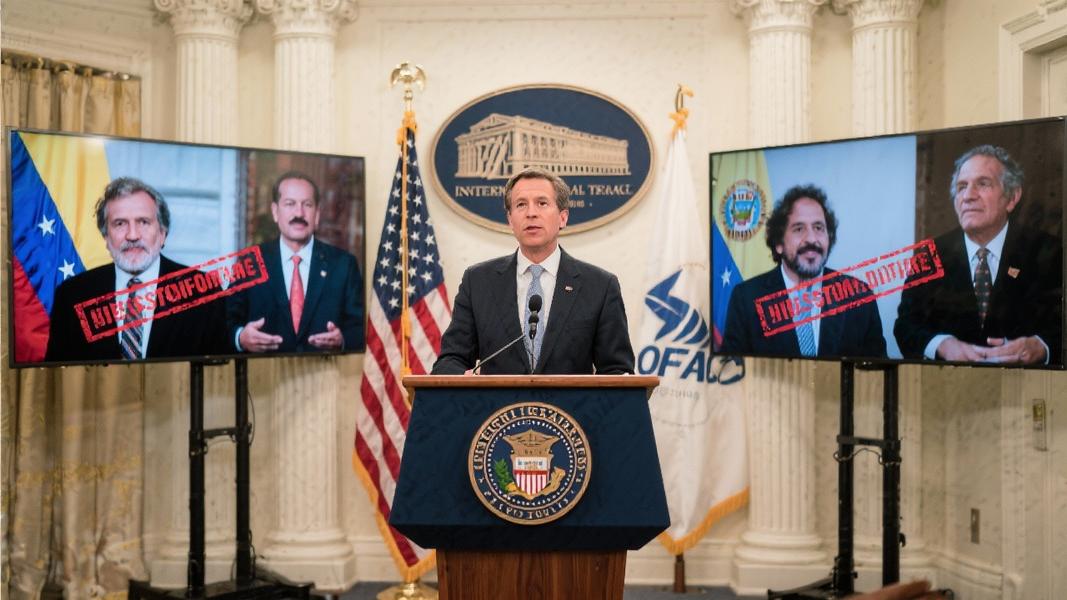
In a stunning diplomatic move, the U.S. Treasury Department has sanctioned Colombian President Gustavo Petro, his wife, son, and close political allies under counternarcotics authorities, marking an unprecedented action against a sitting democratically elected Latin American leader.
The sanctions, announced under Executive Order 14059, target Petro for what Treasury officials describe as policies that have allowed cocaine production to “explode” since his 2022 election. “Since President Gustavo Petro came to power, cocaine production in Colombia has exploded to the highest rate in decades, flooding the United States and poisoning Americans,” said Treasury Secretary Scott Bessent in a statement accompanying the designation.
From ‘Total Peace’ to Total Crisis
Petro, a former guerrilla member who rose to become Colombia’s first leftist president, implemented what he called a “total peace” plan upon taking office. But U.S. officials contend this initiative has effectively provided benefits to narco-terrorist organizations, resulting in record-high coca cultivation and cocaine production.
The situation deteriorated so significantly that on September 15, 2025, the U.S. formally determined Colombia to be “failing demonstrably” to uphold its drug control responsibilities — a serious diplomatic rebuke of a country that has historically been one of America’s closest allies in the region.
What’s behind this dramatic shift? Critics point to Petro’s ideological realignment away from the United States and toward regional leftist governments, particularly Venezuela. “Petro has made himself an ally to [Venezuelan dictator Nicolás] Maduro’s regime, a narco-state, and a regime that is held mainly by the Cartel de los Soles,” said Colombia’s former defense minister Juan Carlos Pinzón in a recent interview.
Family Affair: The Petro Inner Circle
The sanctions extend beyond the president himself to include his inner circle. His eldest son, Nicolas Fernando Petro Burgos, once considered his political heir, was arrested in 2023 on money laundering charges connected to drug trafficking funds that allegedly supported Petro’s presidential campaign.
Petro’s wife, Veronica del Socorro Alcocer Garcia, hasn’t escaped scrutiny either. Treasury officials note she was unconstitutionally appointed as an ambassador “on a special mission” by her husband — an appointment later annulled by Colombia’s courts.
Rounding out the sanctioned group is Armando Alberto Benedetti Villaneda, a close Petro ally who was appointed Minister of the Interior in February 2025. Leaked audio from 2023 reportedly revealed Benedetti’s involvement in campaign financing activities and securing votes for Petro’s election.
Concrete Consequences
The sanctions aren’t merely symbolic. All property and interests belonging to Petro and his designated associates located in the United States or controlled by U.S. persons are now blocked and must be reported to OFAC. U.S. persons are generally prohibited from engaging in transactions with these individuals without specific authorization.
“President Petro has allowed drug cartels to flourish and refused to stop this activity,” said Secretary Bessent. “Today, President Trump is taking strong action to protect our nation and make clear that we will not tolerate the trafficking of drugs into our nation.”
The designations come at a time when Colombia remains the world’s top producer and exporter of cocaine, with Mexican cartels frequently purchasing Colombian cocaine before smuggling it across the U.S. southern border. Despite the severity of the drug threat, Petro recently made what Treasury officials called a “flippant” comparison of cocaine use to whiskey.
Diplomatic Fallout
The relationship between the U.S. and Colombia — once described as the strongest security partnership in the Western Hemisphere — has deteriorated significantly under Petro’s leadership. In 2024, Colombia was suspended from The Egmont Group, an international organization of financial intelligence units, after Petro’s government allegedly shared confidential anti-money laundering information.
Treasury officials emphasize that sanctions are intended to bring about behavioral change rather than simply to punish. “The ultimate goal of sanctions is not to punish, but to bring about a positive change in behavior,” the department noted in its release.
Still, the unprecedented nature of sanctioning a sitting democratic president — particularly one leading a country that has received billions in U.S. aid for counternarcotics efforts over the decades — signals a dramatic rupture in relations.
As Colombia grapples with these sanctions and their international implications, one question looms large: Will Petro adjust course on his “total peace” policies that U.S. officials blame for the cocaine surge, or will this action only push him further into alignment with Venezuela and other U.S. adversaries in the region? For now, a decades-long partnership hangs in the balance.
